

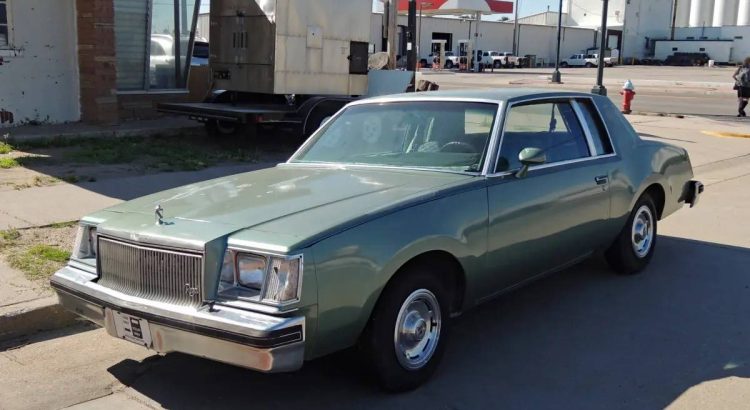
When thinking of cars from the 70s, extremes often come to mind: either bland compacts or cumbersome sedans. Yet, the 1978 Buick Regal stands out in this sea of contrast by becoming the brand’s best seller that year. Straddling the line between luxury and practicality, it managed to attract nearly a quarter of a million buyers, proving that sometimes, moderation is a good thing.
The Birth of a Legend
The Buick Regal made its debut in 1973 within the intermediate Century lineup, but it truly established itself in 1978. With a streamlined design and a body available only as a coupe, the Regal capitalized on the craze for personal luxury coupes, a segment that was booming at the time. In fact, that first year, it managed to sell 236,000 units, a figure that would make any manufacturer today green with envy. But what could have given it such popularity? A clever combination of refined style and competitive pricing.
A Design That Makes a Difference
The design of the Regal is a breath of fresh air in the automotive landscape of the 70s. Gone is the excessive bling; here, pure lines and a sleek silhouette take precedence. With its rectangular headlights and slightly slanted grille, inspired by the Buick Riviera, it presents a look that is both modern and timeless. The simplicity of its rear, centered around long rectangular taillights, reflects a desire to distance itself from the superfluous ornaments that dominated large American cars at the time.
In terms of equipment, Buick offered three trim levels for the Regal. The base model, like the one presented here, had a starting price of $4,852. One could spend nearly $6,000 for a brand-new turbocharged Sport coupe! This range attracted a diverse clientele, from young couples to retirees looking for a comfortable vehicle.
A Mechanic That Lives Up
Inside the Regal, there is a cabin designed for comfort, with materials that reflect attention to detail. However, the real question lies under the hood. The base model was equipped with a 3.2-liter V6 developing a meager 90 horsepower, while a more interesting option was available with a 3.8-liter V6 offering 105 horsepower. This may seem modest today, but at the time, this engine was considered powerful for a vehicle weighing around 3,100 pounds.
The Regal was not a sports car, but it offered pleasant and reassuring road behavior. Thanks to a suspension designed for more responsiveness and less roll than its bulkier predecessors, driving this coupe was an enjoyable experience. Despite its reduced weight of about 550 pounds compared to previous models, it still managed to provide enough interior space to comfortably accommodate four passengers.
Moderation Pays Off
In an era when consumers were beginning to turn away from flashy cars and exaggerated designs, the Regal managed to capture the spirit of the times. It represented a “down-to-earth dream,” as the advertising of the time claimed. This positioning appealed to buyers tired of unnecessary extravagance. Buick understood the need to offer a car that met demand without falling into excess. Thus, with a reasonable price and a sober yet elegant style, the Regal established itself as a safe bet in the market.
A Lasting Legacy
The success of the Regal did not stop in 1978. This model continued to sell over 200,000 units per year until 1984, despite some changes in the lineup that saw the addition of four-door and wagon versions. However, the decline of two-door coupes was inevitable in the following years. Consumer preferences evolved towards SUVs and more practical vehicles.
Today, the Buick Regal is considered an affordable classic for vintage car enthusiasts. Its balance between moderate performance and comfort makes it a sought-after model for collectors looking for an emblematic piece from the 70s.
Photographed in Garden City, Kansas in June 2019, this model reminds us that at a time when everything seemed excessive, the Buick Regal found its place thanks to its well-thought-out moderation.


