

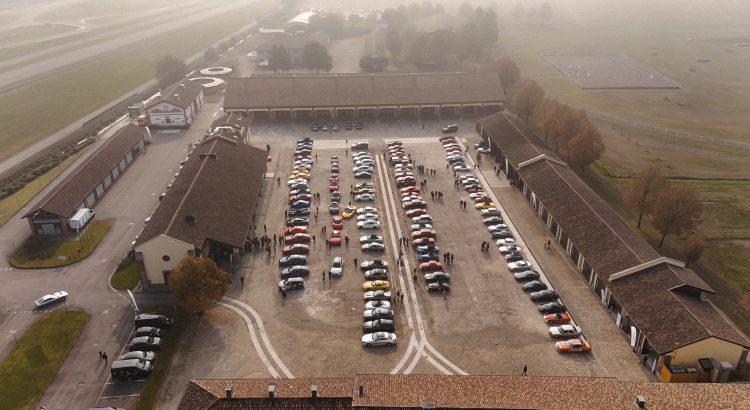
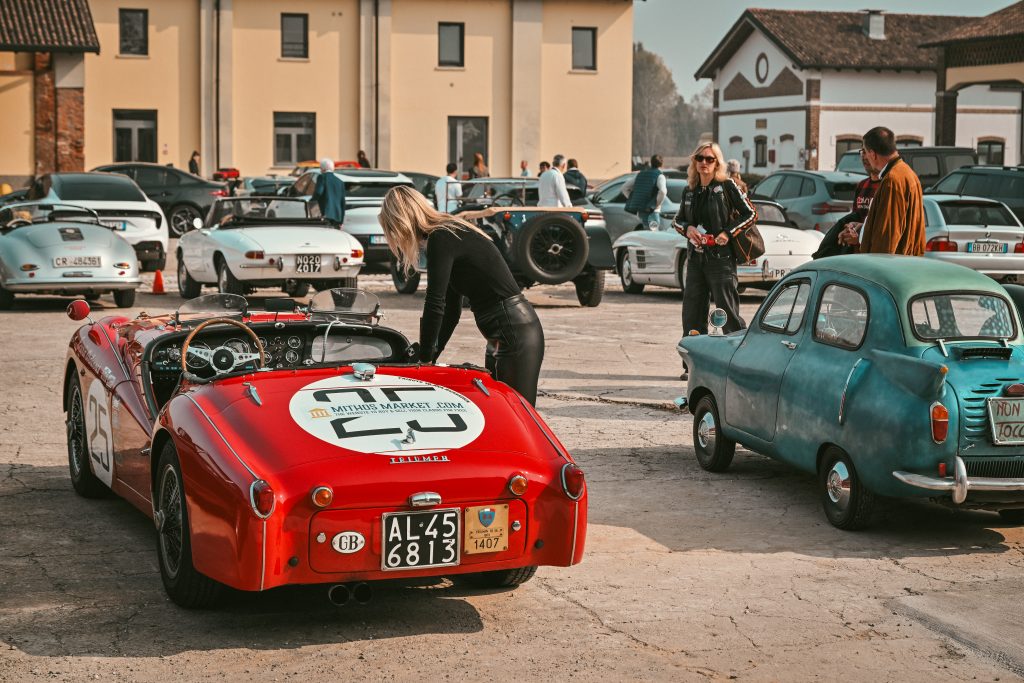
On a clear autumn day, 150 cars and nearly 500 people gather on a stretch of asphalt lost in the Lombard countryside. This is neither a car show, nor an elegance contest, nor a typical “club outing.” Everything takes place at the Vairano circuit, a unique place where people come less to “parade” and more to reflect, drive, measure, and exchange ideas. And behind this very concrete playground, one name recurs like a common thread: Edidomus, the publishing house that imagined, built, and owns this one-of-a-kind testing center.
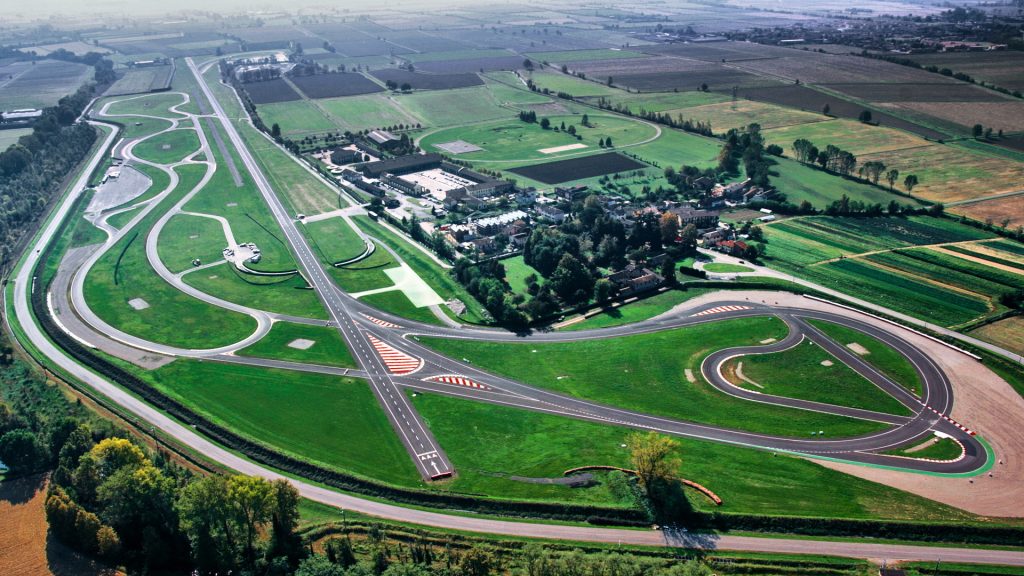
Vairano, at first glance, is a simple circuit: 8 kilometers of asphalt, an off-road track, training areas, workshops. In reality, it is a piece of Edidomus’s DNA that has materialized in the plains of Pavia. To understand Vairano, one must also tell the story of those who dreamed it up.
Edidomus, a publishing house that thinks about society… and cars
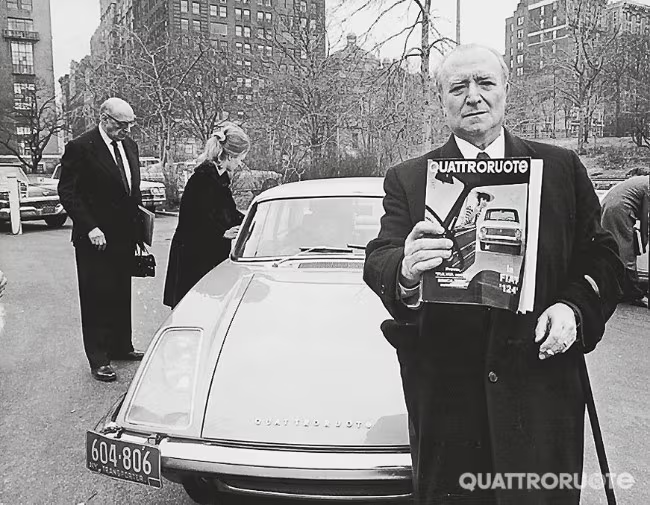
Edidomus is the “house” nickname of Editoriale Domus, founded in 1929 in Milan by Gianni Mazzocchi around the magazine Domus, alongside architect Gio Ponti. At that time, there was no talk of SUVs or electrification: the big question was how to inhabit, furnish, and build a modern life. The first playground of Domus was architecture and design.
Very quickly, Mazzocchi understood that the press should not only follow societal changes: it must anticipate them. Domus thus enriched itself with new titles: Casabella, focused on traditional housing, the Book of the House, a practical manual published for over 70 years, and then news magazines like Panorama and L’Europeo, which became references in Italian journalism.
After the war, Editoriale Domus ventured into other fields: economics, politics, cooking, notably with Il Cucchiaio d’Argento (The Silver Spoon), which became an absolute classic of Italian cookbooks. The house also published Stile Industria, a visionary magazine that theorized industrial design long before the word “design” became a marketing slogan.
Then came the major automotive turning point. In 1956, Quattroruote was born, a monthly dedicated to cars, the defense of motorists, and rigorous road tests. Later came Ruoteclassiche for collectors, Dueruote for motorcyclists, Youngtimer, TopGear Italy, and many other specialized titles.
Over the decades, Edidomus has built a unique profile: a family-run, independent publishing house that speaks as much about architecture as it does about travel, cooking, and mobility. After Gianni Mazzocchi, his daughter Giovanna Mazzocchi took over in the 1980s, followed by his granddaughter Sofia Bordone from 2014 onwards. Three generations serving the same intuition: the press is not just a commentary on the world; it is a laboratory of ideas – and sometimes, a laboratory in itself.
It is precisely in this logic that Vairano was born.
Vairano: when a newsroom acquires a circuit
In the early 1990s, the tests of Quattroruote were already famous for their rigor. Braking distances, emergency evasions, behavior at the limit… manufacturers knew that the figures published by the magazine would be scrutinized by readers as well as by their own engineers. However, to go further, something was still missing: an independent tool, calibrated for these tests.
In 1995, Editoriale Domus decided to create its own Automotive Safety Center (ASC) in Vairano di Vidigulfo, south of Milan. On about 50 hectares, the house constructed:
- a modular circuit of about 8 km;
- an off-road track;
- exercise areas for evasion, emergency braking, and driving on low-grip surfaces;
- hangars and workshops for vehicle preparation and control;
- a conference center for training, seminars, and events.
Vairano became the rolling laboratory of Quattroruote and Edidomus: testing, measuring, validating. The tests were no longer just journalists’ impressions on open roads, but reproducible technical protocols conducted on a neutral terrain that the group controlled from start to finish.
From testing center to enthusiasts’ home
For a long time, Vairano remained primarily a professional tool, a rather discreet place where journalists, engineers, and instructor pilots crossed paths. But the automotive landscape changed: cars were caught in a vise between, on one side, a sometimes moralizing discourse on sustainability, and on the other, a defensive nostalgia that froze everything in the memory of carburetors.
Faced with this polarization, Edidomus chose a third way: to make Vairano not only a testing center but also a living space for enthusiasts. The site gradually transformed:
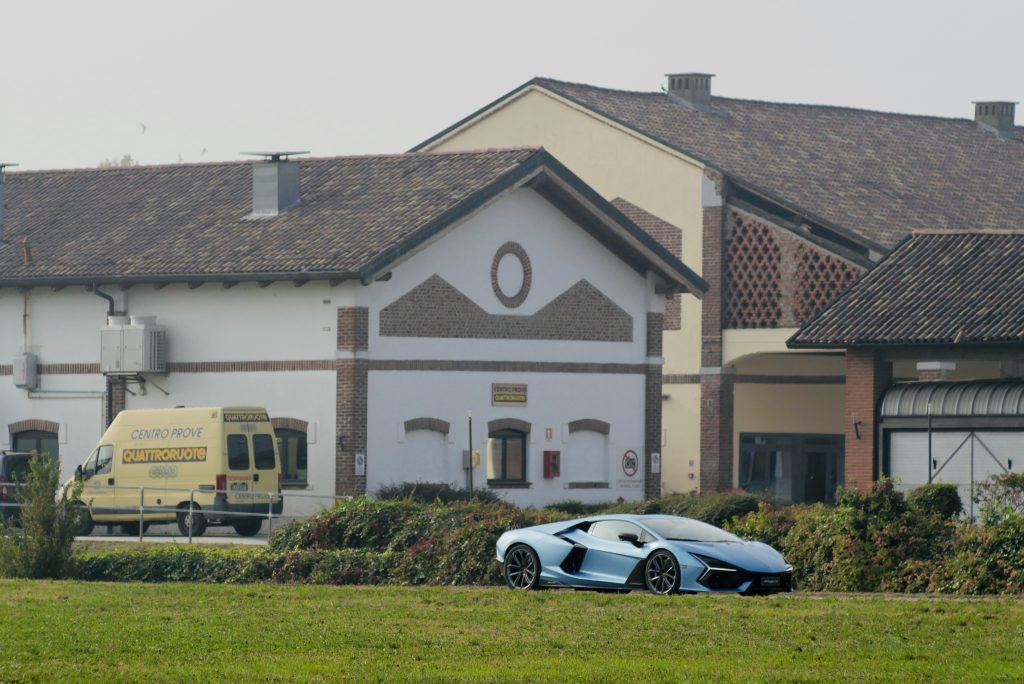
- a former 19th-century farmhouse was restored and became a warm club-house;
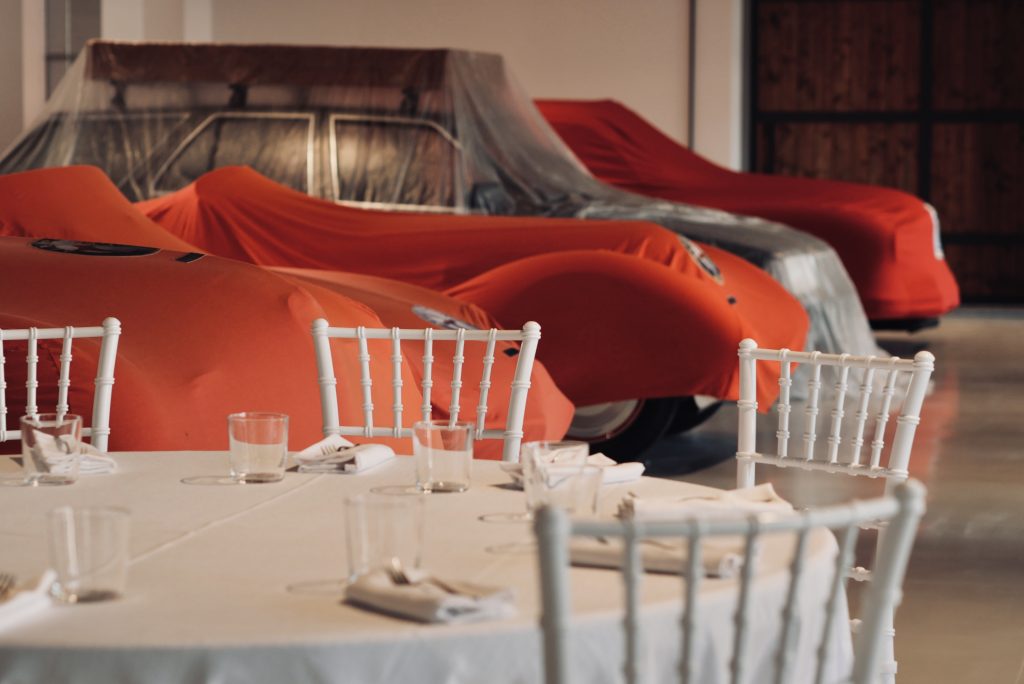
- two large spaces were set up to accommodate around sixty cars in storage;
- a cosmetic renovation area and a mechanical workshop completed the ensemble;
- the archives of Quattroruote and Ruoteclassiche became a treasure accessible on-site;
- discussion, projection, and conference spaces allowed for organizing meetings, training, and community events.
People no longer come to Vairano just to be “measured” by journalists, but to live their passion in a structured, demanding, and caring environment.
The Vairano Automobile Club: selection by project, not by wallet
In this setting, Edidomus carries an original project: an Automobile Club anchored in a real place, with a clear philosophy.
The idea is not to reinvent another supercar owners’ club, where the value of the cars parked in the lot serves as a business card. Here, selection is based first on something else:
- the coherence of the member’s automotive project (collection, restoration, use, transmission);
- their willingness to engage in the community;
- their respect for technique, history, and responsible driving.
The annual membership, around €1,500, grants access to the club-house, services, and the community. The use of the track remains deliberately affordable (on the order of a few hundred euros for half a day), so as not to turn Vairano into an inaccessible stronghold.
The owner of a modern GT, a sporty compact, a slightly sharpened family sedan, or a small popular classic has the same legitimacy there. What matters is not to own “more” than the neighbor, but to understand better: the dynamics, safety, history, and contemporary issues of the automobile.
A natural extension of Edidomus culture
If Vairano works, it is because it naturally fits into the trajectory of Edidomus.
Quattroruote and Ruoteclassiche bring the culture of testing and rigor: we do not talk about cars based on gut feelings, but from measurements, comparisons, and archives. Domus, Casabella, and the architecture/design universe give an aesthetic and cultural meaning to the automobile: a car is not just a means of transport; it is also a piece of design, a fragment of landscape. Titles on travel, gastronomy, and tourism (TuttoTurismo, Meridiani, etc.) remind us that the car is also a tool of freedom, discovery, and self-presentation in the world.
Vairano is all of this at once: a laboratory where we measure, a school where we train, a club where we share, a cultural refuge where one can go from an old issue of Ruoteclassiche to an afternoon drive.
Edidomus no longer just writes about cars: the group stages them, questions them, and brings them to life physically.
A circuit that outlines perspectives
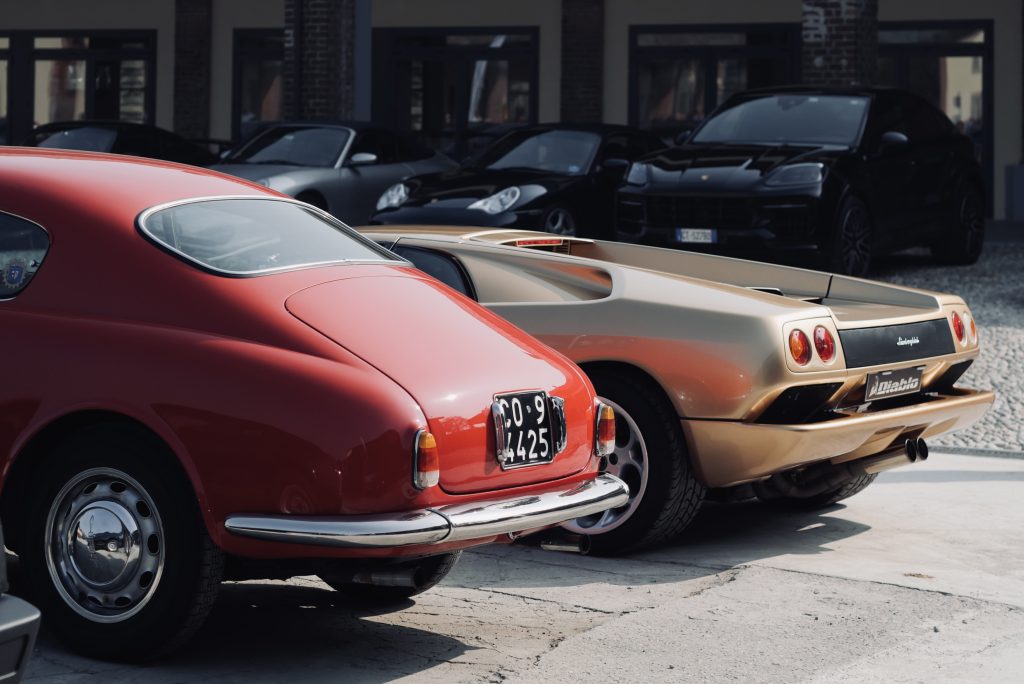
In a world where the car is often reduced to a problem to be solved or a fetish to be idolized, Vairano offers something different. It is a place where one can discover their limits as a driver in a secure environment, truly understand what emergency braking, evasion, and grip mean, measure the difference between an old atmospheric engine and a modern electric one, and discuss the future, regulations, and technologies, without dogmatism but without naivety.
One could say that Vairano is a civil institution of passion: a place where technique becomes a common language, where one accepts to look the automobile in the face – with its qualities, excesses, and contradictions – to better make it evolve.
And this is where the loop closes. Because Edidomus is almost a century old, because this house has always thought together about the home, the city, travel, and mobility, it was probably best positioned to invent a place like this.
Vairano is therefore not “just” a private circuit. It is the very concrete materialization of an editorial conviction: in 2025, loving the automobile is no longer just about collecting it or pushing it to the limit. It is also about understanding it, contextualizing it, questioning it, and accepting that this questioning happens… while driving.
The history of Edidomus in a few dates
The roots and experiences of Edidomus help to understand Vairano, but also the group’s vision for the mobility of tomorrow. For nearly a century, Editoriale Domus has accompanied – and often anticipated – the major evolutions of Italian society.
- 1929 – Gianni Mazzocchi takes over the magazine Domus with architect Gio Ponti and founds the publishing house Editoriale Domus in Milan, dedicated to modern architecture and furnishing.
- 1930s–1950s – The group expands its universe with Casabella, the Book of the House, news magazines like Panorama and L’Europeo, and the culinary classic Il Cucchiaio d’Argento (The Silver Spoon).
- 1956 – Launch of Quattroruote, a monthly entirely dedicated to automobiles, road tests, and the defense of motorists. The rigor of the “road tests” will earn the magazine a reputation with the public and manufacturers.
- 1960s–1980s – Diversification: economic press (Quattrosoldi), women’s magazine (Domina), titles dedicated to travel and automotive tourism (TuttoTurismo), industrial vehicles (TuttoTrasporti), and aviation (Volare). In 1980, Editoriale Domus moves to its current headquarters in Rozzano, south of Milan.
- 1984–1990 – Leadership passes to Giovanna Mazzocchi, daughter of the founder, who consolidates the family’s independence of the group. The Quattroruote automotive database is born – now a reference tool for the entire industry – and the magazine Ruoteclassiche, dedicated to classic cars.
- 1995 – Construction of the Automotive Safety Center (ASC) in Vairano di Vidigulfo: 50 hectares, an 8 km circuit, an off-road track, training areas, specialized workshops, and a conference center. The site becomes the official laboratory for Quattroruote tests… and the future heart of the Vairano circuit-club.
- 2000s – Acceleration in digital and new specialized titles: Meridiani Montagne, Dueruote, and XOffRoad for motorcyclists, the Italian edition of TopGear, launch of QuattroruoteTV and new services for automotive professionals.
- 2014 and beyond – The third generation takes the reins with Sofia Bordone, granddaughter of the founder, a Bocconi graduate, who becomes CEO of Editoriale Domus. Under her leadership, the Accademia Editoriale Domus (masters and training in automotive, architecture, design, gastronomy, tourism) is born, as well as projects like the Gianni Mazzocchi Prize and the Domus 10x10x10 program leading up to the magazine’s centenary.
Today, Edidomus is much more than a magazine publisher: it is a cultural ecosystem that connects architecture, design, travel, gastronomy… and automobiles. The Vairano circuit naturally fits into this story, as a concrete expression of this culture and vision of mobility.


