The Chinese Grand Prix was the stage for a fierce battle, with Kimi Antonelli emerging as the master, marking a turning point in the season. Lewis Hamilton, for his part, finally tasted the podium with Ferrari, revealing the underlying tensions between the teams. This GP highlights not only individual performances but also the industrial strategies shaping the future of Formula 1.
A Start Without McLaren: A Blow for the Team
The Grand Prix began on an unexpected note, with the complete absence of McLarens on the grid. Oscar Piastri and Lando Norris, two promising drivers, were forced to withdraw due to technical issues. In the current context of Formula 1, where every point counts, this situation is a significant blow for the British team. The reigning champion, Max Verstappen, also struggled, losing several positions right from the start.
This void on the grid allowed other teams to capitalize, and it is clear that the absence of McLarens could redefine the championship dynamics. Without these direct competitors, Mercedes and Ferrari were able to focus on their own battle without having to watch their backs.
Ferrari Surprises Mercedes… But for a Limited Time
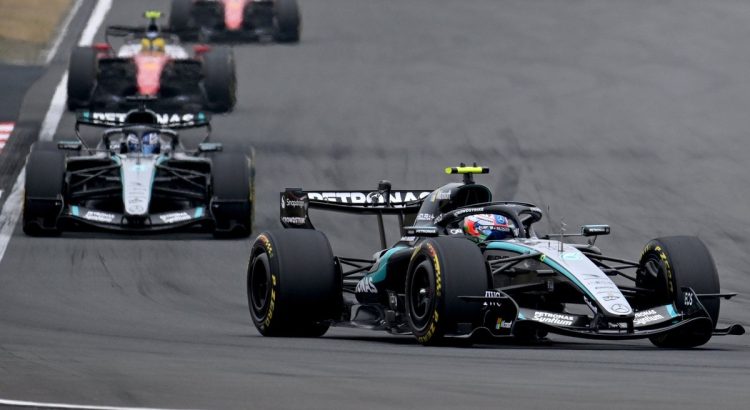
The start saw Ferrari take the lead, with Hamilton briefly taking the top spot before Antonelli responded. This dynamic underscores a reality: despite the improvements made by Mercedes, Ferrari remains a serious threat. However, the speed with which Antonelli and Russell regained control shows that Mercedes still has resources to exploit.
As teams refine their strategies to maximize performance, this battle between Ferrari and Mercedes could influence the design of future models. Tire choices and race strategies are becoming crucial, and every mistake can be costly.
The Safety Car: A Key Moment That Redistributes the Cards
The deployment of the safety car on lap 10 was a decisive turning point. Teams had to choose whether to change their tires or not, a choice that reshaped the race landscape. Antonelli was able to take advantage of this situation, solidifying his position as the leader.
This moment highlights an often-overlooked aspect of Formula 1: strategy under pressure. Decisions made in these critical moments can determine the outcome of a race. In the future, teams will need to refine their ability to anticipate these moments and react quickly to remain competitive.
An Internal Battle at Ferrari: The Hamilton-Leclerc Duel
The duel between Lewis Hamilton and Charles Leclerc was captivating. The two drivers engaged in a brotherly struggle, each seeking to outdo the other while maintaining respect. This internal dynamic at Ferrari underscores the complexity of relationships within a team where two top talents coexist.
Through this rivalry, a development strategy at Ferrari is emerging that could be crucial for the future. The ability to manage high-level drivers while maintaining a team spirit will be essential to maximize their performance in upcoming races.
Verstappen: A Nightmare Race
Max Verstappen had a difficult weekend, culminating in a retirement due to technical issues. This scenario highlights the challenges even the best drivers and teams face. For Red Bull, this situation is concerning, especially in a season where every point can make a difference.
In the short term, this setback could prompt Red Bull to reassess its priorities and strengthen its investments in research and development to prevent such incidents from happening again. With competition intensifying, every team must ensure that its reliability meets expectations.
A Future Under Pressure: What Are the Consequences?
As the season progresses, the Chinese GP foreshadows an intensification of the battle between Ferrari and Mercedes, with a Verstappen seeking redemption. The performances of drivers and teams will be closely scrutinized, with every victory or defeat having repercussions on the morale and strategy of the teams.
In the coming years, this dynamic could lead to significant changes in how teams approach the development of their cars. Strategic choices will become even more crucial as competition tightens.
In Summary
- Kimi Antonelli wins his first Grand Prix, marking a turning point in the season.
- Lewis Hamilton returns to the podium with Ferrari, but the internal struggle remains intense.
- The absence of McLarens highlights the challenges of an unpredictable season.
- The deployment of the safety car reshaped the race, emphasizing the importance of strategy.
- Verstappen must bounce back after a disastrous weekend, increasing the pressure on Red Bull.