
The Japanese Grand Prix was recently marked by a shocking incident involving Oliver Bearman. David Coulthard, former Formula 1 driver, shared his thoughts on the event, highlighting the dangers drivers face on the track. Between the speed differentials and the violent impact against barriers, Bearman’s accident serves as a stark reminder of how perilous the sport can be.
Narrow Escape from Disaster
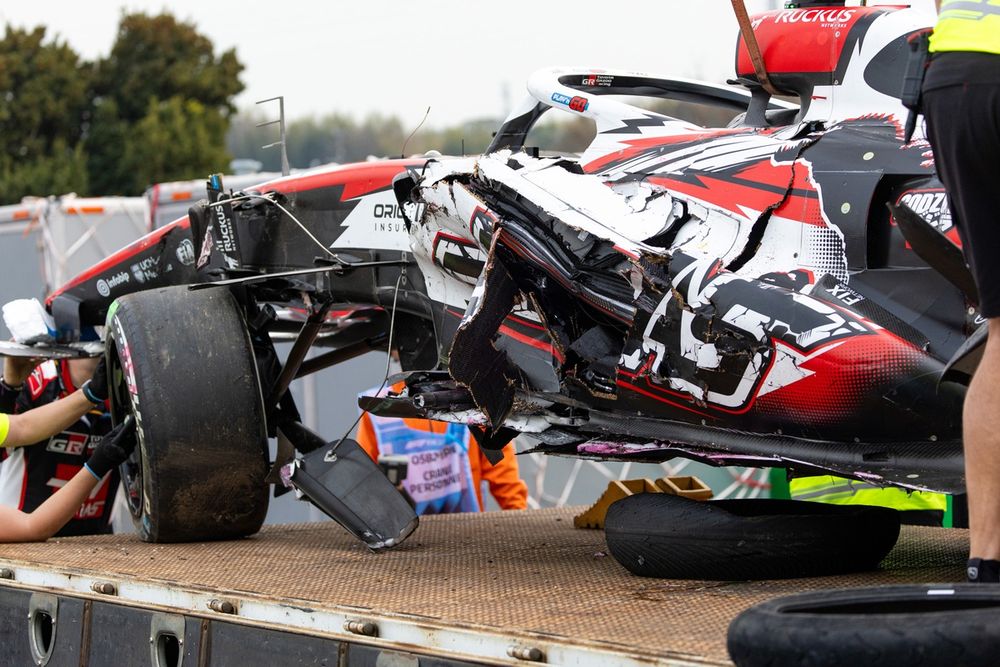
During the recent Japanese Grand Prix, Oliver Bearman narrowly avoided catastrophe while trying to miss Franco Colapinto’s Alpine. However, this maneuver led to a spectacular off-track excursion, resulting in a violent crash of his Haas into the safety barriers. It was a moment of sheer terror that reminded David Coulthard of his own experiences on the track.
Memories of a Former Driver
“As a former driver, I know what it feels like when there’s that speed differential,” Coulthard shared in an interview on the Up to Speed podcast. He related this personal experience to a significant incident at the Nürburgring in the 2000s, where he nearly collided with Fernando Alonso. “He had lifted off 20 meters earlier than he did the previous lap, and I came this close to hitting him.”
Heart-Stopping Speeds
Coulthard doesn’t shy away from discussing the terror these speed differentials can create. “It’s the most frightening thing for a driver,” he says, recalling rainy incidents where visibility is compromised. Memories of Ayrton Senna in Melbourne or Michael Schumacher at Spa-Francorchamps come flooding back, underscoring the ever-present dangers in this sport.
Incredible Luck for Bearman
Bearman was incredibly fortunate to avoid direct contact with Colapinto. Upon impact with the barriers, a deceleration of 50 g was recorded. To put this in perspective, Coulthard references tests from the 1950s that showed the human body could survive decelerations of up to 80 g.
“They didn’t test beyond that on purpose, but I’ve heard of a driver, Kenny Bräck, who survived a crash recorded at 200 g,” he adds. This is a striking demonstration of the limits of the human body against the forces at play during an accident.
Crisis Management in Formula 1
Oliver Bearman’s accident didn’t just impact the driver himself. It also triggered an immediate response among Formula 1 officials. In a context where the 2026 regulations are already under scrutiny, a meeting among all stakeholders in the sport is planned to discuss potential adjustments.
Implications for the Future
This situation raises crucial questions about safety in Formula 1. As speeds increase and cars become more powerful, it’s imperative that measures are put in place to protect drivers. Technology is evolving, but safety must remain an absolute priority in a sport where every second counts.
In Summary
- Oliver Bearman’s accident highlights the inherent dangers of Formula 1.
- David Coulthard recalls similar personal experiences on the track.
- Impressive forces were recorded during the crash with the barriers.
- A crucial meeting is set to examine driver safety.
- The issue of safety remains essential amid the rapid evolution of automotive technologies.