The 2026 Formula 1 season is already stirring passions, and predictions are running high. Helmut Marko, although no longer an advisor at Red Bull, does not hesitate to assert that the future champion could very well be powered by Mercedes. A prospect that does not delight all the players in the paddock, as the memories of the German team’s domination are still fresh.
Uncertainties Ahead
Who will be crowned world champion in 2026? Even though the previous season has not yet started, this question occupies the minds of all Formula 1 enthusiasts Formula 1. The upcoming regulatory changes promise to disrupt the established hierarchy, and it is delicate to project into a future where the cards will be reshuffled. Even behind the scenes of the teams, it is difficult to gauge what is being prepared in the garages.
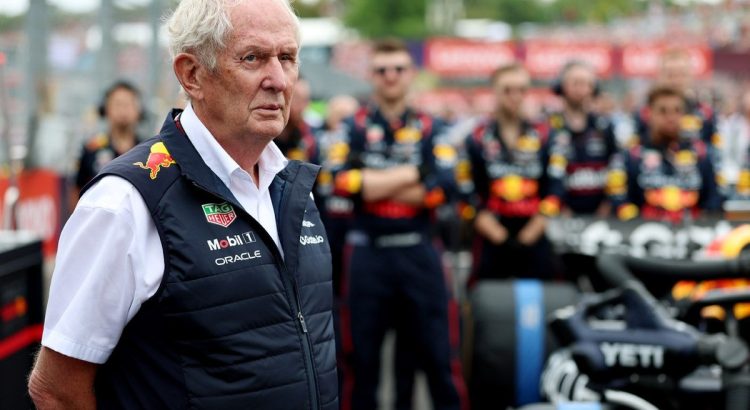
Helmut Marko, former advisor to the Red Bull team, has closely followed the development of the new engine, a product of collaboration with Ford. Although he left his position last December, his opinion remains influential. When asked about his predictions for the 2026 drivers’ championship, he makes no secret of his fears: “I’m afraid it will be a driver powered by Mercedes.”
A Scenario Already Seen?
Marko recalls the memories of overwhelming domination during the 2014 season, where Mercedes had taken a phenomenal lead over its competitors. “I hope we won’t relive such a situation,” he confides to the ORF channel. “From what we hear, Mercedes seems to be the most advanced in engine development today.”
This concern about the potential gap between teams for the 2026 season is reinforced by the performances observed during the 2025 season. Qualifying sessions where the cars were so close to each other that one could believe in a tight competition. But Marko fears that this dynamic may just be a distant memory.
A Hierarchy That Could Widen
The last Formula 1 season was marked by extremely competitive qualifying sessions, where the gaps between drivers were minimal. For 2026, Marko fears that these gaps may worsen. “Last year, the field was never as tight,” he emphasizes. “There were races where all 20 cars were within seven-tenths of a second in qualifying. I think this gap will widen significantly.”

During Q1 of the 2025 São Paulo GP qualifying, 17 cars were within the same second. This impressive performance raises concerns for the future, as the increased complexity of the regulations could lead to much more pronounced differences in 2026.
Marko explains: “Between the chassis, flexible wings, and especially battery performance, many parameters come into play. We also have to consider the combustion engine, the battery, and then the software. Added to this is the CO2-neutral fuel.” A chemistry that could tip the balance in favor of the most efficient.
The Role of Drivers More Crucial Than Ever
With the introduction of active aerodynamics and various modes such as “overtake,” “boost,” or “corner,” driving will take on an even greater dimension in 2026. Marko believes these developments will favor certain drivers who can take advantage of these new technologies: “The driver will play a determining role in how he uses energy, when he recovers it, etc.”
He adds that pure talent will be essential to navigate these new constraints: “A driver like Max [Verstappen] will be favored because he can go very fast while thinking at the same time.” But Marko also emphasizes that veterans like Fernando Alonso could also adapt and find their way in this new era.
An Uncertain but Exciting Future
The 2026 season promises to be a major turning point for Formula 1, with a hierarchy that could be reshaped by the new engines and regulations. While Helmut Marko seems to designate Mercedes as the favorite, nothing is ever set in stone in motorsport. Surprises are commonplace, and each season holds its share of unexpected events.
To follow this new season and discover who will be crowned world champion, one must keep a close eye on the performances of the different teams and the evolution of technologies. One thing is certain: the passion for Formula 1 will never fade as long as daring drivers and impressive machines are at the forefront.