


The opening race of the season in Melbourne revealed a troubling performance gap between Mercedes and its customer teams, raising questions about the automaker’s industrial strategy. How can the renowned German team find itself so out of sync with its partners? This article explores the long-term implications of this situation.

A Bitter Reality: Mercedes Outshines Its Customers
The Australian Grand Prix showcased Mercedes’ dominance, not only winning the race but also highlighting the shortcomings of its customer teams. Team principal Toto Wolff noted that while George Russell clinched victory, competition with Ferrari remains palpable. However, performances at Albert Park revealed a clear hierarchy, with Mercedes seemingly racing alone.
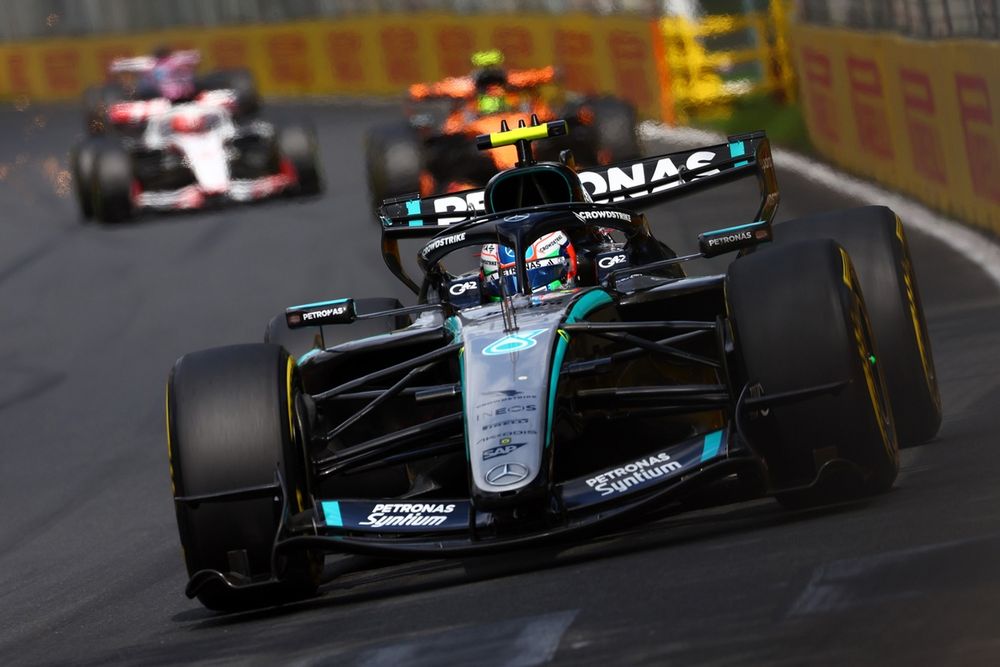
The real issue lies in Mercedes’ energy efficiency. While customer team drivers struggled to keep pace, Russell demonstrated impressive control over the straights despite running on older tires. This phenomenon is even more striking when comparing lap times with McLaren’s Oscar Piastri. GPS data shows Mercedes was faster in nearly every corner, raising questions about the development of its engines.
A Technical Gap Worth Analyzing
What stands out is Mercedes’ ability to maximize its engine’s potential, a feat that customer teams seem to struggle to replicate. Andrea Stella, McLaren’s director, expressed surprise at this gap. Although customer teams have access to similar engines, it’s clear they cannot exploit their potential in the same way as the factory team. Stella mentioned that customer teams use a different, less sophisticated version of the engine, limiting their competitiveness against Mercedes.

This phenomenon cannot be solely attributed to chassis or aerodynamic differences. Energy management and engine mapping appear to play a significant role. Mercedes has developed engine exploitation strategies that allow it to maximize performance while minimizing losses on the straights. This expertise is crucial, especially at the start of the season when new regulations tighten competition.
A Steep Learning Curve for Customer Teams
Customer teams like McLaren and Williams find themselves in a precarious position. James Vowles from Williams stated they were “caught off guard” by Mercedes’ performance. This observation highlights the difficulty these teams face in catching up technologically. The learning curve is steep, as customer teams must navigate their own limitations alongside those imposed by the manufacturer.
In essence, the performance difference between Mercedes and its customer teams lies not only in raw power but also in the ability to interpret and apply data effectively. Customer teams must not only understand their engine but also adapt their approach based on the specifics of each circuit.
A Development Strategy in Need of Reevaluation
Toto Wolff acknowledged that the implementation of new regulations presents complex challenges for all teams. However, he defended the idea that Mercedes strives to provide quality service to its customers. This raises the question of long-term strategy: how can Mercedes balance its interests as a factory team while supporting its partners?
The answer may lie in a strengthened collaboration between Mercedes and its customer teams. This will require a more open sharing of data and strategies so that all parties can benefit from technological advancements. If this situation persists, it could lead to a reevaluation of the relationships between factory teams and their customers in the future.
A Dependency Worth Questioning
The current situation also highlights the dependency of customer teams on Mercedes. While they benefit from a competitive engine, they must also contend with the drawbacks of an inverted hierarchy compared to previous years. This raises questions about the long-term viability of such dependency.
McLaren, for instance, does not wish to follow Red Bull’s example by developing its own engine. Zak Brown stated they are satisfied with their partnership with Mercedes, but this could change if the performance gap continues to widen. Ultimately, customer teams may be forced to consider other options if they cannot close this gap.
In Summary
- Mercedes dominates its customer teams in terms of performance and energy efficiency.
- The technical differences between the factory team and customer teams are concerning.
- The learning curve for customer teams is steep and complex.
- Toto Wolff defends Mercedes’ approach but acknowledges the challenges ahead.
- The dependency of customer teams may prompt a reevaluation of their long-term strategy.
Who is this analysis relevant for? For Formula 1 enthusiasts and automotive industry stakeholders, the gap between Mercedes and its customers raises crucial issues. In the medium term, if this dynamic persists, it could redefine the hierarchy in the paddock and prompt customer teams to explore strategic alternatives in the face of intensifying competition.


