As Formula 1 prepares to enter a new era with the 2026 regulations, the concept of “super clipping” could become a major strategic issue. This technique, which allows cars to recover energy while maintaining acceleration, raises essential questions about the balance between performance and energy management. With implications for competition, safety, and the appeal of the sport, this new tool could transform the dynamics of upcoming races.
What is Super Clipping?
During the recent Bahrain tests, Andrea Stella, McLaren’s director, unveiled an innovation that could redefine racing strategies. Super clipping is a mechanism that allows single-seaters to recover energy via the MGU-K, even when the driver is fully pressing the accelerator. A way to reconcile performance and energy efficiency, but not without consequences. In short, cars might be slower in corners, a fact highlighted by Fernando Alonso, who did not hesitate to compare driving these machines to that of a chef.
Revealing Data on Performance
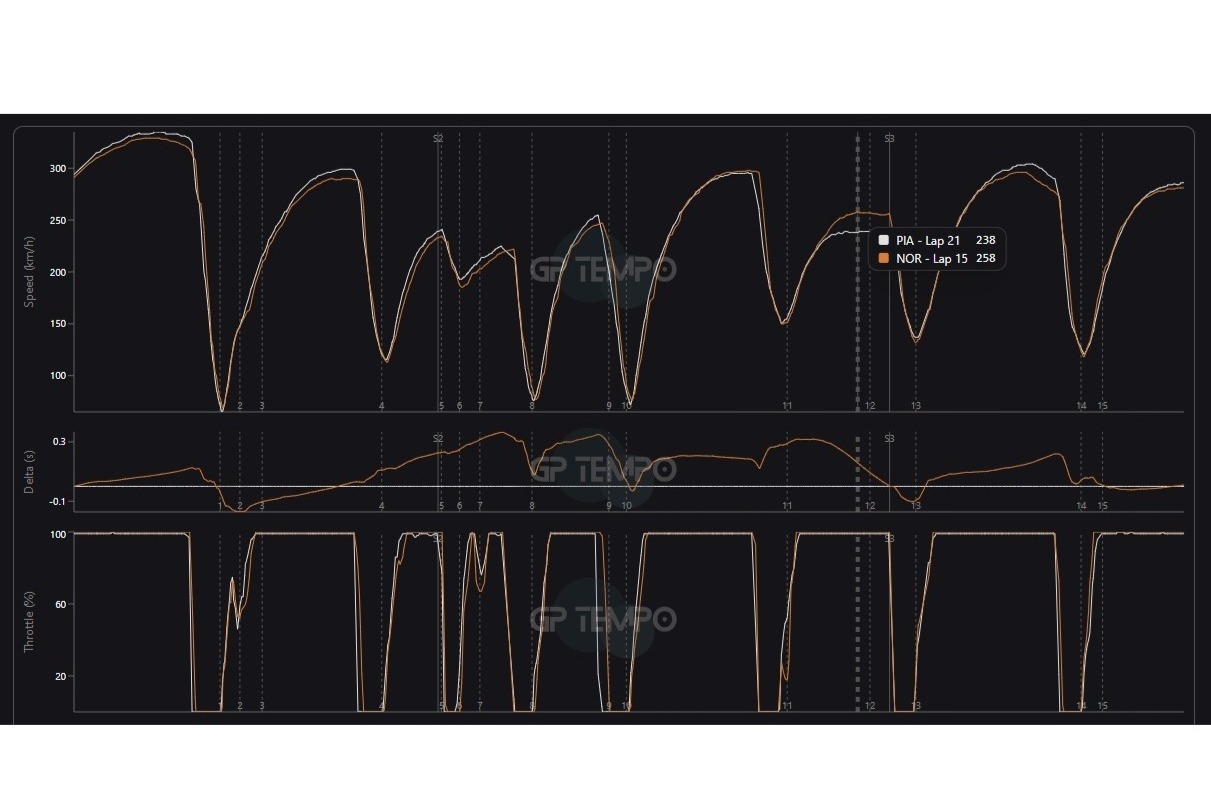
Initial feedback on this technology is already promising. Analyzing the performances of Oscar Piastri and Lando Norris, it is noted that despite similar lap times, the speed profiles differ. Piastri reached higher maximum speeds in certain sections of the circuit, while Norris experienced super clipping, illustrating how this technique can influence energy management and speed in the race. This phenomenon could become a determining factor in the hierarchy of teams.
A Double-Edged Strategy
Stella advocates for an increase in the energy recovery limit to 350 kW, a proposal that could simplify energy management for drivers. However, this suggestion does not have unanimous support. The FIA will have to juggle the need to increase the competitiveness of the championship and the desire of teams to preserve their technical advantages. A decision that could have consequences on the balance of competition.
A Reaction to a Potential Crisis
The FIA is preparing to react to the results of the first races of the 2026 season. If performances prove disappointing, super clipping could be a lever to avoid a boring spectacle. However, this initiative will not be without risk. Teams that have invested in high-performance energy systems could find themselves disadvantaged if the rules change mid-season. A situation that could create tensions within the paddock.
A Fragile Balance Between Regulation and Performance
The challenge will be to find a balance between the interests of the championship and those of the teams. The FIA is aware that any modification must be carefully weighed. Nikolas Tombazis mentioned upcoming discussions, where each team will try to defend its interests while keeping an eye on the future of the sport. The choices made could influence not only the current season but also the future directions of the regulations.
In Summary
- Super clipping allows energy recovery during full acceleration but reduces maximum speed.
- Driver performances during tests reveal the significant impact of this technique on energy management.
- An increase in the energy recovery limit is being considered, but raises concerns among teams.
- The FIA must navigate between improving the spectacle and preserving the competitive interests of teams.
- Decisions made this season could redefine the landscape of Formula 1 for years to come.
In conclusion, super clipping represents both an opportunity and a challenge for Formula 1. This new tool could offer more dynamic and interesting races, but it also raises questions about fairness and competition. For teams like McLaren and others, the challenge will be to adapt to these changes while keeping an eye on performance. In the medium term, we could witness a redefinition of racing strategies and an evolution of relationships between teams and governing bodies. It remains to be seen whether this stroke of genius will become a turning point or a mere defensive maneuver in the face of upcoming challenges.