As the 2026 season approaches, Formula 1 is set to enter an even more pronounced hybrid era, with regulations that are sure to raise eyebrows. Between sarcasm and revelations, drivers are already sharing their thoughts on these changes that could transform driving.
Changes That Don’t Go Unnoticed
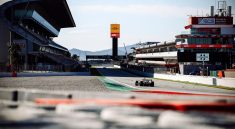
The arrival of Formula 1 in 2026, with an emphasis on hybridization, is not just a simple regulatory facelift. It promises to disrupt driving and the way competitors approach racing. Among the new features, one situation, in particular, has already generated a lot of ink: the possibility that drivers may have to downshift on straightaways due to a deficit in electric power. This idea has been particularly criticized by the Red Bull camp, including Christian Horner and Max Verstappen, but it took shape during testing in Barcelona.
George Russell’s Thoughts
During testing in Barcelona, George Russell shared his thoughts on this issue, stating: “There have obviously been a lot of discussions about a potential downshift on straightaways in certain circumstances. It will probably still be the case, but honestly, it doesn’t seem that abnormal to me.” His comparison to driving a car uphill is quite telling. “It’s like when you’re climbing a hill: you accelerate fully, but you lose a bit of speed and you have to downshift to maintain your momentum.”
He continued: “So there are times when you downshift at the end of the straight, even when you’re at full throttle. It felt stranger in the simulator than in reality. I talked to a few other drivers, and they made the same comment, so it was quite intuitive.” That certainly gives food for thought!
Stroll on the Defensive
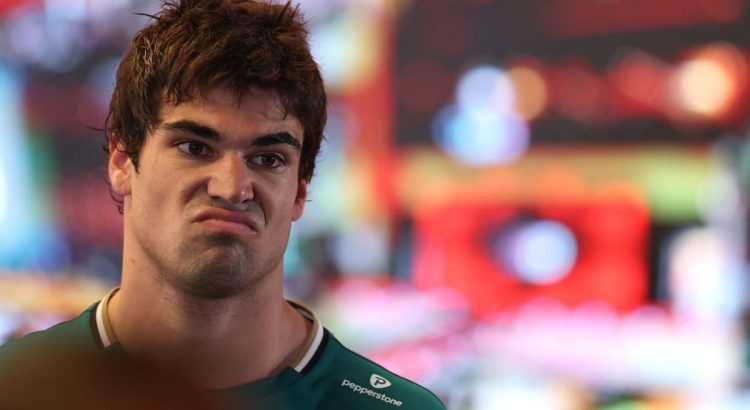
For his part, Lance Stroll is still getting used to these new F1 cars. He completed only five laps during the private testing in Barcelona, a very limited number to get a precise idea of the new mechanics. “Every new regulation always comes with an adaptation period,” he stated, struggling to deliver a firm verdict on the driving of the Aston Martin AMR26.
He added: “I did two laps in 1:45 in Barcelona, so I don’t have much to say about driving the car. From what I’ve heard, opinions are mixed. Some found the cars smaller, more agile, and more enjoyable to drive.” This observation raises the question of drivers’ perceptions regarding the new rules.
A Return to Driving Enjoyment
Stroll does not hide his skepticism regarding the previous generation of single-seaters: “I don’t think the last generation of cars was particularly enjoyable to drive. They were very rigid and heavy.” The prospect of driving lighter and more maneuverable cars seems to give him a bit of hope, but only time will tell.
Stroll’s Sarcasm in Response to Criticism
When Stroll was asked about Russell’s comments regarding downshifting and lift and coast in qualifying, his response quickly resonated with laughter in the paddock. With a well-timed dose of sarcasm, he stated: “For sure. For my part, I’ve been saying for a long time: I think it would be nice to have atmospheric engines running on synthetic fuels, but I don’t make the rules; I just drive the cars.”
And he didn’t hesitate to add: “I’m sure George, when he maybe wins the race in Australia with a 30-second lead in his Mercedes, won’t see any issue with downshifting a lot on the straights and doing lift and coast. Maybe he’ll change his mind by then.” A little jab that reminds us that, despite the regulations, competition is ultimately a matter of drivers.
An Uncertain but Promising Future
As drivers adapt to the challenges posed by the new rules, the 2026 season promises to be as exciting as it is uncertain. Technological and regulatory evolutions could redefine not only the way races are contested but also the driving pleasure experienced by the drivers. It remains to be seen whether these adjustments will enhance the spectacle on the track or create more confusion among competitors. One thing is certain: the smell of gasoline and the sound of engines will remain inseparable from this iconic discipline.