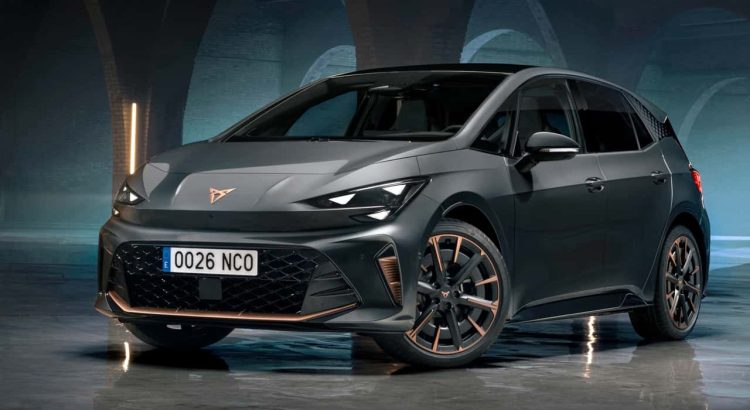
With its 2026 refresh, the Cupra Born is more than just an aesthetic update; it marks a strategic pivot for the brand. By enhancing ergonomics and increasing range, Cupra aims to distinguish itself from the Volkswagen ID.3 while asserting its sporty personality.

The Cupra Born has always been seen as the more elegant and dynamic version of the Volkswagen ID.3. With this new iteration, the Spanish brand makes a bold industrial move by revising its design and ergonomics. The removal of touch-sensitive controls in favor of physical buttons could be the most appreciated change by users, and for good reason. These controls have often been criticized for their imprecision and lack of intuitiveness. The return to more conventional controls acknowledges a failure to meet modern driver expectations, but it’s also a smart choice that could attract a broader clientele.
Design and Technical Evolutions: A Stronger Identity
Visually, the 2026 Cupra Born adopts a bolder style inspired by the Tavascan and Raval models. The new front end, featuring a triangular light signature, emphasizes the car’s sporty character. At the rear, redesigned taillights and an illuminated logo add a contemporary touch. This stylistic evolution goes beyond aesthetics; it reflects a desire to differentiate from its German cousin.

On the technical side, Cupra smartly reorganizes its powertrain lineup. The entry-level model now features a 140 kW (190 hp) motor, while mid-range and sporty versions offer 170 kW (231 hp) and up to 240 kW (326 hp). This differentiation strategy allows Cupra to position itself in a segment where performance is expected. The 600 km range is also a major asset, especially in a market where range anxiety remains a barrier to electric vehicle adoption.
Increased Comfort Inside: Enhanced User Experience
Inside, the new Cupra Born doesn’t hold back. The instrument cluster grows to 10.25 inches, while the central 12.9-inch screen promises a smoother interface thanks to the integration of Android Automotive. This change is significant: it allows users to access a multitude of applications while enhancing the overall onboard experience. New door trims and dynamic ambient lighting further reinforce this impression of quality and modernity.

The shift towards Android Automotive could also have long-term strategic implications. This platform may enable Cupra to attract a more tech-savvy clientele eager for advanced connectivity.
A Response to Criticism: The Return of Buttons
The return of physical buttons is undoubtedly the most tangible change in this update. Criticism of touch controls has been widespread, and Cupra seems to have realized that ergonomics should not be sacrificed for modern design. This choice could tip the scales in favor of the Born against its direct competitors, which continue to opt for more futuristic interfaces that are often less practical. In short, Cupra appears to prioritize user experience above all.
A Strong Positioning Against Competitors
With this update, Cupra clearly seeks to stand out in a saturated market where references are multiplying. Competition is fierce, particularly with models like the Hyundai Ioniq 5 and Kia EV6, which also offer impressive performance and appealing design. By improving its range and revising its ergonomics, the Cupra Born positions itself as an attractive choice for those seeking a sporty alternative to more conventional models.
This repositioning could also impact Cupra’s brand image. By betting on a strong and assertive identity, the Spanish brand could capture a new, younger, and more dynamic clientele looking for not just an electric vehicle, but also an engaging driving experience.
In Summary
- 2026 refresh focused on ergonomics and range.
- New design inspired by Tavascan and Raval models.
- Return of physical buttons for a better user experience.
- Increased range to over 600 km.
- Integration of Android Automotive for advanced connectivity.
In conclusion, the 2026 Cupra Born represents a strategic turning point for the brand. This refresh not only improves ergonomics and range but also asserts a strong identity against the competition. Who is this car for? It’s aimed at sporty driving enthusiasts looking for a distinctive and functional electric vehicle. Alternatives like the Hyundai Ioniq 5 and Kia EV6 remain relevant, but the Cupra Born stands out with its style and user-centered approach. Its strengths include range and design, while its limitations may lie in the need for constant updates to stay competitive in a rapidly evolving market.