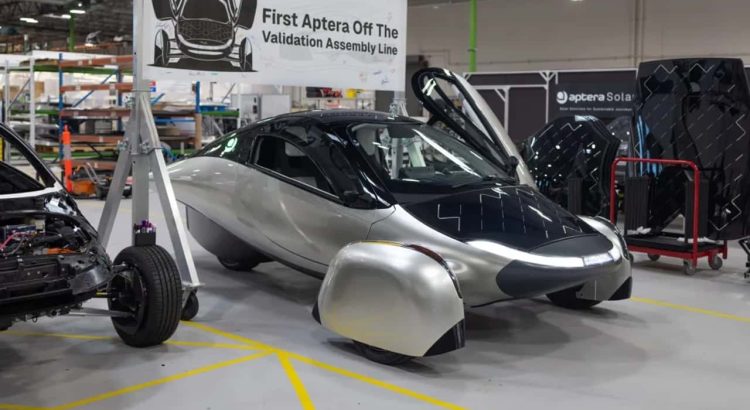
After years of development, Aptera Motors has launched production of its solar electric tricycle, a model that could redefine sustainable mobility. However, behind this promise lie significant strategic challenges for the brand’s future and the automotive industry.

The dream of many drivers may finally take shape with the Aptera, a solar electric tricycle rolling off the assembly lines of California-based Aptera Motors. After six years of hard work, prototypes are ready for testing, but this is just the beginning of an industrial adventure that could shake up the automotive landscape. The promise of a vehicle capable of running largely on solar energy is a bold bet in a rapidly changing sector. For more details on this topic, stay tuned for all the latest on Aptera.
Production Arrives Amid Energy Crisis
The timing of Aptera’s production couldn’t be better. As fuel prices soar and the need for sustainable solutions becomes urgent, Aptera Motors positions itself as a key player in the eco-friendly vehicle sector. CEO Steve Fambro mentions reservations nearing 50,000 units, representing a potential revenue of around $2 billion. This early success raises questions: Can the Aptera truly deliver on its promises amid increasing competition?
Solar Range That Inspires
With a daily range of 40 miles thanks to its solar panels, the Aptera offers an innovative solution for urban and suburban commutes. In comparison, most conventional electric vehicles require regular charging, which can be a hassle for users. The Aptera, with its ability to generate up to 16,000 miles of driving per year from sunlight, could attract those looking to reduce their dependence on charging stations. In short, this approach could transform how we think about our daily vehicle use.
Technology Raises Questions
The Aptera’s carbon fiber body reflects a commitment to innovation and lightness but also raises concerns. How does it compare in safety to traditional vehicles? The tricycle design, while economical and eco-friendly, might hinder its adoption among a broader audience accustomed to sedans and SUVs. These questions are crucial for understanding whether the Aptera can truly establish itself in the market.
High-Risk Economic Model
The announced price of $40,000 places the startup in a delicate position. This price is competitive compared to some electric vehicles, but it remains high for a tricycle. Additionally, the promise of fuel savings must be carefully analyzed. While savings may be real, they also depend on usage conditions and local sunlight. This strategy could prove risky if the market doesn’t respond as expected.
Uncertain Yet Promising Future
As Aptera begins production, the real test will be its ability to meet consumer expectations. Early user feedback will be crucial in determining whether this model can genuinely compete with automotive giants. Furthermore, the question of infrastructure to support this new form of mobility remains unresolved. If Aptera can create a favorable ecosystem around its product, it could become a significant player in the sector.
In Summary
- Aptera launches production of its solar electric tricycle.
- Reservations reach nearly 50,000 units, representing a potential $2 billion.
- Promising solar range of 40 miles per day.
- Price of $40,000 raises questions about model adoption.
- Success will depend on user feedback and infrastructure support.
In conclusion, the Aptera represents a strategic turning point for Aptera Motors and could influence the future direction of the automotive industry. If the model can attract a broader audience and demonstrate the viability of its concept, it could pave the way for a new era of eco-friendly vehicles. However, the road ahead is fraught with challenges, and only time will tell if this bold gamble will pay off.