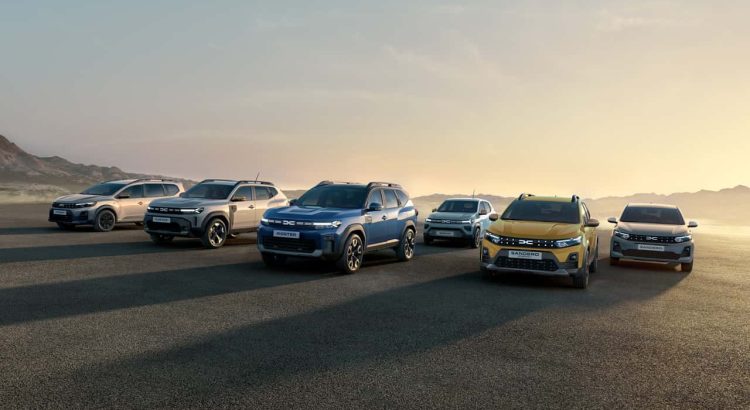
Dacia is embarking on a major transformation for its 2026 lineup, with technical updates that redefine its range. With the introduction of LPG and more powerful engines, the Romanian brand is clearly determined to meet the challenges of a rapidly changing market.
Ambitious Technical Update
Dacia is entering the 2026 era with a comprehensive update program that fundamentally alters the DNA of its models. The brand is not just undergoing a simple facelift; it is making a strategic pivot by introducing more powerful engines and diversified transmission options. This change aims to enhance its appeal against increasingly sharp competition, particularly in the budget vehicle segment.
Key models like the Sandero and Jogger are receiving a technical overhaul that should attract high-mileage drivers and families. The changes are not merely cosmetic; they reflect Dacia’s commitment to adapting to new consumer expectations regarding performance and energy efficiency.
Sandero and Jogger: LPG Gets a Modern Upgrade
Among the notable updates, the introduction of the Eco-G 120 engine on the Sandero, Sandero Stepway, and Jogger deserves special attention. By pairing LPG with an automatic transmission for the first time, Dacia is responding to a growing demand for more flexible and long-distance-friendly powertrains. This shift to a 6-speed dual-clutch EDC transmission marks a turning point in the brand’s approach to LPG, which was previously limited to a manual gearbox.
- With power boosted to 120 hp, the new engine offers increased responsiveness, making driving more enjoyable.
- The LPG tank volume has been increased, allowing for a 20% improved range, which is crucial for regular users.
- Total announced ranges reach 1,590 km for the Sandero, providing a genuine alternative to conventional powertrains.
These improvements translate into a richer user experience, where comfort and practicality are prioritized. In short, Dacia is targeting a market segment where economic efficiency is paramount.
Dacia Jogger: A Stronger Hybrid
The update for the Jogger doesn’t stop there. The Hybrid 155 replaces the Hybrid 140, offering a combined power output of 155 hp. This change is significant not only in terms of performance but also efficiency, with a reported 10% reduction in consumption compared to its predecessor.
This transition to a 1.8-liter four-cylinder engine, combined with two electric motors, demonstrates Dacia’s commitment to more effective hybrid solutions. This strategy positions the brand in a rapidly expanding market where hybrid vehicles are increasingly favored by environmentally conscious and budget-minded consumers.
Aesthetic and Technological Adjustments
Aesthetically, the changes to the Sandero and Jogger are subtle yet significant. A new lighting signature and “Pixel” LED taillights add a modern touch without altering the brand’s identity. Inside, the central touchscreen has been upgraded to 10.1 inches, while a digital instrument cluster replaces the old analog displays, bringing Dacia into the digital age.
On the safety front, updates include a vigilance assistant and improved emergency braking, essential elements to meet strict European Union standards. These adjustments show that Dacia takes safety seriously while aiming to make its vehicles more appealing to family-oriented customers.
Duster and Bigster: Innovative 4×4 Hybridization
For SUV enthusiasts, the Duster and the upcoming Bigster are not left behind. The introduction of the Hybrid-G 150 4×4 represents a significant advancement in Dacia’s 4×4 technology. This system combines 48V micro-hybridization, LPG power, and electric all-wheel drive, offering an innovative technical solution that could attract adventurers while reducing operating costs.
- With a combined power output of 154 hp, this powertrain offers unprecedented efficiency for the brand.
- The rear electric motor, equipped with a two-speed gearbox, provides better torque off-road.
- This hybrid system also allows for occasional electric mode in the city, a significant advantage for urban users.
This evolution could change the game for Dacia in the SUV segment, where competition is constantly growing. By integrating advanced technologies while maintaining an economical approach, Dacia positions itself as a key player in this market.
Dacia Spring: An Improved Electric City Car
Finally, the Spring, the emblematic model of accessible electric vehicles, receives a major technical update. With powertrains now offering 70 hp and 100 hp, Dacia addresses criticisms regarding the insufficient performance of previous versions. The promise of a 20% improvement in performance between 80 and 120 km/h should reassure those who were still hesitant.
Despite a reduced battery capacity of 24.3 kWh, the WLTP range remains at 225 km, thanks to better efficiency. Aerodynamic modifications and the addition of a stabilizer bar aim to enhance road behavior, a crucial point for attracting demanding urban customers.
An Expanded Range of Practical Accessories
Dacia is not stopping there and is expanding its accessory range with practical solutions like a 3 x 3 meter awning for models equipped with roof bars. The “YouClip” fastening system allows for various accessories to be adapted inside the cabin, further enhancing the vehicles’ functionality.
In conclusion, these updates position Dacia at a decisive strategic turning point. If the brand can maintain its attractive pricing while offering modern technologies, it could see its market share increase against more established competitors. The coming years will be crucial to observe how these changes influence consumer perception of the brand.
In Summary
- Significant technical update for the entire Dacia range.
- New LPG engine with automatic transmission for Sandero and Jogger.
- Launch of 4×4 hybrid on Duster and Bigster.
- Improved Dacia Spring to better meet user expectations.
- Expansion of practical accessory range.