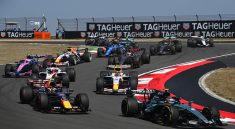
The 2026 Chinese Grand Prix marked a turning point in the history of Formula 1 with the dazzling performance of Kimi Antonelli, who became the youngest pole sitter in history at just 19 years old. This promising result raises questions about the future of the sport and the place of young drivers against established veterans like Lewis Hamilton and George Russell.
A resounding feat in the heart of Shanghai
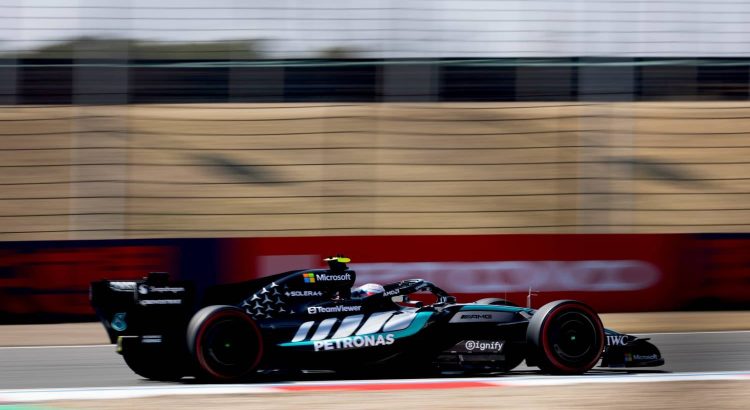
The qualifying session for the Chinese Grand Prix took place in an intense sprint format, where every second counts. After a stunning victory in the morning sprint, George Russell seemed well-positioned to shine again. However, it was ultimately Kimi Antonelli who capitalized on the power of the Mercedes W17, achieving a lap time of 1’32″064 that earned him pole position. At 19 years and 201 days, he enters history, leaving behind seasoned drivers like Hamilton and Leclerc.
This success is not just a mere number; it reflects a rising generation that challenges the status quo. Indeed, the young Italian driver has managed to exploit the technical advancements brought by Mercedes, particularly in terms of managing and deploying electric power, a crucial aspect under the new technical regulations of 2026.
A dominance of the Silver Arrows
The qualifying sessions once again revealed Mercedes’ superiority on the Shanghai circuit. With Antonelli and Russell on the front row, the German team seems to have found a perfect balance between performance and reliability. However, this dominance raises questions about the competition: where have the other teams gone? McLaren and Ferrari, who hoped to close the gap, struggled to match the times set by the Mercedes.
The real issue is that Mercedes’ performance does not rely solely on one driver. The synergy between the two drivers and the team seems to be at its peak, which could complicate matters for other teams in the coming months.
The French in the mix
On the French drivers’ side, Isack Hadjar and Pierre Gasly showed encouraging signs, trying to carve their way into the top 10. Hadjar, Verstappen’s teammate at Red Bull, finished his qualifying in a good position, while Gasly managed to elevate his Alpine to seventh place. Esteban Ocon, on the other hand, struggled to qualify beyond 13th place, highlighting the challenges faced by the Haas team.
In practice, this performance from the French drivers highlights intense internal competition. If Hadjar continues on this trajectory, he could become a serious contender for higher positions in the overall standings.
The implications for the current hierarchy
With Antonelli establishing himself as a new leader at Mercedes, the question arises: will this dynamic disrupt the established hierarchy? Former champions like Hamilton must now contend with a young talent who shows no signs of nervousness. This turnaround could also prompt other teams to rethink their strategies to attract similar talents.
However, even if Antonelli shines today, the pressure of a full season remains to be managed. Expectations are high, and the young driver will need to prove that he can maintain this level of excellence beyond a single race.
An uncertain future for veterans
The rise of Antonelli and other young drivers could well signify the end of an era for some F1 veterans. The behind-the-scenes of the competition are already buzzing with rumors of potential retirements of iconic drivers. If the young continue to perform at this level, teams may be forced to make tough choices regarding their line-up.
In short, this new wave of drivers could redefine not only team dynamics but also the strategies for engaging sponsors and partners, who are always looking to associate with promising names.
In summary
- Kimi Antonelli becomes the youngest pole sitter in F1 history.
- Mercedes confirms its dominance with an impressive performance.
- The French drivers are trying to stand out in a competitive field.
- The F1 hierarchy could be challenged by this new generation.
- Veterans face an uncertain future in a rapidly evolving sport.
In conclusion, Kimi Antonelli’s feat at the Chinese Grand Prix is not just a simple record; it represents a profound change in the dynamics of Formula 1. For the teams, it is crucial to monitor the evolution of this new generation while readjusting their strategies. The challenge is set, and the upcoming races promise to be thrilling.