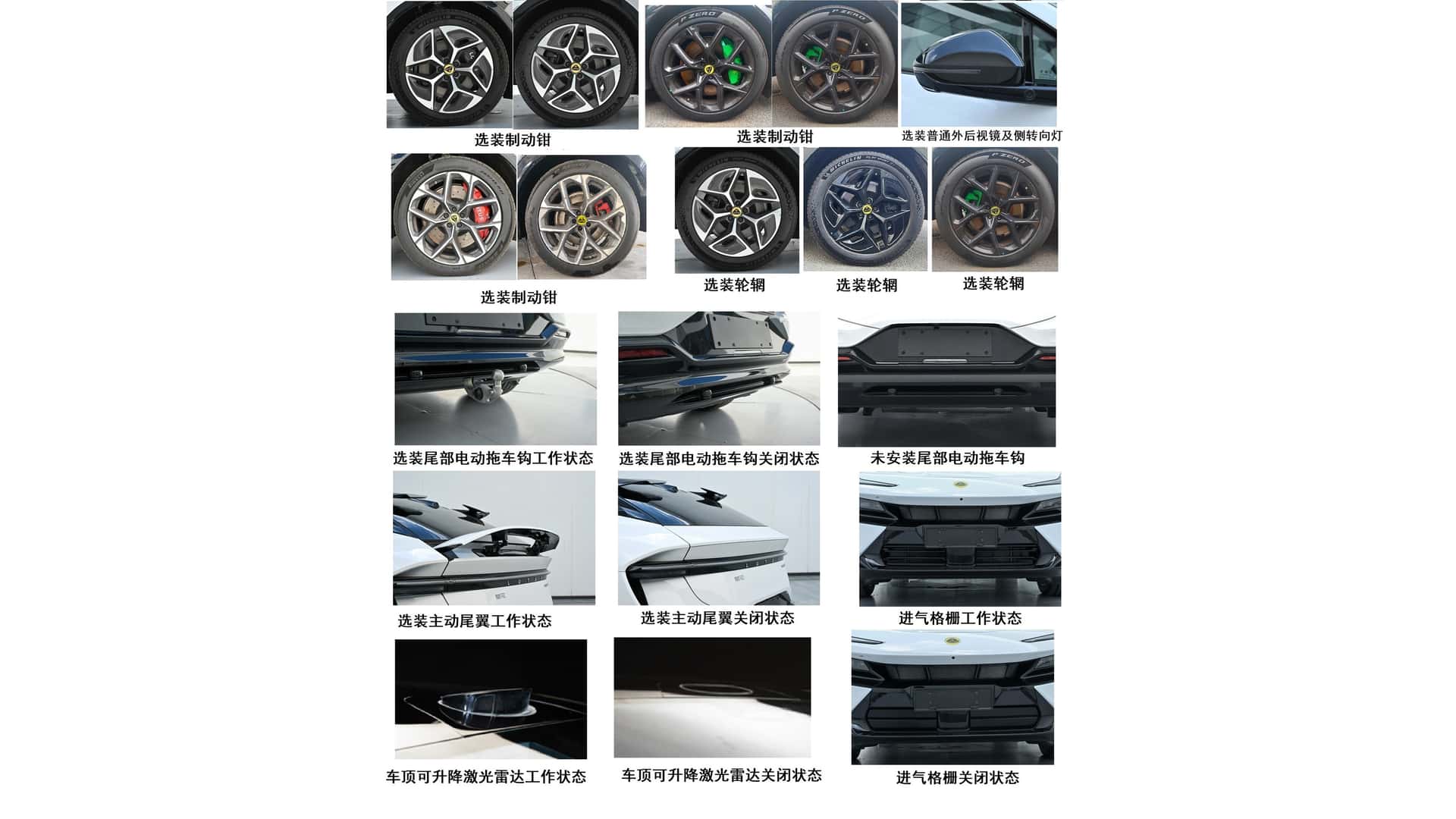
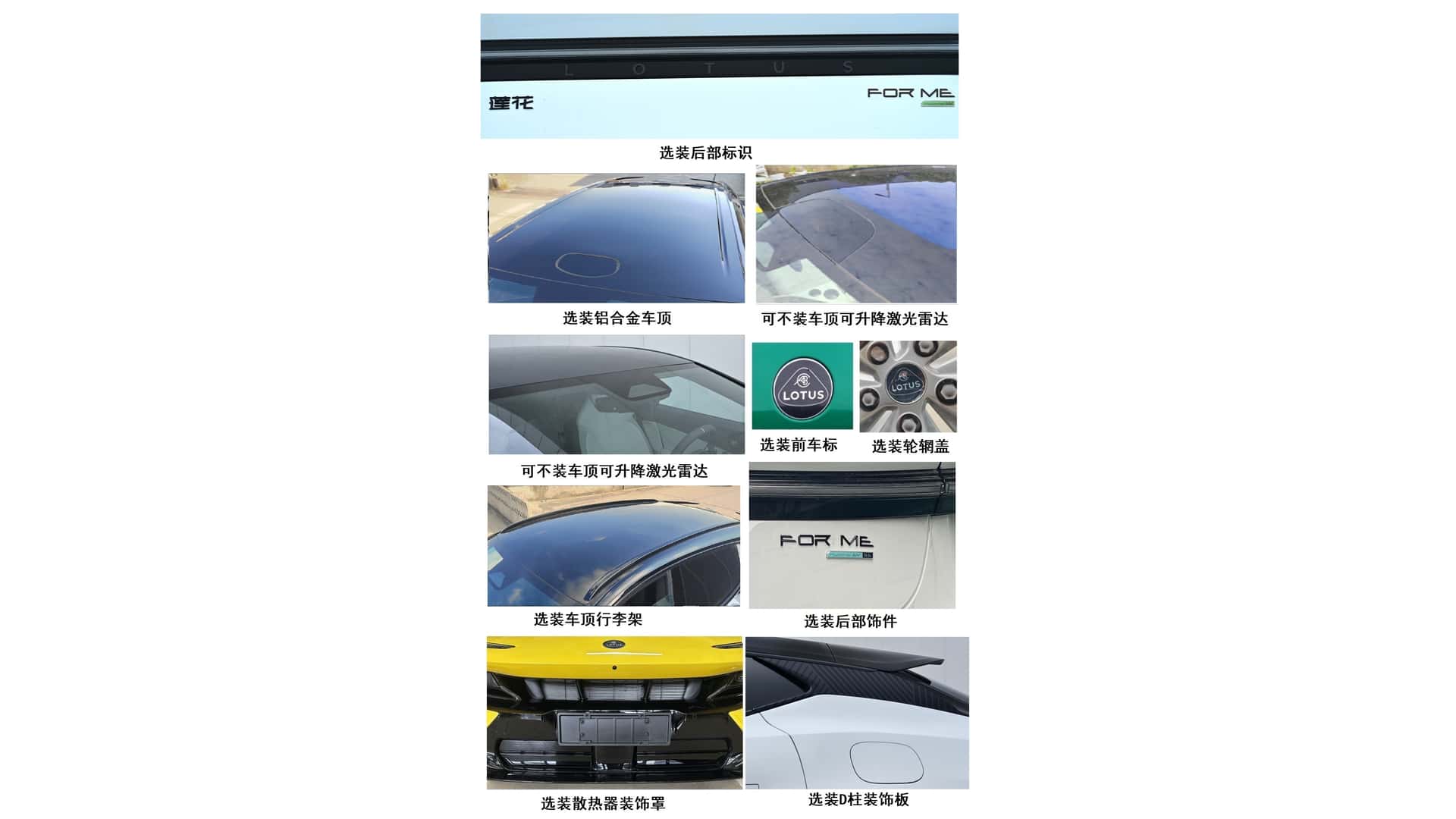
Lotus enters the arena of plug-in hybrids with its Eletre, an SUV that shakes up the codes of the British brand. While the name “For Me” may raise a smile, it hides a surprising technical innovation: a thermal engine combined with stunning electric power. But how does this unexpected union really hold up?
A name that provokes
When talking about Lotus, one often expects evocative names, rich in history and emotion. However, the Eletre, now presented under the name “For Me,” seems to have taken an unexpected turn. This nickname evokes more of a chic city car than a muscular SUV. One almost imagines a small car sold by Smart rather than a 2,625 kg behemoth! And while this choice of name may raise eyebrows, it deserves closer examination.
The For Me, Lotus’s first plug-in hybrid, makes its debut in the Chinese market thanks to the Ministry of Industry and Information Technology. This is where all new cars must pass to obtain their approval. Thus, this singular association between the brand’s tradition and a greener future becomes even more intriguing.
A surprising mechanics
At the heart of this Eletre lies a 2.0-liter turbo gasoline engine, which shakes up the classic electric combination. Indeed, this four-cylinder is not just a simple thermal engine: it also acts as a generator to recharge the battery. This is enough to bring a smile to purists while adding a modern touch. The original 107 kWh pack has been replaced by a 70 kWh battery, which may make lightweight enthusiasts shudder who have seen Colin Chapman preach the good word about weight reduction.
But where the issue lies is that this SUV weighing nearly 2.6 tons undermines the ethic of “Simplify, then add lightness.” The Eletre weighs between 2,523 kg for the entry-level version and 2,745 kg for the Eletre R. One wonders if this quest for performance is truly compatible with the founding values of Lotus.
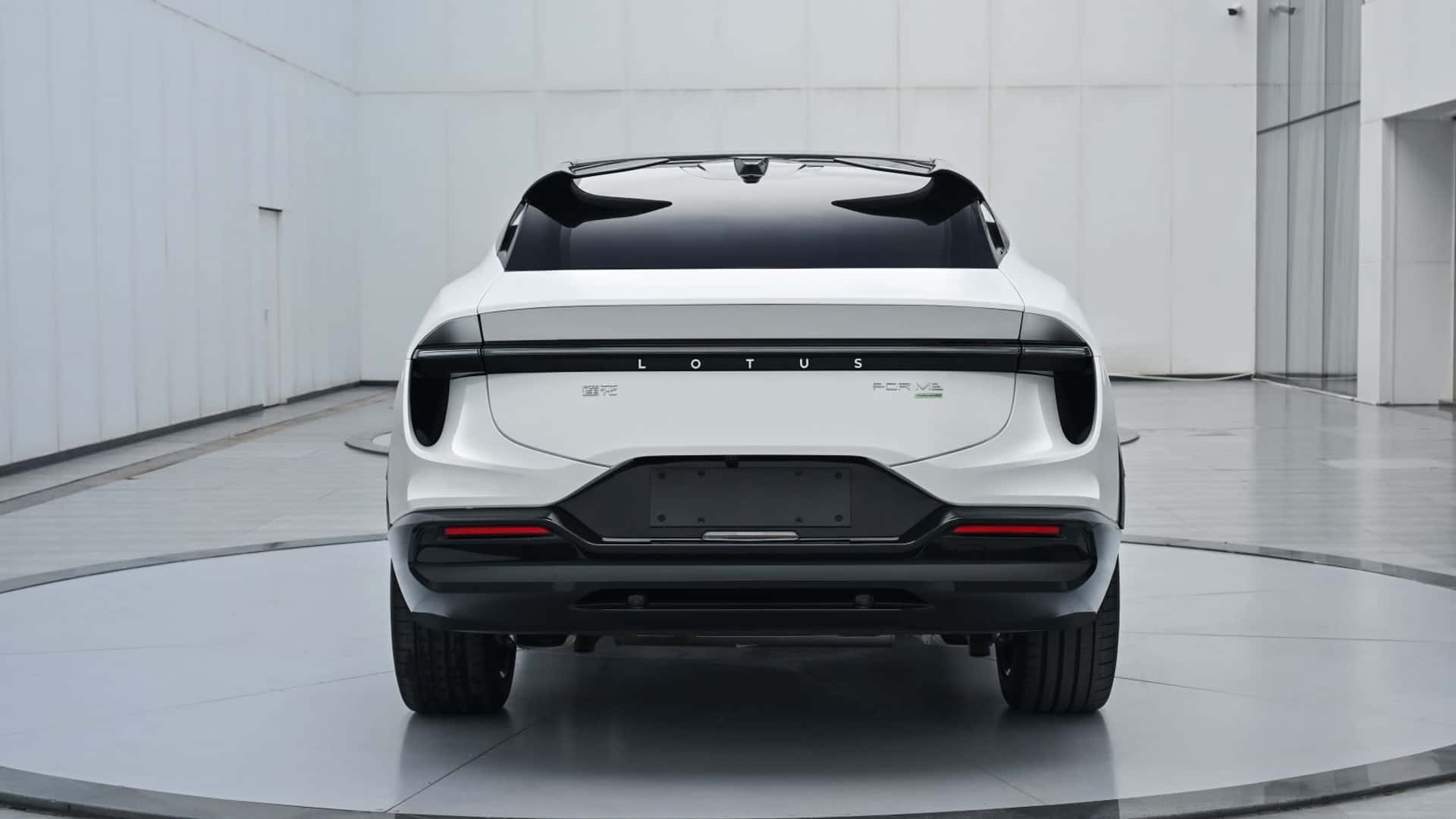
This gasoline engine delivers 275 horsepower, combined with a pair of electric motors to achieve a staggering total power of 952 hp. Accelerating from 0 to 100 km/h in just 3.3 seconds is impressive, even for a vehicle of this size. The battery range is announced at 420 kilometers according to the CLTC test cycle, much more optimistic than our usual European standards. Nevertheless, it must be acknowledged that the ability to charge the battery from 30% to 80% in just eight minutes is a promising sign of efficiency.
A strategic turning point for Lotus
The official launch of the For Me is scheduled for next month. Whether the European version retains the same name or adopts a more classic title like “Eletre Hybrid” remains a mystery to be solved. It is remembered that Lotus had promised to abandon thermal engines by 2028. However, the transition to electric takes time, and the manufacturer must deal with increasing commercial demands.
Moreover, it would not be surprising if the Emeya sedan also follows this hybrid path. The small sports car Emira has already been confirmed for a plug-in hybrid version planned for 2027. Indeed, Lotus cannot afford to rely solely on gasoline cars. A model like the Emira is too niche to ensure its sustainability in a constantly evolving market.
Between tradition and modernity
That said, why this fierce struggle to integrate hybrid and electric models? The answer is simple: survival. SUVs and sedans are essential to adapt to increasingly strict emission regulations. The temptation is great to remain faithful to Lotus’s sporting heritage, but that is no longer enough to sustain the business.
Lotus thus finds itself caught between a rock and a hard place. On one side, the reputation built on lightweight and high-performance cars; on the other, the necessity to evolve in a world where electrification is becoming a given. If the Emira could stand alone in the past, today it needs allies in the race for success.
Diversifying its range with hybrids and electric vehicles seems to be the key to keeping the lights on at Lotus. With the financial support of Geely and the development of the For Me and other models like the Emeya, the manufacturer may well find a balance between performance and compliance with ecological standards.
Conclusion: Towards an uncertain future
It is undeniable that the For Me represents a bold turn for Lotus. By blending tradition and innovation, the brand attempts to write a new chapter while respecting its heritage. But will this change be enough to attract enthusiasts while drawing in a new clientele? The answer likely lies in the manufacturer’s ability to balance sporting performance with ecological demands.
Stay tuned to discover how Lotus plans to tackle this monumental challenge in a rapidly transforming automotive world.