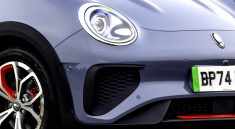
As the SUV kingdom has reached its peak, Peugeot’s boss, Alain Favey, is already looking to the future. With fierce competition from Renault, which continues to expand its offerings, Peugeot is questioning alternatives to current models. Between the extinction of traditional station wagons and the emergence of hybrid body styles, the lion brand seems to be searching for its electric path for tomorrow.
A still modest SUV range
We can’t really say that Peugeot is the king of SUVs. With only three models in its catalog, the manufacturer is rather cautious, especially compared to brands like Renault, which boasts no less than four thermal or hybrid models, not to mention the Alpine A390 if we want to be exhaustive. One could say there is a lot of work to be done.
However, since the return of Gilles Vidal and the arrival of Alain Favey at the beginning of the year, a fresh breeze could be blowing over the upcoming ranges. Vidal, although a homegrown product, returns from a stint with the competition, which could bring a new perspective. Favey stated to our colleagues at Autocar that he is seriously contemplating the post-SUV era: how to produce vehicles that meet customer expectations without falling into the ease of SUVs? A burning question in the current context.
A Peugeot station wagon? Not necessarily
The last station wagon that Peugeot marketed was none other than the 508, but its withdrawal – just like that of the sedan – was more than logical: demand has collapsed. Only the Skoda Octavia seems to be holding up well thanks to a brand image well established in the Northern and Eastern European markets. In contrast, other generalist sedans such as the Ford Mondeo, the Citroën C5, or the Renault Talisman have gradually disappeared. The Volkswagen Passat stands as an exception, being a cousin of the Octavia.
The rise of electric cars could, however, bring a revival in the body style sector. With the SUV now capping at just over 50% market share in Europe, can we envision it losing ground in the future? That is the question Alain Favey is asking. When questioned on the subject, he sidestepped the issue of station wagons, reminding that it is precisely the lack of market that led to the end of the 508 SW.
Does Peugeot already have the right model?
« The market for traditional station wagons is much more limited than at the time of the launch of the original Peugeot 508 – a direct consequence of the rise of SUVs – but newcomers to the segment like the BYD Seal 6 or the Toyota bZ4X Touring could represent serious competition for a potential successor to the 508 », declares Alain Favey. Do these models remind you of anything? These hybrid body styles between sedan, station wagon, and crossover are reminiscent of the 408 that Peugeot already possesses.

In the foreground, our illustration of the restyled Peugeot 408; in the background, the Peugeot 408 launched in 2022. © Didier RIC
However, the 408 remains quite niche in Europe and its electric version will soon undergo a facelift. If Peugeot truly wants to find a replacement for the 508 in electric form, it will need to adopt a more appealing recipe than that offered by the current 408. In short, it is high time for Peugeot to reinvent itself.
Towards a new automotive era
The search for alternatives to the SUV is not just about Peugeot. The entire automotive sector is in a phase of transition towards more sustainable models that meet the new expectations of consumers. The need to evolve is palpable, and the PSA group must adapt to avoid being left behind by competitors who are multiplying innovations.
It therefore seems urgent for Peugeot to define its long-term strategy while closely monitoring market developments. The necessity to offer attractive and practical models will be crucial to capture the attention of drivers seeking novelty without sacrificing their need for space and functionality.
Conclusion: the future at a turning point
At a time when the energy transition is reshaping the automotive landscape, the challenge for Peugeot is monumental. Successfully combining innovation and tradition will be essential to attract an increasingly demanding clientele. The road to electric is fraught with obstacles, but with leaders like Alain Favey at the helm, it is legitimate to hope for a promising future for the lion brand. If it manages to embrace this new trend while keeping its DNA intact, Peugeot could well become an essential player in the post-SUV era.