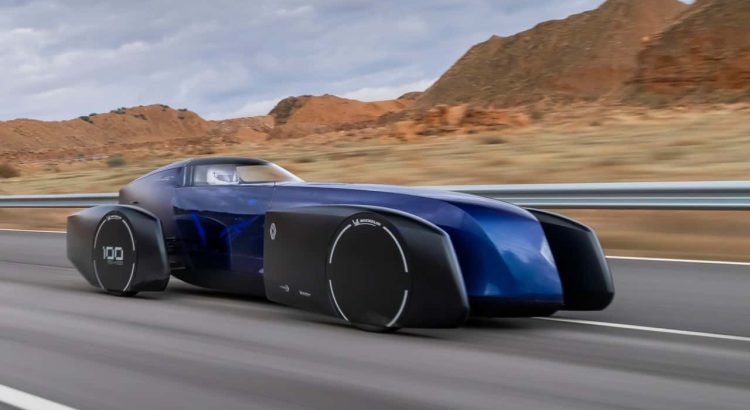
In a world where energy efficiency reigns, the Renault Filante Record stands out with a record consumption of only 7.8 kWh per 100 kilometers. This prototype, which has already traveled 1,008 km without recharging at an average speed of 102 km/h, is an exception on the asphalt. But behind this feat lies a set of bold technologies and a breathtaking aerodynamic design.
An achievement beyond numbers
The 2025 Filante Record electric demonstration vehicle recently made waves by achieving a consumption of 7.8 kWh per 100 kilometers during a memorable journey. Certainly, it was not driven at a turtle’s pace, as its average speed hovered around 100 km/h. This astonishing result is explained by careful aerodynamics and a propulsion system cleverly designed to save energy. A true achievement in the world of electric vehicles!
A design that combines elegance and performance
The Filante Record is not just about its energy performance; it is also a masterpiece in terms of design. Measuring 5.12 meters long and only 1.19 meters high, this prototype weighs just 1,000 kilograms. This feat is made possible by the integration of an 87 kWh battery weighing about 600 kilograms. The weight reduction is facilitated by a “Steer-by-Wire” steering system and “Brake-by-Wire” braking, which minimize the number of mechanical parts. Additionally, specially designed tires reduce rolling resistance, contributing to the low consumption of this model.
An extraordinary performance on the track
On December 18, the Filante demonstrated its capabilities on a test track in Morocco, where it covered 1,008 km in less than 10 hours. Stopping only seven minutes for a driver change, it showed that it could handle long journeys without needing a recharge. Upon arrival, the battery still displayed 11% capacity remaining, which would have allowed for an additional 120 km. Adding it all up, the total range would have reached 1,120 km. For comparison, the consumption of 7.8 kWh/100 km is almost on par with the 7.4 kWh/100 km of the Mercedes EQXX, which also achieved a record journey of 1,000 km.
Ideal conditions but caveats to consider
While these figures are impressive, it is important to note that the vehicle has not been tested in public traffic, let alone under challenging weather conditions. The experience was conducted on a test track, a setting conducive to performance. The average speed of 102 km/h is respectable, but it remains slightly below that of German highways, where speeds typically reach around 114 km/h according to the German Economic Institute.

Renault Filante Record 2025 during the record attempt

The first version of the Filante from January 2025
Images from: Renault
Technical evolution and innovation
The technical specifications of the battery have somewhat evolved since January 2025, when it was initially indicated that the model utilized the “Cell-to-Pack” principle. This would have allowed for weight savings by eliminating modules. Today, it seems that the prototype is equipped with a standard series battery with a capacity of 87 kWh. This change raises questions about the announced weight: the original 600 kilograms is not so impressive, especially considering that the 87 kWh battery of the electric Scénic weighs 511 kilograms according to its technical sheet.
Aerodynamics: the secret to performance
Aerodynamics is undoubtedly one of the strong points of the Filante Record. During wind tunnel tests, engineers identified significant improvement potential compared to the first version. Various fairings have been redesigned to optimize the drag coefficient, reducing it from 0.40 to about 0.30. This refinement is essential for enhancing the vehicle’s performance and energy efficiency. The results obtained during the record journey will be integrated into the development of future models intended for the road.
In summary, the Renault Filante Record perfectly illustrates the technological advancements in electromobility. With its refined aerodynamics and technical innovations, it offers a fascinating glimpse into the future of electric vehicles. It remains to be seen whether these feats can translate into production models and on our roads in the near future.