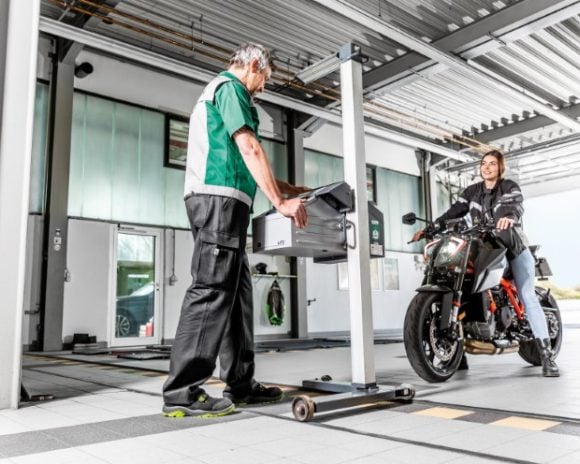
While waiting one minute after the technical inspection of your two-wheeler, you might be tempted to laugh. However, this measure, deemed absurd by some, signals a much more serious tightening of the inspection process. Behind this small detail lies a desire to enhance security and traceability, while preventing abuse.
A minute that is not arbitrary
Starting in 2026, a one-minute delay will be imposed between the validation of inspection operations and the return of the vehicle to the owner as part of the technical inspection of two-wheelers, three-wheelers, and quadricycles. This provision, added to the Order of October 23, 2023, has immediately sparked mockery and criticism. At first glance, this minute seems to be a bureaucratic whim, but its purpose is much more serious.
Indeed, this mandatory minute acts as a buffer, ensuring that the document handed to the client exactly matches the one recorded by the administration. Contrary to what its wording might suggest, this minute is not a simple pause for the inspector or the user. It marks a locking of the validation process, now strictly regulated from both an IT and legal standpoint. Once the inspection is validated, the data is transmitted, timestamped, and fixed in the national system. This means that it is no longer possible to modify the report, whether to correct a detail or adjust a mention. This minimal one-minute delay thus aims to secure the traceability of the inspection and prevent any post-facto modifications, whether intentional or not. For the user, the impact is virtually nil. However, for the centers, the responsibility becomes clearer and more engaging. This could help avoid certain abuses sometimes attributed to the profession.
Centers more exposed
This measure does not just add a minute of waiting; it fits into a broader framework of tightening regulations. Thus, the same order provides for a strengthening of sanctions aimed at centers and inspectors. Administrative fines of up to €1,500 will now be applied in case of non-compliance with regulations. These fines are in addition to existing sanctions, such as the suspension or withdrawal of accreditation. Traceability thus becomes a major issue for inspection centers, which will need to be more vigilant.
Moreover, the text mandates the collection of contact information from owners to facilitate the management of recall campaigns. This follows the Takata airbag affair, the consequences of which continue to influence automotive regulation. Starting January 1st, certain cars whose airbags have not yet been replaced may be immobilized almost immediately. Although owners of two-wheelers, three-wheelers, or quadricycles are generally spared from the presence of airbags, they cannot rest on their laurels. Other tightening measures for technical inspections are expected by the end of the decade.
An uncertain future for technical inspections
This tightening goes far beyond a simple minute of waiting. It is a reform aimed at enhancing road safety and improving the quality of technical inspections. With harsher penalties and more rigorous processes, the goal is to ensure that vehicles on the road are compliant and safe.
The technical inspection of motorcycles and scooters has long been considered a mere formality, but this paradigm shift could redefine our approach. Road safety is a crucial issue, and these new measures aim to prevent non-compliant vehicles from circulating on our roads.
A mixed reaction
As often with new regulations, reactions are mixed. Some see this minute of waiting as an example of unnecessary bureaucracy, while others welcome a measure that could help improve road safety. The mayor of Cannes, David Lisnard, criticized this decision, calling it regulatory excess. But perhaps it is time to set aside the laughter and consider the more serious implications of this evolution.
Users of two-wheelers must prepare for these changes, as they will have a direct impact on their experience. Although the minute of waiting may seem trivial, it represents a part of a larger system that seeks to hold technical inspection centers accountable and ensure the safety of everyone on the road.
It is therefore essential to closely monitor these developments. As we move towards stricter regulations, it will be interesting to see how these measures are implemented and what their impact will be on road safety in France.