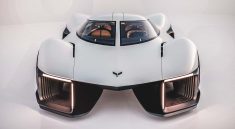
Electric cars continue to turn heads, and 2026 is shaping up to be a pivotal year. Manufacturers are not slowing down and are preparing models that could overshadow futuristic prototypes. From affordable vehicles to high-performance machines, the electric sector is diversifying at breakneck speed.
An Imminent Electrification
Although enthusiasm for electric cars sometimes seems to waver, car manufacturers are not letting off the accelerator. Indeed, 2026 could very well be the year when electric vehicles are no longer just fantastical prototypes, but normal cars that the general public might seriously consider buying. We’re talking about returns of accessible models, new interpretations of classics, and even a few high-performance experiences, the fruits of engineers’ overflowing imagination.
Crossovers remain popular, but the year 2026 also promises an array of interesting sedans, true performance machines, and even the first fully electric Ferrari. All the models presented here are confirmed or expected for next year. Here’s a glimpse of the electric cars that genuinely excite us.
Chevrolet Bolt — The Return of Affordable Electric

” alt=”Chevrolet Bolt 2027″ />
Price: $29,990
The Chevrolet Bolt makes its grand return and remains the electric car for the people. Set to debut next year, this small city car will be offered for under $30,000 in its Launch Edition, with an even cheaper LT version following closely behind. This will make it the cheapest electric car in America.
The numbers may not be dazzling, but they are convincing: 410 km of range, 210 horsepower, fast charging at 150 kW, and NACS port. Super Cruise is optional, and while Apple CarPlay and Android Auto have disappeared, GM’s software strategy is progressing. For under thirty thousand dollars, the return of the Bolt represents a significant victory for buyers seeking a simple and usable electric car.
Rivian R2 — A More Accessible Adventure SUV
” alt=”Rivian R2″ />
Price: $45,000
The Rivian R2 targets a niche that the R1S has never been able to reach: a more compact size, a lower price, and performance that continues to attract attention. The base single-motor model will start around $45,000, while higher versions are expected to hit 0 to 60 mph in about three seconds.
With an expected range of over 480 km, a rear hatch that drops like a Toyota 4Runner, and NACS charging for optimal simplicity, the R2 could very well be the most appealing electric SUV of 2026 for camping enthusiasts.
BMW iX3 — The Breakthrough of the New Class
Price: $60,000 (estimated)
The new era of BMW begins with the iX3, the first electric model produced on the Neue Klasse platform. Expect a range of up to 640 km, 800-volt charging capable of supporting speeds of 400 kW, and a modern interior enhanced by a panoramic screen placed at the base of the windshield.
This model arrives as an electric version of BMW’s best-selling crossover — likely the most important launch for the brand in decades.
Porsche Cayenne Electric — A 1,000-Horsepower Beast
” alt=”Porsche Cayenne Electric 2026″ />
Price: $120,000 (estimated)
Porsche has not said its last word in electric. The 2026 Cayenne Electric promises over 1,000 horsepower in its Turbo version, making it the most powerful production model ever designed by Porsche. The 0 to 60 mph is achieved in three seconds, while the 200 km/h mark is crossed in under eight seconds.
The range is around 600 km according to the WLTP cycle, and Porsche claims that its 800-volt system will reach charging speeds of 400 kW. Even the rear motor is mounted backward to improve weight distribution. This will not just be a fast electric vehicle, but also a showcase of Porsche engineering.
Lexus ES 350e/500e — The Electric Luxury Sedan
” alt=”Lexus ES 500e 2026″ />
Price: $50,000 (estimated)
Lexus is reinventing its famous ES for 2026 with hybrid and fully electric versions. The single-motor 350e delivers 220 horsepower, while the dual-motor 500e rises to 338 horsepower. The range will reach 480 km and 400 km, respectively.
With a charge from 10 to 80% in about 30 minutes, the new ES remains calm, quiet, and efficient. Inside, a minimalist cabin centered around screens, unprecedented for the Lexus ES.
Mercedes-Benz GLC Electric — A Fresh Start for Mercedes
” alt=”Mercedes-Benz GLC Electric” />
Price: $60,000 (estimated)
Mercedes is also entering 2026 with a brand new electric GLC — moving away from the EQ design language that never really captivated. The new GLC EV adopts the brand’s new face, a rear light bar inspired by the classic C111, and (finally) brings back more physical controls.
Its 800-volt architecture promises charging at 330 kW and a range of 710 km according to WLTP. A massive 39-inch Hyperscreen is optional, but the interior finally manages to balance touch screens with tactile buttons.
Hyundai Ioniq 6 N — The Sporty Electric Sedan with Character
” alt=”Hyundai Ioniq 6 N” />
Price: $60,000 (estimated)
The second fully electric N model from Hyundai takes everything fun about the Ioniq 5 N and compresses it into a sleeker sedan. The two motors produce up to 601 horsepower — or 641 when the “N Grin Boost” activates for ten seconds.
With improved suspension, “suspension travel-sensitive” adaptive dampers, a reworked chassis, and “fake” gears, the Ioniq 6 N aims to be the performance EV for drivers seeking both spectacle and speed.
Genesis GV60 Magma — Genesis Goes All Out
” alt=”Genesis GV80 Magma Concept” />
Price: $80,000 (estimated)
The first production car from Genesis’s new high-performance sub-brand Magma is the GV60 Magma, a very orange and very serious electric crossover. Expect significantly more power than the 429 horsepower of the GV60 Performance — possibly rivaling the Ioniq 5 N and the Kia EV6 GT.
This marks Genesis’s first real step into performance territory, and if it resembles its platform mates, it could be the surprise success of the year.
Toyota C-HR Electric — A Funky and Fast Electric Compact
” alt=”Toyota C-HR Electric” />
Price: $40,000 (estimated)
Toyota may have taken its time with electric cars, but the next generation of the C-HR will be fully electric. With its 338 horsepower and dual motor all-wheel drive, it accelerates to 60 mph in five seconds — which is pretty wild for a compact crossover.
The estimated range is around 466 km thanks to a 72.7 kWh battery. Inside, Toyota heavily draws inspiration from Lexus, giving the C-HR a 14-inch touchscreen and a premium look. Prices are expected to range between the high $30K and low $40K.
Acura RSX — A Beloved Name Returns in Electric
” alt=”Acura RSX” />
Price: $60,000 (estimated)
Yes, the RSX is back — but now as a compact electric crossover based on Honda’s new in-house O Series platform. It will be assembled in Ohio and will operate with Honda’s new Asimo operating system.
Details regarding power and range are not yet public, but a dual motor all-wheel drive, double wishbone suspension, Brembo brakes, and a sporty setup are expected. The name may spark debates, but the material seems promising.
Ferrari Elettrica — Maranello Makes the Electric Leap
” alt=”Ferrari Elettrica” />
Price: $600,000 (estimated)
The first fully electric model from Ferrari is not a supercar — it’s a grand tourer offering over 986 horsepower thanks to four electric motors. Consider it an EV successor to the 612 or GTC4Lusso, capable of reaching 0 to 60 mph in just 2.5 seconds with a top speed of 310 km/h.
It uses a primarily aluminum chassis, features rear steering, a 48-volt active suspension, and a unique “gear-shifting” system. The range is around 529 km according to WLTP, but let’s be honest: that’s not what matters. It’s the dawn of an electric Ferrari.
Final Thoughts
From affordable cars to six-figure performance monsters, the year 2026 marks a rare moment where the electric vehicle market expands in all directions simultaneously. Buyers frustrated by today’s high prices and limited variety may finally find the options they’ve been waiting for — and competition could be exactly what this segment needs.