


By 2027, Hyundai is set to unveil the new generation of its Bayon, a model that is sure to attract the interest of compact SUV enthusiasts. With a revamped design and a more advanced hybrid powertrain offering, this future version could redefine the standards of the B segment.
A Compact SUV with a Renewed Look
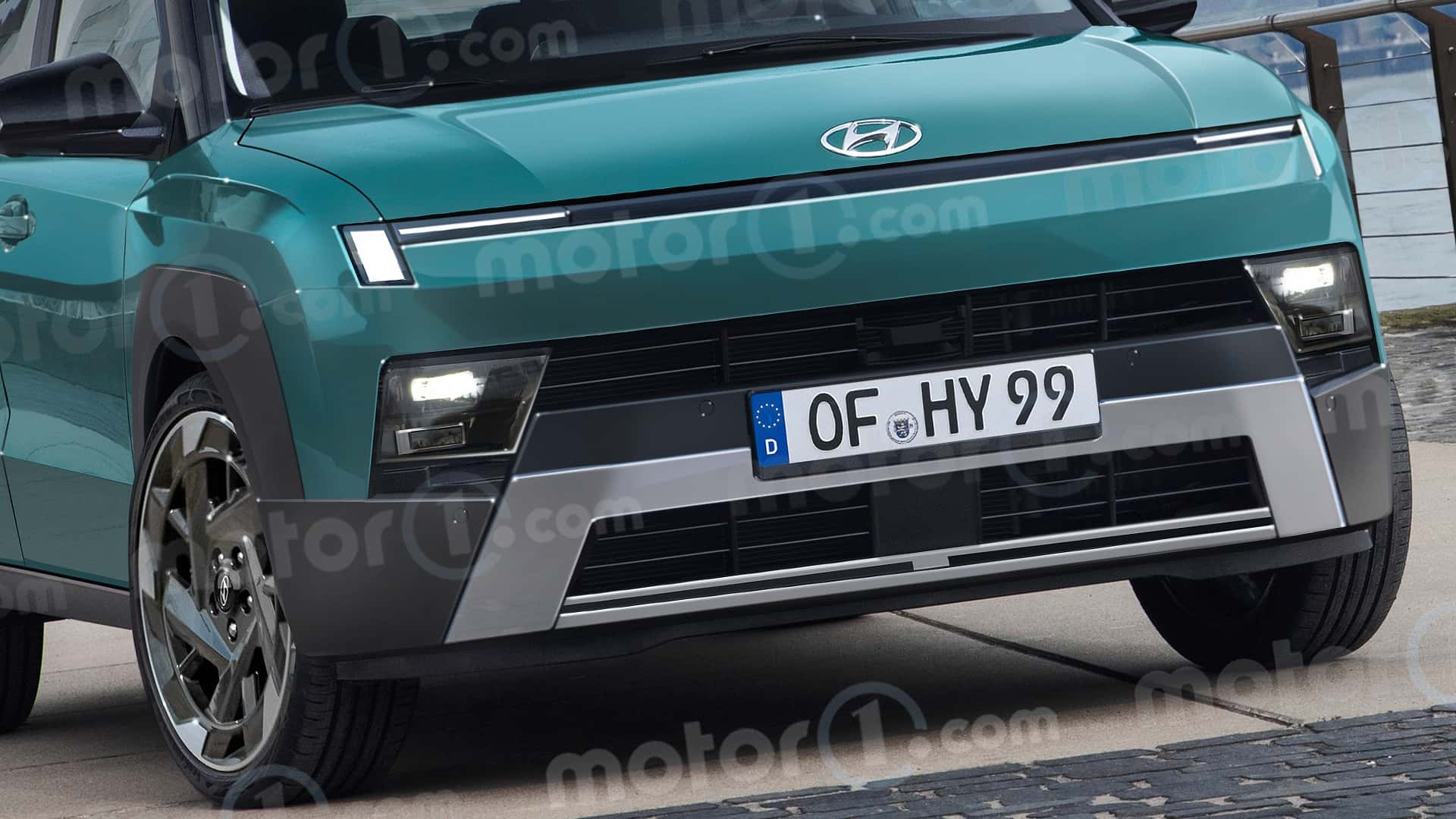
The first images of the camouflaged prototypes of the future Bayon reveal more robust lines and a silhouette less focused on urban crossover, moving towards a true compact SUV design. Indeed, these design changes promise a significant evolution compared to its predecessor.

Hyundai Bayon (2027), the rendering from Motor1.com
The roof appears more horizontal, while the wheelbase is extended, thus offering improved interior space and a more generous trunk volume. As for the dimensions, they are expected to remain close to those of the current model, with a length ranging between 4.10 and 4.20 m, a width of 1.80 m, and a height between 1.55 and 1.60 m.
The front end is distinguished by a light signature that spans the entire width, integrating slim headlights. A style that fits into Hyundai’s new aesthetic language already seen on higher-end models, like the latest Kona.
In summary, the new Bayon is approaching its big brother the Kona, thus bridging the stylistic gap between the two models.
Inside: Modernity and Comfort
As for the interior, spy shots have not yet revealed precise details, but a major update is expected. Look forward to a brand new digital instrument cluster, a larger and more modern infotainment screen, as well as significantly enhanced material quality. Additionally, an N Line variant is being considered, bringing sportier style elements for those who desire a more dynamic presentation without compromising the model’s family-oriented nature.
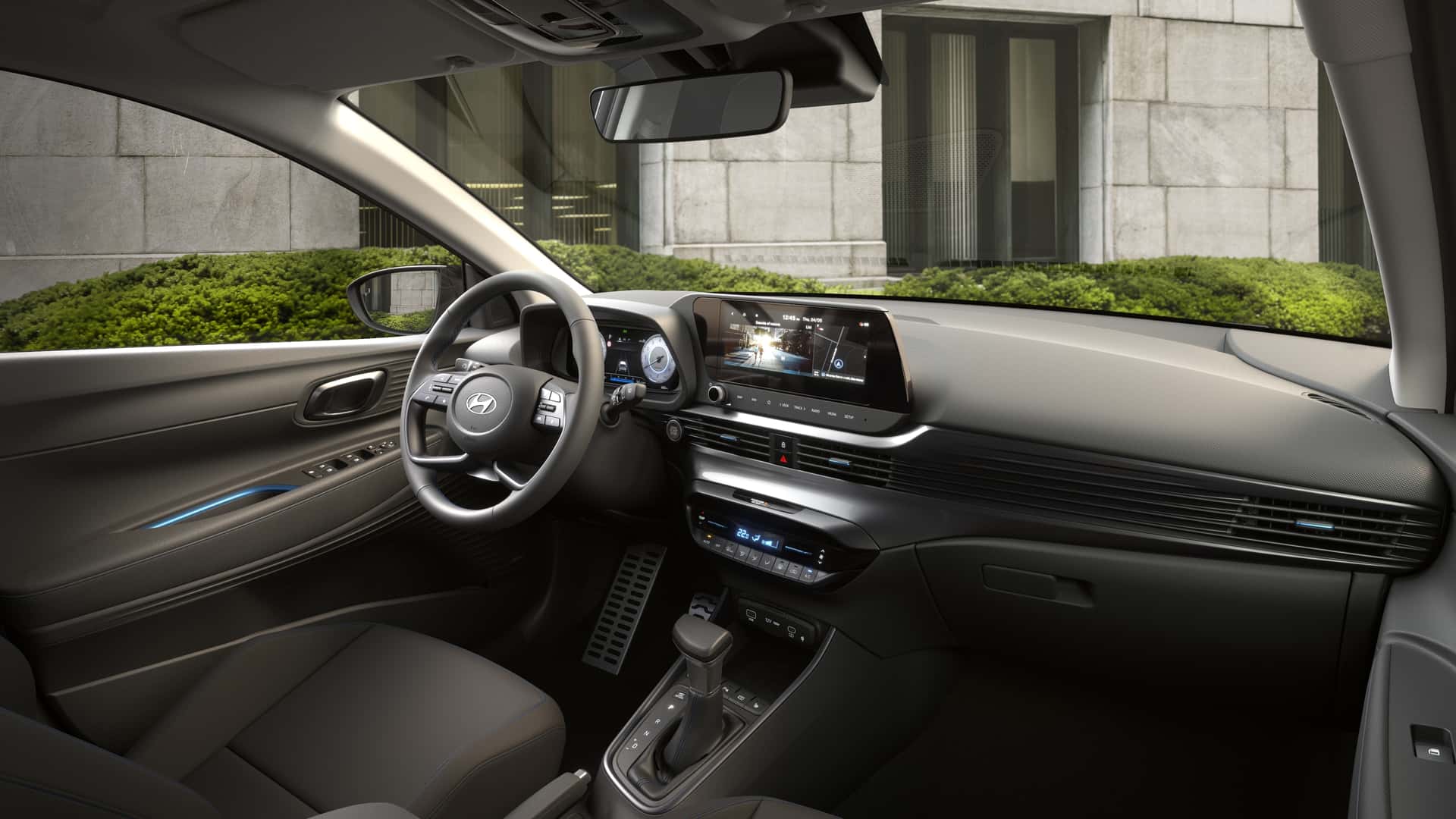
Hyundai Bayon, the interior of the current model
Powertrains: A Shift Towards Hybrid
On the powertrain side, the new Bayon is expected to emphasize its hybrid strategy. Information circulating suggests a full hybrid system, marking a clear evolution from the previous mild-hybrid solutions. However, nothing has been officially confirmed on this subject. It remains to be seen whether the 1.2 LPG version will be carried over or if other surprises await us.


Competitive Pricing
As for pricing, it is expected to remain within the current range, between 21,000 and 22,000 euros for the gasoline and LPG versions. A pricing strategy that would allow the Bayon to maintain its competitiveness in the compact SUV market.
Conclusion: The Bayon Ready to Take on the Challenge
In summary, the future Hyundai Bayon positions itself as a serious player in the compact SUV segment. With its new lines, hybrid powertrains, and modernized interior, it promises to attract a wide audience. It remains to be seen how this model will evolve by its expected release in 2027. To follow Hyundai’s evolution and its news, feel free to check our Automotive News section.


