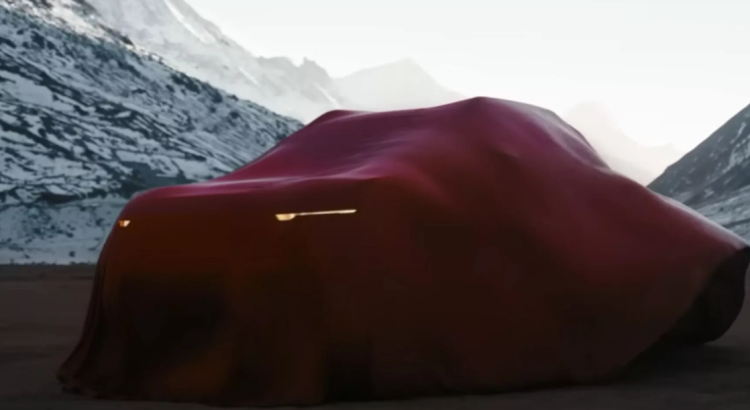
Absent from the Indian market since 2022, Renault’s famous SUV is set to make its strategic return on January 26, 2026. But don’t be fooled: this third-generation Duster is not just a simple copy of the European Dacia model. With a design specifically adapted to India, a unique lighting signature, and a confirmed hybrid engine, this Duster will have plenty to entice. Locally manufactured in Chennai, it aims to help the diamond brand gain market share, particularly against Suzuki.
A much-anticipated return to the Indian market
Long awaited by local distributors, the star SUV of the Renault group is preparing for its grand return to the Indian market after three years of absence. Be careful, this “Duster 3” will not be a mere copy of the Dacia model we know in Europe. Designed specifically for the Indian market, it features a distinctive design and a diamond badge at the end of the grille. This Duster could still inherit the hybrid engine available in Europe, as well as a useful 4×4 variant in a country where Suzuki-Maruti overwhelmingly dominates.
While Europe is already experiencing the third generation under the Dacia badge, the French group is preparing its offensive in one of the most competitive and promising markets in the world. After a notable absence following the withdrawal of the first generation in 2022, the Duster is set to be reborn on January 26, 2026, a symbolic date for Republic Day, with sharpened arguments to appeal to the local audience. And a look that seems quite far removed from our Duster.
An “Indian-Spec” design for this Duster
To appeal to an increasingly demanding Indian clientele, Renault has not only replaced the Dacia logo with the diamond. Recent official teasers reveal rather massive aesthetic modifications. At the front, the Duster abandons the characteristic Dacia “Y” lighting signature for sleeker LED daytime running lights, evoking the style of the recent Renault Boreal, the larger seven-seater sibling.
At the rear, the change is even more radical: an LED light bar now spans the entire width of the tailgate, connecting to the Renault logo in the center. A stylistic choice that responds to the current trend of “connected lights,” highly sought after in the Indian market. This detail could almost make the Dacia Duster appear outdated, as it tends to be more understated at the back.
One platform, two destinies
Under this specific exterior lies the CMF-B platform, already well-utilized within the Renault group. While the initial launch will be with a turbo petrol engine (the 1.3 TCe is a potential candidate), a Full Hybrid version is already confirmed for the following year. Gone are the days when European cars adapted for India only had access to old engines!
The Duster will not travel alone. It will be produced locally at the Chennai plant alongside its “German cousin,” the Nissan Tekton. Although sharing the same technical base, the Nissan model will feature a design inspired by the large Patrol, adding a touch of diversity to this local offering.
The price, estimated at around €15,000, places the Duster at the heart of the market. For Renault, the stakes are high: the manufacturer aims to make India a major export hub. This new Duster is the first piece of the “International Game Plan 2027,” in which Renault plans to launch eight new models internationally, aiming to adapt global models to local specifics without sacrificing profitability.
It will be interesting to follow the evolution of this model in a market where competition is fierce and every detail counts. Renault’s efforts to appeal to Indian consumers could well give a new boost to their brand image in this region of the world.
For more news on automotive updates, feel free to check our Auto News section.