Max Verstappen doesn’t hold back when discussing the technical regulations for the 2026 Formula 1 season. The four-time world champion openly criticizes the upcoming changes, labeling them as “Formula E on steroids.” In this tense context, his remarks serve as a warning for the future of the sport.

Hot Context at the 2023 Austrian GP

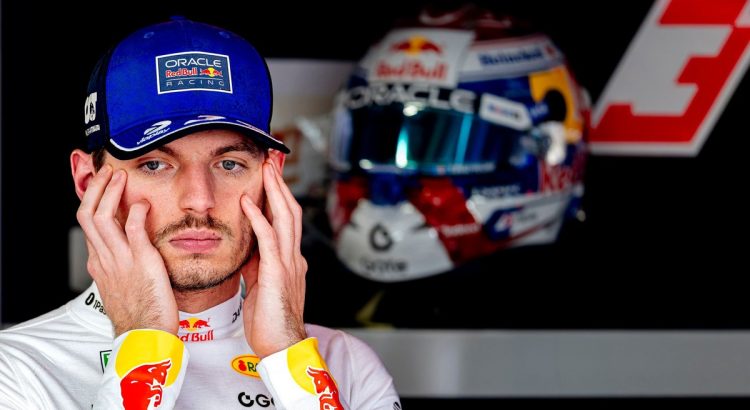
Max Verstappen during the press conference at the 2023 Austrian Grand Prix.
To grasp the depth of Verstappen’s concerns, we must revisit the 2023 Austrian Grand Prix. Dominating the season, the Dutch driver was asked about future regulations by Motorsport.com right after his victory with Red Bull Racing. This question didn’t come out of nowhere. Just days before the race, worries had emerged regarding various aspects of the technical regulations, particularly resonating within the Red Bull camp.
Christian Horner, then team principal, expressed fears about a potential power balance skewed too evenly between the internal combustion engine and the electric motor, calling for reflection on the ambitious goal of a 50/50 split. It was in this context that our reporter Ronald Vording questioned Verstappen the following Sunday: “Christian Horner has talked a lot this weekend about the 2026 regulations and fears that if the engine regulations remain as they are, many changes will be needed at the chassis level. What do you think?”
Verstappen Faces Technical Challenges
Verstappen’s response reveals his concerns. “I’ve talked about it with the team and I’ve already seen data on the simulator. To me, it’s pretty horrible.” This initial statement sets the tone: there is a growing unease surrounding the new standards.
The Downshifting Dilemma
“If you go flat out on the straight at Monza… you need to downshift about 400 or 500 meters before the end of the straight because it’s faster,” he says. This observation highlights a reality that could become problematic for drivers. The F1 cars of 2026 seem to require downshifting in sections where it wasn’t necessary before, particularly for energy recovery reasons.
This was particularly evident during qualifying, where drivers had to adapt their driving to a new dynamic that disrupted their traditional references.
A Competition Among Internal Combustion Engines?
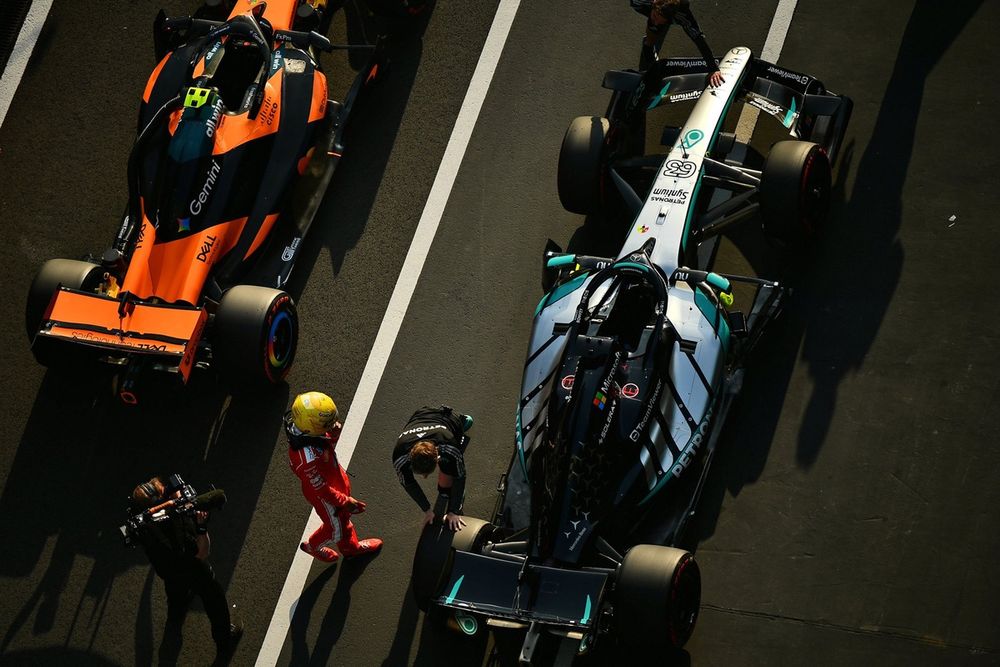
Lewis Hamilton and Ferrari in the paddock.
Verstappen continues: “But the problem for me is that it seems like it will be a competition among internal combustion engines. Whoever has the most powerful engine will have a big advantage.” For him, this goes against the very spirit of Formula 1. The idea that performance would be dictated by engines rather than the skill of drivers and engineers would be detrimental.
However, with a chassis evolving in parallel, the stakes aren’t solely about the engine. The convergence of performance through mechanisms like the ADUO could mitigate these disparities.
In the context of his era, where Red Bull dominated thanks to a superior chassis and a proven engine, it’s hard not to see a political dimension in his comments. Such criticism could aim to influence the debates surrounding the new rules.
Challenges of Overtaking on the Straight?
Verstappen adds: “Moreover, the cars will probably have much less drag, making it even harder to overtake on the straight.” At this point, his vision seems disconnected from future realities since discussions about the regulations were still ongoing.
Paradoxically, in 2026, Verstappen may be less concerned about the difficulty of overtaking and more about its artificiality related to energy management. This reflects an evolution in his perception of the challenges drivers will face.
Active Aerodynamics: Limited Control?
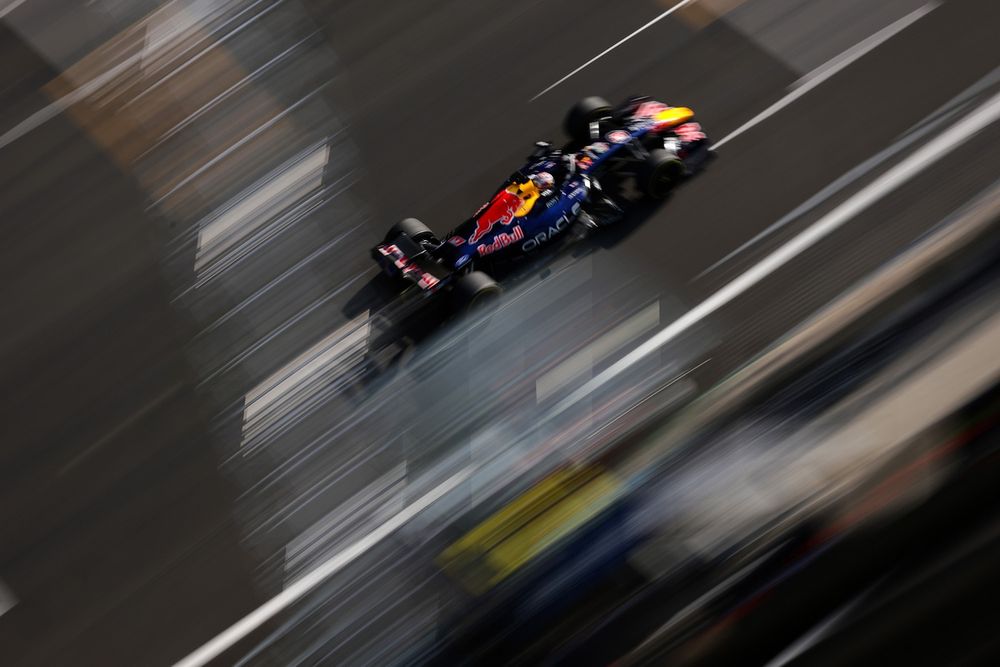
Max Verstappen with Red Bull Racing.
He also mentions active aerodynamics that the driver cannot control: “That would make the car very strange to drive.” In reality, this technology will be entirely under the driver’s control in 2026, allowing for aerodynamic adjustments based on the strategic needs of each race.
While he raises a valid question about the increasing automation in driving, the reality will be that this innovation primarily aims to reduce drag to enhance overall performance. This begs the question of whether this technology can truly make a difference on the track.
Weight Increase?
Verstappen concludes with another observation: “And then the weight will increase again.” Contrary to his predictions, the F1 cars of 2026 are set to see a significant weight reduction with a regulatory minimum around 768 kg.
In Summary
- Verstappen strongly criticizes the new F1 2026 regulations.
- He highlights the dangers of a competition focused on thermal power.
- Active aerodynamics: a complex topic evolving rapidly.
- Concerns about weight prove unfounded.
- His statements may reflect a desire to influence technical discussions.