
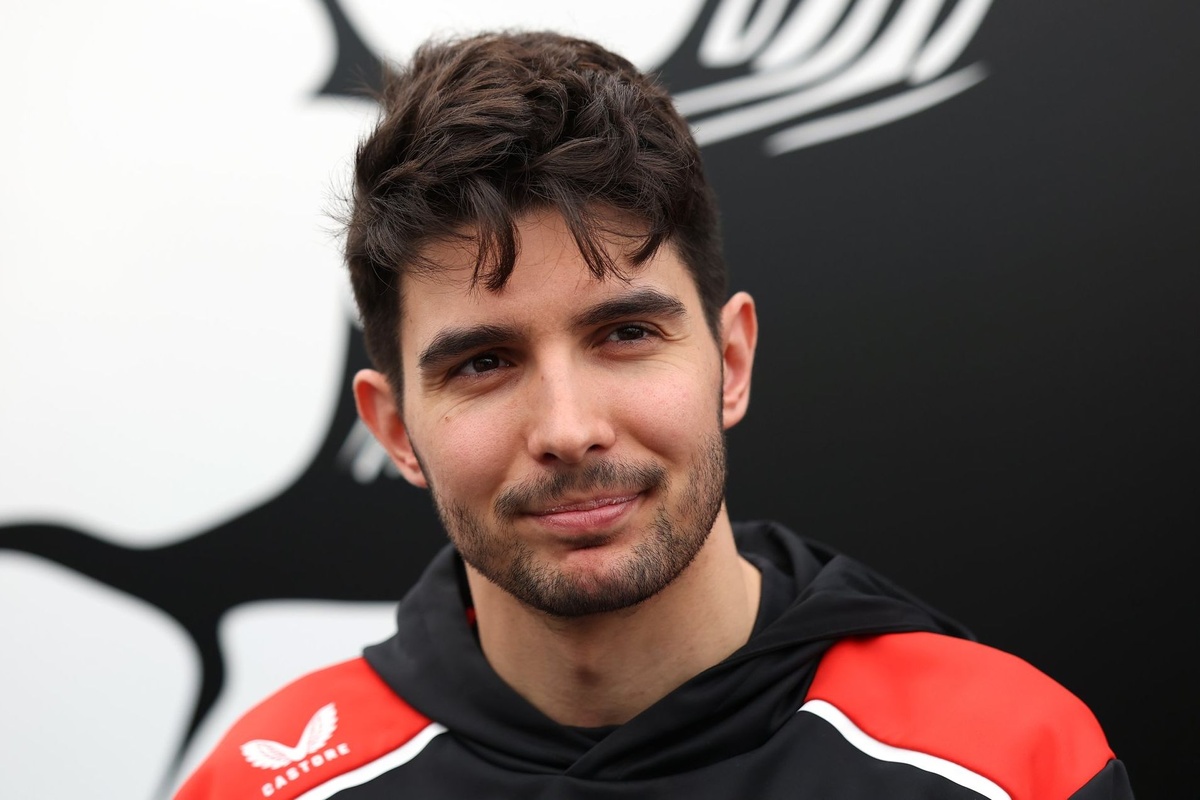
In a world where social media often dictates mood, Esteban Ocon finds himself at the center of a digital storm after a controversial clash in Formula 1. The verbal violence he has faced raises crucial questions about respect and anonymity on the Internet, at a time when every word can have consequences. As the FIA tackles this scourge, the French driver calls for accountability.
An unfortunate clash in Shanghai
“You better turn off your private messages now,” a journalist advised Esteban Ocon in the mixed zone after his collision with Franco Colapinto during the Chinese Grand Prix. The latter, a Haas driver, was inundated with insults and threats online following the incident. This situation demonstrates how unbearable the pressure can become for drivers, especially in a media-saturated context like Formula 1.
For Ocon, harassment is not just a mere nuisance. Receiving death threats is never trivial. This episode fits into a worrying trend, where athletes, such as Kimi Antonelli last year after the Qatar Grand Prix, shut down their social media accounts to escape this verbal violence.
A necessary dialogue
In the Suzuka paddock, before the Japanese Grand Prix, Ocon confides: “Obviously, a lot has happened.” Yet, he chooses not to be downcast. “Honestly, I didn’t pay too much attention to it, but I saw what was happening online.” Indeed, rather than focusing on anonymous insults, he prefers to engage directly with Colapinto, stating: “The most important thing for me was really to talk directly with Franco.” He emphasizes his regret regarding the accident, assuring that their discussion was constructive.
Penalties and support
The clash occurred as Colapinto was exiting the pits and Ocon was attempting an overly optimistic maneuver on the inside of the first corner. The stewards quickly penalized the French driver with a 10-second penalty. Despite this, Colapinto managed to secure a point thanks to his tenth place finish. However, this performance does not suffice to ease tensions, as some fans fail to understand that respect should take precedence over sporting rivalries.
An unexpected letter of support
In Suzuka, Ocon receives unexpected support in the form of a letter from Mohammed Ben Sulayem, president of the FIA. He has made the fight against online harassment one of his priorities and launched the United Against Online Abuse campaign in 2023. For Ocon, this support is invaluable: “The FIA president sent me a letter, so it has become a topic of discussion.”
He adds: “Of course, any type of online abuse should not be tolerated and should lead to severe consequences.” In short, he calls for a collective awareness to put an end to such behavior.
The reality of “keyboard warriors”
Ocon does not hide his skepticism towards the behavior of internet users: “They are keyboard warriors.” These individuals hide behind their screens to unleash their hatred without taking responsibility for their words. He even fears that this violence may become more frequent in the future. “There will probably be more consequences for these people.” This observation resonates as a call for individual accountability in a world where words can hurt deeply.
Towards a more respectful F1?
The initiatives launched by the FIA offer hope for change. But for Ocon and his fellow drivers, this requires a collective effort: teams, sponsors, and media must also participate in this fight. Formula 1 must evolve beyond the spectacle of sport to become a model of integrity and mutual respect.
In summary
- Esteban Ocon faced online threats after a clash in China.
- Direct discussion with Franco Colapinto helped ease tensions.
- Mohammed Ben Sulayem supports Ocon in the fight against online harassment.
- Ocon calls for individual accountability on the Internet.
- The FIA launches initiatives to combat this scourge in sports.


