
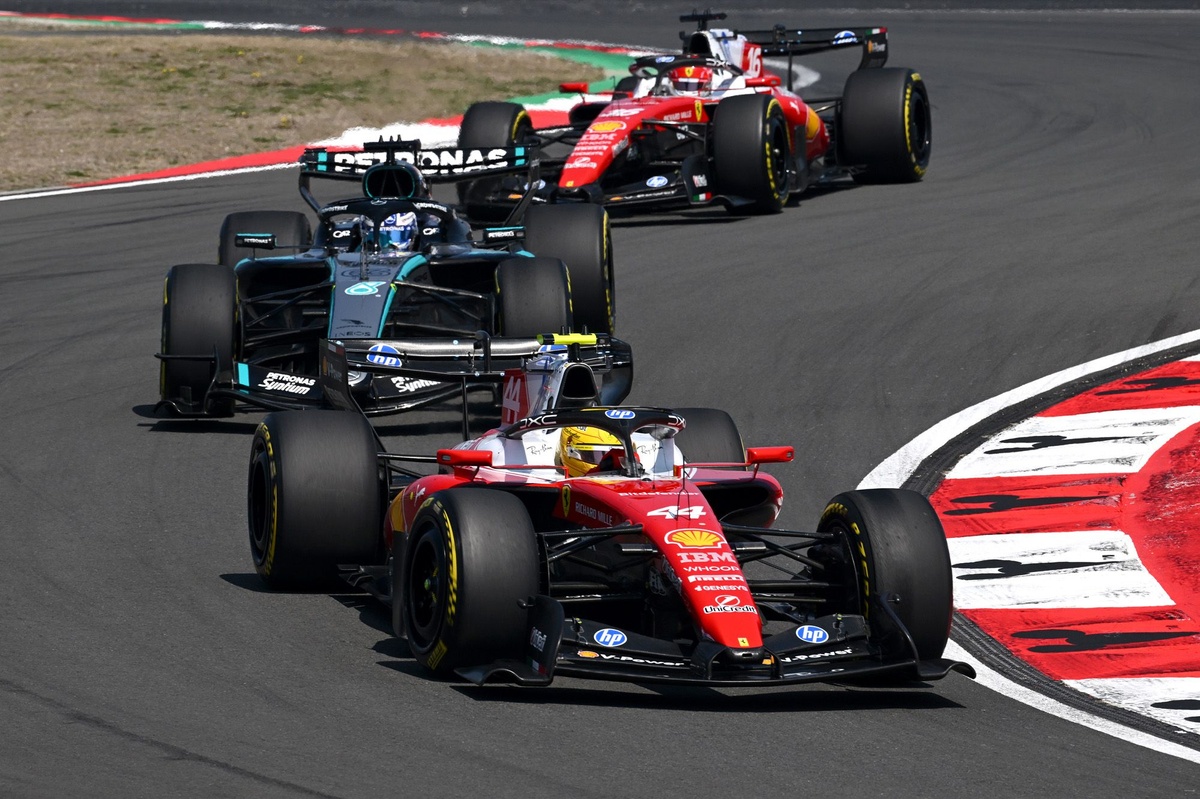
George Russell defends the new Formula 1 regulations, asserting that even purists are beginning to appreciate this evolution. With significant changes to chassis and engines, competition is set to become more intense, yet also more complex to manage on the track. This new regulation, which introduces increased electric energy management, redefines race strategies and questions the future of the sport.

A Bold Regulation: Towards a More Electric F1
The 2026 season of Formula 1 marks a decisive turning point in the sport’s history, with regulatory changes aimed at integrating more electric energy into engines. This evolution, pushing teams to adapt their racing strategies, is seen by some as an industrial stroke of genius. George Russell, a driver for Mercedes, serves as a voice of optimism, claiming that “purists” are starting to appreciate these transformations.
But what does this concretely mean for drivers and teams? The new rules impose strict battery management, making racing more strategic. Maneuvers like super clipping and lift and coast become essential, creating a “yo-yo” effect where drivers must juggle speed and energy management. This radical shift challenges the old certainties of drivers, who must now rethink their approach on the track.
A Renewed Racing Dynamic
The first races of the 2026 season have already provided a glimpse of this new dynamic. In Melbourne, an intense duel between Charles Leclerc and George Russell captivated spectators, illustrating how these new rules can create tight battles. Russell himself noted that these races remind him of karting competitions, where multiple drivers fight for the same position. This closeness between cars could bring excitement back to racing, a facet often criticized in the past.
However, not all drivers share this enthusiasm. Figures like Max Verstappen and Lando Norris express reservations about the new rules, considering that the balance between performance and strategy might be too difficult to manage. In short, while the promise of tighter competition is appealing, it also raises questions about the clarity of races for the audience.
The Challenge of Adaptation: Balancing Strategy and Performance
Energy management becomes a central issue in this new era of F1. Drivers must now anticipate their maneuvers with surgical precision. Russell mentions the overtaking mode, where the driver behind can use a power boost at speeds higher than their competitor. This asymmetry could lead to races where strategy takes precedence over sheer speed.
In practice, this approach could enhance rivalry among teams and drivers, but it could also complicate engineers’ work. Teams will need to invest in developing technologies for better battery management, which could lead to additional costs. In essence, this new regulation could reshape the economic landscape, making the championship more accessible to less wealthy teams.
A Long-Term Vision: Towards a Sustainable F1?
Beyond technical and strategic challenges, this regulatory change aligns with a broader trend towards a more sustainable Formula 1. The integration of electric energy addresses growing environmental concerns and could attract a younger audience eager for a motorsport that aligns with ecological values. New generations of fans might thus gravitate towards a championship that emphasizes not only speed but also technological innovation.
However, this transition to a greener F1 is not without risks. Purists of the sport may view this evolution unfavorably, fearing a dilution of the very essence of competition. Russell himself admits there is still much to learn to maximize performance under this new regulation. The future will tell if this bold strategy can win over all stakeholders in the field.
In Summary
- The 2026 F1 season introduces major changes to engines and chassis.
- The new rules favor increased electric energy management, altering race strategies.
- The first races show a renewed dynamic, with tighter duels.
- Opinions are divided among drivers regarding the impact of these changes on race clarity.
- This evolution is part of a move towards a more sustainable and environmentally friendly F1.
Conclusion: The 2026 season could mark a decisive turning point for Formula 1. For teams and drivers, it will be a period of adaptation to these new rules that could redefine competition. This change is particularly relevant for brands like Mercedes, which must navigate between performance and innovation. In the medium term, these developments could influence the sponsor market and attract a broader audience, but they also carry risks of alienation for purists. The future of motorsport thus looms on the horizon, oscillating between tradition and modernity.


