
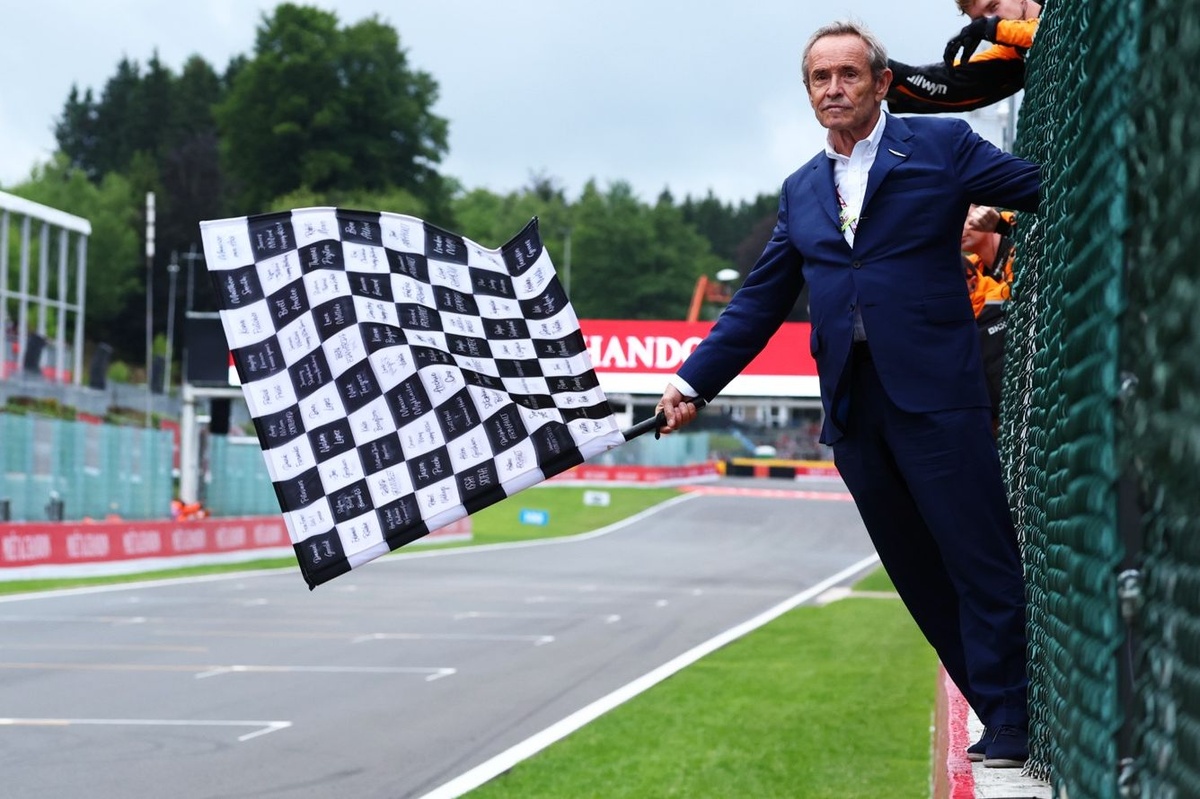
F1 2026 is already creating tension across part of the paddock and the fan base, caught between a disputed technical rule set and races seen as too dependent on energy management. Jacky Ickx, however, brushes aside any nostalgia-driven case against it: for the former Belgian driver, only one verdict really matters—the audience’s. It’s a blunt way to frame the issue, but an unmistakably modern one.
This debate about Formula 1 is not just about technology. It raises a broader, almost uncomfortable question: can a criticized F1 still be good F1 if huge numbers of people keep watching it? In short, Ickx moves the center of the conversation from the cockpit to the grandstands.
F1 2026 is divisive because it changes the nature of performance
Since the start of the 2026 season, the new technical regulations have left no one indifferent. The principle is well known: hybridization now plays an even bigger role, with power output split almost evenly between internal combustion and electric power. In other words, performance no longer depends only on the engine itself, but also on how energy is stored, deployed, and conserved.
In practice, that changes both driving and the way an entire Grand Prix weekend is understood. Qualifying, in particular, is moving away from familiar reference points, while in races some overtaking phases rely more on battery state of charge and electric deployment than on a “classic” attack. That is where the problem lies: part of the audience feels it is watching an F1 that is more calculated and less instinctive.
The break is significant enough that officials have already planned a first wave of adjustments, announced for the fourth round in Miami. That point is far from trivial: when a regulation package is modified this early, it shows the discomfort goes well beyond the usual background noise of social media.
Drivers’ criticism shows the issue is not just aesthetic
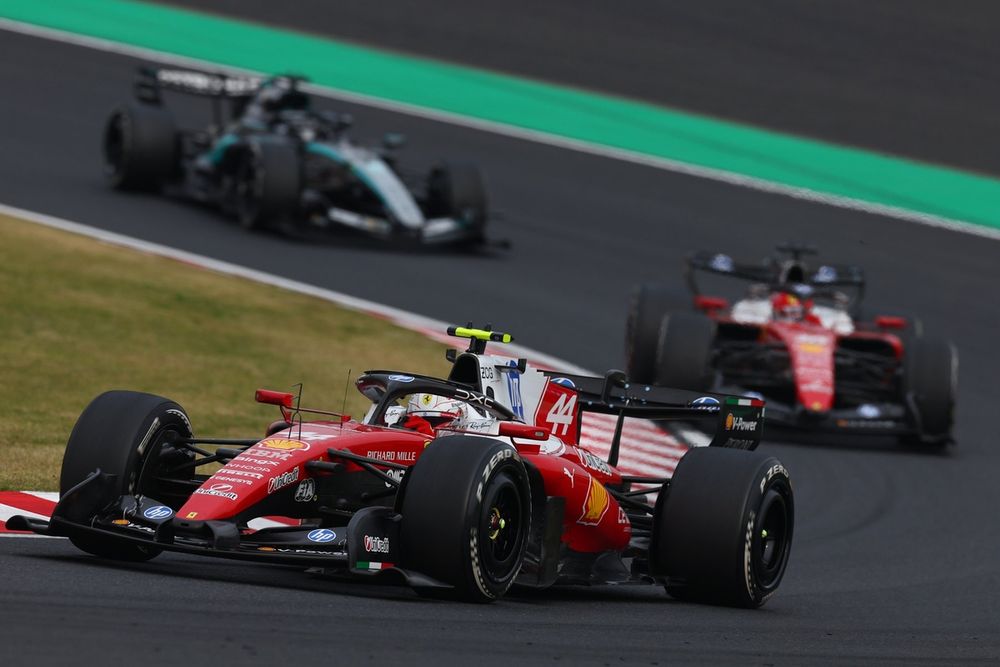
The debate is not coming only from the stands. Among current drivers, the overall tone has been rather negative, even if the paddock is not united. Max Verstappen, Lando Norris, and Carlos Sainz have clearly voiced their dissatisfaction. George Russell and Lewis Hamilton have been more open-minded, though without giving the current formula a blank check.
This divide is interesting because it says something simple: the problem is not just an old-versus-new argument. It touches the very feel of the job itself. When energy management becomes central, the driver does not disappear, obviously, but the way that talent is expressed changes. The steering wheel is still in the driver’s hands, except that part of the performance now plays out in a tighter framework, more dictated by parameters than by raw instinct.
Still, F1 has always been a sport built on compromises between spectacle, innovation, and complexity. The screaming V10s were not inherently more “pure”; they belonged to a different era. So the real question is not whether 2026 looks like 2006 or 1976. The real question is whether this new complexity still produces clarity and desire.
Jacky Ickx rejects nostalgia and judges F1 by the public’s verdict
That is exactly where Jacky Ickx brings a contrarian reading. The former Belgian driver, winner of eight Formula 1 Grands Prix in 114 starts and a six-time winner of the 24 Hours of Le Mans, does not deny the break between eras. He simply believes that a direct comparison does not make much sense.
Speaking to Motorsport.com, Ickx summed up his position bluntly: his personal opinion matters little compared with audience trends. For him, the true judge is neither technical purity nor faithfulness to some imagined golden age, but the discipline’s ability to keep the public interested. Purists may find that line irritating. Even so, it has the merit of framing the debate clearly, almost surgically.
His logic is consistent. Motorsport, especially at the highest level, lives through exposure, broadcasters, promoters, partners, and above all through the attention the public gives it. If people keep following, commenting, and coming back, the machine keeps running. If they do not, even the most beautiful rule book in the world does not count for much. It is a cold view, but it is reality.
Is spectacle enough when overtakes seem “artificial”?
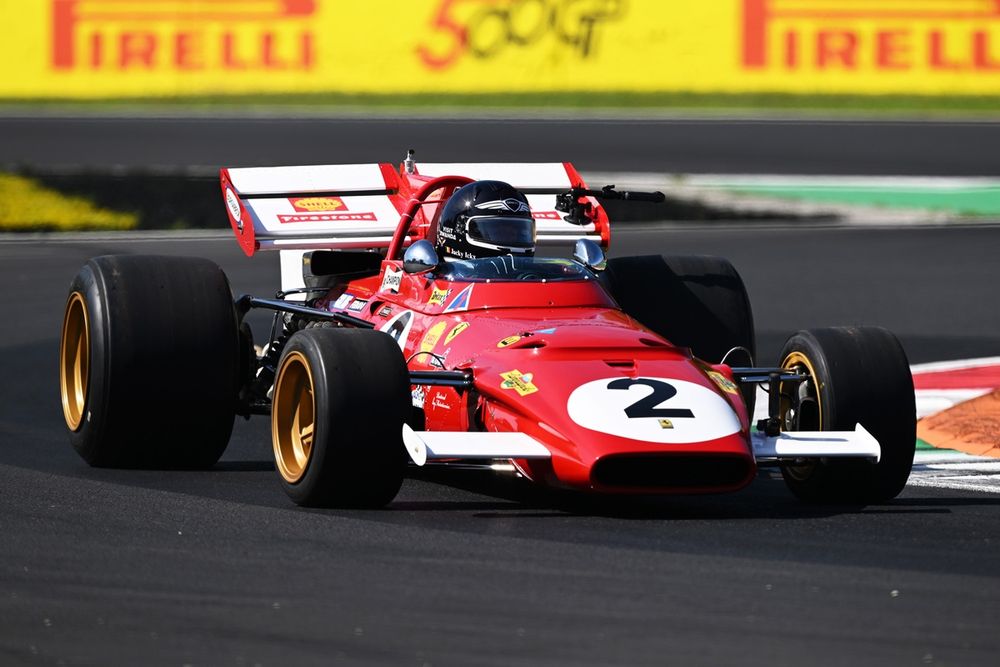
The main source of tension is well known: many followers feel that some 2026-style overtakes are less the product of pure talent than of a battery charge difference or a deployment strategy advantage. Put differently, the battle can sometimes look like an equation solved in advance. And in motorsport, nothing undermines emotion faster than a duel that feels procedural.
Ickx, for his part, sticks to his line. In his day, he points out, drivers had far fewer parameters to monitor on the dashboard. Today, they have to operate in an infinitely more complex environment. But in his eyes, that does not change the essential point: the public does not first connect with what is hidden under the bodywork—it wants to see battles, tension, and challenge.
His reasoning has strength, but also a limit. Yes, the broader audience does not dissect every engine architecture. Yes, an intense fight can make many technical subtleties disappear into the background. But if the mechanisms of performance become too visible, too mechanical, then the spectacle itself can lose credibility. An effective overtake is not always a memorable overtake. And that makes all the difference.
The real test of the announced adjustments will be on-track clarity
The changes expected from the Miami Grand Prix onward will therefore be watched very closely. Not just to see whether the cars get faster or the gaps become smaller, but to determine whether F1 2026 regains a more natural grammar. In practice, the real issue is clarity: a fan needs to be able to understand why an attack is building, why it fails, and why one driver makes the difference.
If the discipline can correct some of its excesses without abandoning its new technical direction, it can still stabilize the narrative. That is the whole challenge. A regulation set does not need unanimous approval to work, but it must avoid creating the impression that the driver is now little more than the operator of energy to be managed. An F1 that becomes too opaque is like artificial rain: spectacular for five minutes, frustrating after that.
The outlook is therefore fairly simple. Either the adjustments restore sporting texture and the debate gradually settles down, or the sense of artificiality remains—and Ickx’s argument, audience first, becomes more fragile itself. Because audiences do not always punish immediately, but they often end up sending the bill.
In summary
- The 2026 F1 regulations are being challenged because they place energy management at the center of performance.
- Several drivers have expressed dissatisfaction, even if the paddock remains divided on the final outcome.
- Jacky Ickx refuses to judge F1 through the lens of nostalgia and gives priority to audience response.
- His argument is clear: if the public still follows the sport in large numbers, the discipline remains on the right track.
- The main limitation concerns the perception that some overtakes feel too artificial for part of the fan base.
- The adjustments expected as early as Miami will be decisive in restoring clarity and credibility to the spectacle.
At its core, Jacky Ickx’s intervention matters less as an endorsement of the 2026 regulations than as a reminder of the economic and popular logic behind modern F1. For fans most attached to pure driving, that reading will seem harsh. For the governing bodies, it sounds more like a useful warning: technical innovation has value only if it remains understandable, desirable, and watchable. Otherwise, the alternative is familiar—a discipline that is fascinating on paper, but increasingly difficult to love on screen.


