Formula 1 has reversed its stance on a controversial rule, abandoning the requirement for two mandatory tire changes during the Monaco Grand Prix following an unsuccessful trial in 2025. This decision raises questions about strategy and innovation in a sport where spectacle often trumps tactical maneuvers.

A Failed Experiment Raises Doubts
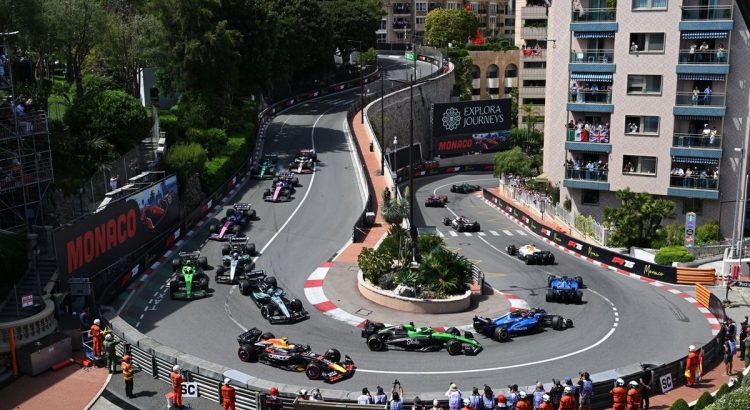
In 2025, Formula 1 attempted to inject some excitement into the Monaco Grand Prix by mandating two tire changes. The goal was to break the monotony of a race often characterized by conservative strategies. However, the experiment backfired, exposing flaws in a system designed to energize the races. The 2024 race, already criticized for its lack of action following an early red flag, hinted that this new rule could lead to deliberate slow-down strategies, which indeed occurred.
Slow-Down Strategies: A Problem to Address
Teams, notably Racing Bulls and Williams, exploited the situation to adopt voluntary slow-down tactics, creating artificial gaps between their drivers. This maneuver drew criticism, particularly from Esteban Ocon, who called for a ban on such strategies. James Vowles, Williams’ director, admitted these practices made him “more uncomfortable than ever,” preferring a more authentic battle for points. In short, F1 faces a challenge: how to maintain excitement while avoiding maneuvers that undermine the integrity of competition.
Adjustments That Fall Short
With the FIA deciding to scrap this rule for 2026, it’s crucial to consider the next steps for enhancing the spectacle. Regulatory changes, while seemingly positive on paper, don’t always meet the expectations of drivers and fans. For instance, the one-minute extension in Q3 for pole position could provide more opportunities, but will it be enough to compensate for a lack of action on track during races?
A Necessary Change of Course
The removal of the tire change rule may be seen as an admission of failure by the sport’s governing bodies. To keep fans engaged and ensure healthy competition, F1 must explore more innovative alternatives. The pressure for more captivating races is intense, and changes must go beyond mere regulatory tweaks. However, reverting to a more traditional approach could also be interpreted as a lack of ambition in a rapidly evolving technological landscape.
Comfort Equipment Under Pressure
Simultaneously, the decision to make cooling vests optional, which were set to become mandatory in 2026, highlights another aspect of the debate on driver comfort. Extreme weather conditions led to their introduction, but drivers have expressed reservations about their effectiveness. The fact that these vests remain optional reflects a willingness to adapt regulations while respecting driver feedback. However, a crucial question arises: how far is F1 willing to go to ensure the well-being of its athletes without compromising performance?
In Summary
- Abandonment of the two tire change rule after a failure.
- Voluntary slow-down strategies criticized by drivers.
- Q3 extension for a more dynamic pole position chase.
- Cooling vest remains optional amid driver concerns.
- F1 must reassess its strategies to maintain public interest.
In conclusion, Formula 1 finds itself at a decisive crossroads. While returning to more traditional rules may seem reassuring for some, it is imperative that the sport strikes a balance between tradition and innovation. In the medium term, the future of the sport will depend on its ability to adapt to new public expectations while preserving the integrity of competition. Future decisions must be made carefully to avoid turning the spectacle into a mere procession on the track.