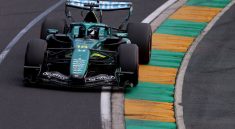
Stefano Domenicali, CEO of Formula 1, does not hide his confidence in the future of the sport. He believes that adjustments will be necessary to optimize the 2026 regulations, while acknowledging a growing global interest in the competition. However, this transition, marked by a greater reliance on electric energy, raises questions about the balance between performance and sustainability.

A Regulation in Full Evolution
The 2026 season marks a decisive turning point for Formula 1. Indeed, the technical regulations have been thoroughly revised, moving towards an almost equal distribution between thermal and hybrid engines. The introduction of sustainable fuels and active aerodynamics aims to make the cars smaller and lighter. This choice responds to increasing environmental demands while seeking to maintain the spectacle on the track.
A Compromise Not Without Consequences
This regulatory overhaul has already had a visible impact on the races. During the first three Grands Prix, a notable increase in overtaking has been observed. However, this success comes with concerns: drivers are forced to ease off in fast corners to recharge their batteries, raising questions about the quality of qualifying. A situation that could frustrate purists.
Concerns from Drivers and Fans
Criticism is starting to pour in, both from drivers and fans. The use of lift-and-coast to recharge batteries during the race could detract from the spectacle. Moreover, the issue of speed differentials has already led to incidents on the track, such as the crash involving Oliver Bearman at the Japanese Grand Prix. These concerns are taken very seriously by F1 stakeholders, who are meeting to discuss potential adjustments before the next Grand Prix in Miami.
A Constructive Dialogue Underway
Speaking in an exclusive interview with Motorsport.com, Stefano Domenicali emphasized that F1 is ready to adapt. He stated, “We are managing this in the right way, without panic, with a solid foundation.” The goal is clear: to find a balance between the new regulatory requirements and fan expectations while maintaining the commitment of current manufacturers.

Stefano Domenicali (CEO of Formula One Group)
The New Challenges of the Automotive Industry
This regulatory upheaval also responds to the imperatives of a rapidly changing automotive sector. Audi, Ford, and General Motors are actively engaging in F1, while Honda is reconsidering its withdrawal decision. There is strong pressure to attract new players while retaining those already involved, such as Ferrari and Mercedes. Domenicali reminds us that “five years ago, manufacturers thought the only way to progress was to achieve a 50-50 balance between thermal engines and electrification.”
An Uncertain but Promising Future
As the automotive industry reconsiders its direction towards electrification, Domenicali anticipates that discussions around the next regulatory cycle in five years will be “clearly different.” The emergence of sustainable fuels could even reopen the door to V8 engines. In the meantime, F1 aims to preserve its foundations while embracing innovation.
In Summary
- Domenicali confident in the necessary adjustments for the 2026 regulations.
- F1 focuses on a balanced distribution between thermal and hybrid engines.
- Concerns about qualifying due to energy management.
- Accidents related to speed differentials raise concerns.
- Engaged dialogue with teams and drivers to improve the F1 product.