
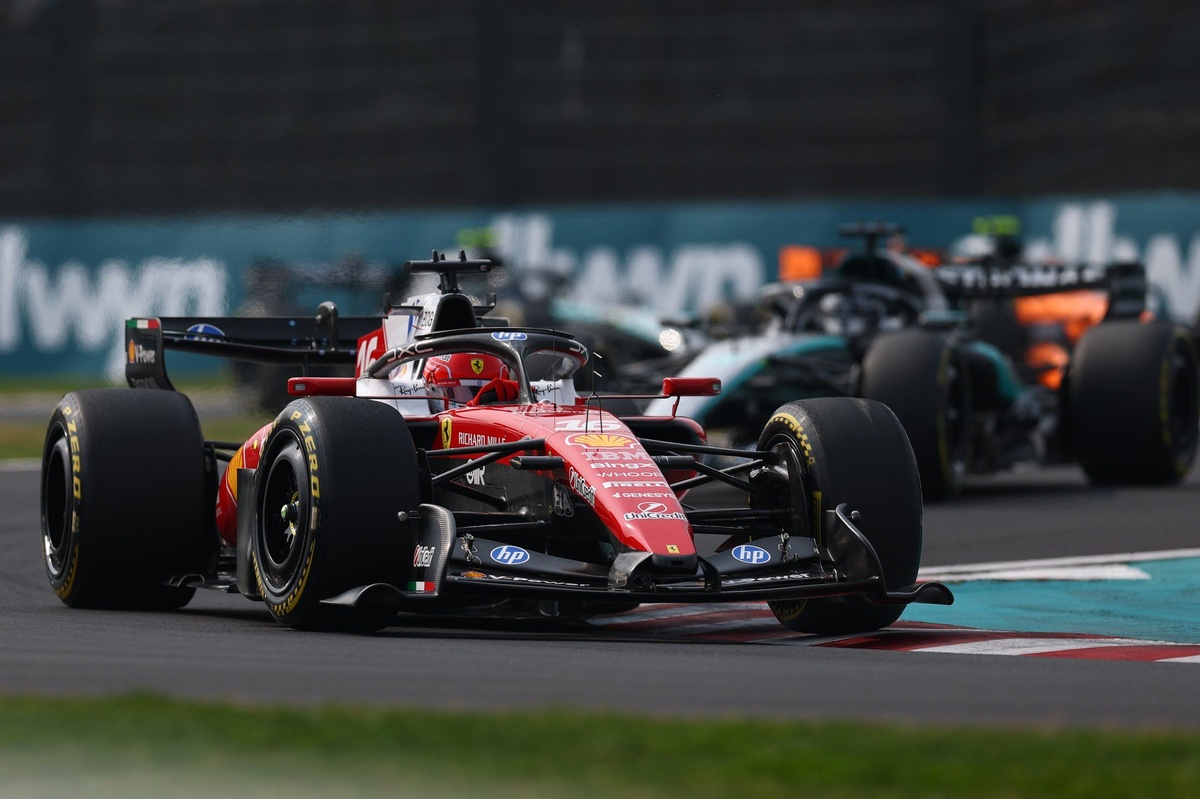
At the legendary Suzuka circuit, the battle between Ferrari and Mercedes took a captivating turn. The new 2026 regulations have reinvented energy management, transforming this rivalry into a fascinating tactical duel. Charles Leclerc demonstrated that speed isn’t everything, employing a clever strategic approach to outpace his competitors.
Suzuka: A Circuit with Two Faces
Suzuka has two faces. It’s both a stunning circuit, one of the most fascinating on the calendar, and a track that offers limited overtaking opportunities, making it challenging to set up multiple DRS zones in the past. This paradox creates a unique environment where strategy and energy management become crucial.
A Game-Changing Regulation
The 2026 regulations have shifted the landscape, offering new options for drivers. In certain situations, the energy boost combined with overtaking mode can prove significantly more effective than DRS, creating speed differentials of over 30-40 km/h. This scenario emphasizes energy management, evolving into a new science in race strategy.
Leclerc vs. Russell: A Fierce Battle
This aspect was evident in the duel between Charles Leclerc and George Russell for third place, with the Monegasque successfully fending off all of the Englishman’s attempts, securing his second podium of the season just ahead of the favorite. Leclerc had already been a tough opponent for Kimi Antonelli during the first stint, making overtaking anything but simple.
“It was a bit difficult to overtake when I was behind Charles because we had two completely different energy deployments, and it was tricky to find the right place to pass,” Antonelli acknowledged after the race. This dynamic had already been observed in earlier Grands Prix, where Ferrari drivers often hindered or countered the attacks of the two W17s before eventually conceding over the distance.
The Art of Defense
Leclerc had stated in China: to beat Mercedes, you must respond in kind. When the W17s have clear air, they maintain a distinct advantage over the competition, as Antonelli further demonstrated at Suzuka. In Japan, Leclerc capitalized on a circuit configuration that, in certain situations, helped him defend more effectively.
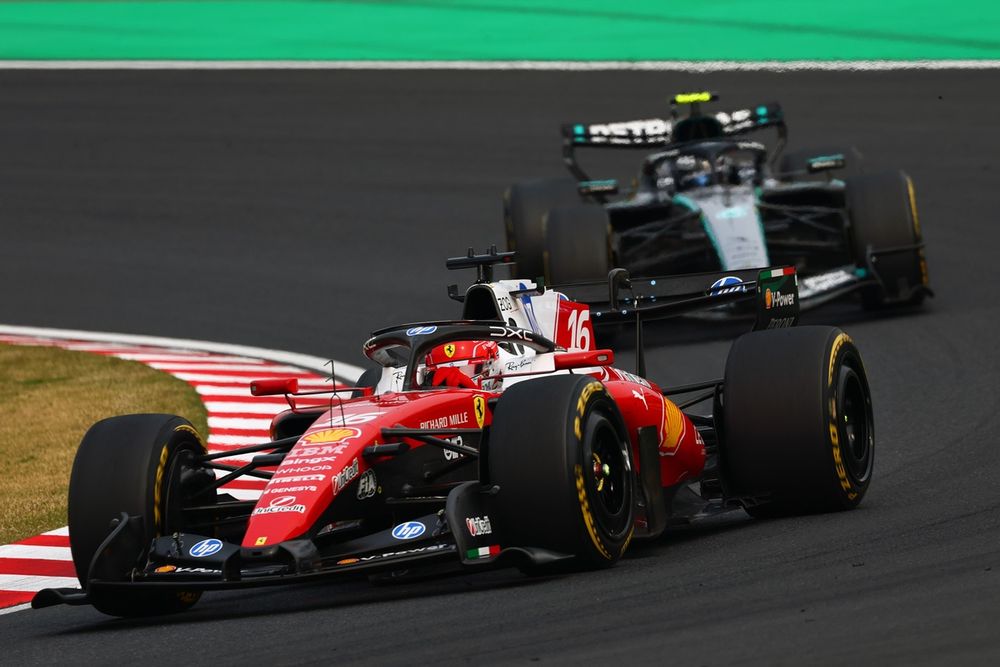
Charles Leclerc held his ground against Kimi Antonelli at Suzuka.
Energy Management: Key to Success
For those on the attack, the most effective choice generally involved using energy between Spoon and the final chicane, as this section allows for significantly higher speeds. However, if too much energy is expended before this chicane, even if an overtake is successful, the risk is running low on battery to defend in the main straight. This dynamic was encouraged by the new regulations, allowing speed differences of up to 30 km/h before the first corner.
Ferrari’s Strategy: A Different Approach
Here lies the strategic trick of Leclerc and Ferrari: beating Mercedes at their own game. The goal was no longer merely to optimize lap times as in qualifying but to understand where it was beneficial to draw from the battery to challenge the following driver. Analyzing the data reveals a significant difference compared to Mercedes.
Ferrari tended to deploy energy more at the exit of the hairpin, accelerating towards Spoon, then using super-clipping before turn 13. The same pattern repeated at the exit of Spoon, where Leclerc was able to be much more aggressive in acceleration due to a slightly different interpretation of that section. This approach was confirmed by Antonelli during discussions with other drivers in the paddock.

The comparison in energy management between Charles Leclerc and George Russell at Suzuka.
A Yo-Yo Effect in the Battle
Essentially, the Ferrari gained time in acceleration, immediately creating a small gap in the first part of the straight and forcing Mercedes to expend more energy in the second half to catch up. This yo-yo effect provided some leeway in defense, allowing Leclerc to recover energy just in time to protect himself in the main straight.
Tense Racing
In some cases, overtaking becomes almost “forced.” This happened to Russell on lap 50 when he gained the upper hand on Leclerc at the final chicane while the Monegasque was in super-clipping mode. Such a sequence consumes a lot of energy and risks leaving the driver without battery to defend, facilitating a counter-overtake. That’s exactly what Leclerc did.
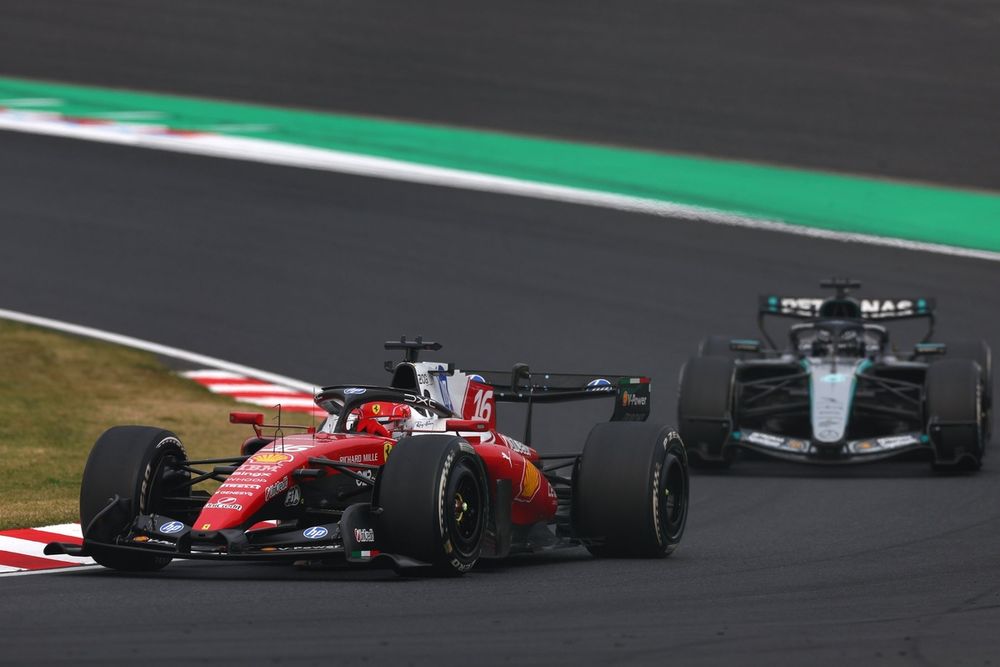
Charles Leclerc was able to contain George Russell.
Boosting Team Morale
Some characteristics unique to Suzuka undoubtedly helped: track configuration or very low degradation on the new asphalt. But the right strategy had to be implemented. After the race, Frédéric Vasseur emphasized the significance of this battle for the last podium spot: “We wanted more, but I think it was a great performance by Charles against Russell at the end,” he stated. “It was crucial to keep Mercedes and Russell behind. This is essential for preparing for the next steps.”
In Summary
- Suzuka: a demanding circuit with few overtaking opportunities.
- The 2026 regulations favor a new strategic approach to energy management.
- Leclerc shows that tactics and speed can coexist.
- Ferrari succeeds in beating Mercedes at their own game with cleverness.
- A performance that boosts team morale for the future.


