The 2026 Formula 1 season is shaping up to be a decisive turning point, with bold regulatory changes. The cars will become lighter and more compact, while incorporating a share of electric energy representing nearly 50% of the total power. Teams will need to adapt to this new reality, as well as the arrival of two new engine manufacturers on the grid, a first in over two decades.
The power units used by each F1 team
McLaren

Oscar Piastri (McLaren)
The McLaren-Mercedes partnership is one of the most iconic in F1 history, with memorable successes in the 1990s and 2000s. However, Mercedes’ arrival as a factory team in 2010 redefined the relationship: Ron Dennis claimed that to regain the title, McLaren needed to become a factory team. This led to the tumultuous arrival of Honda in 2015, a partnership that quickly turned disastrous, to the point where Fernando Alonso referred to the Japanese engine as a “GP2 engine” during the 2015 Japanese Grand Prix.
After a painful separation, McLaren signed with Renault in 2018, but this was an interim step. The renaissance came in 2021 with the return of Mercedes. The sequel became legendary: Daniel Ricciardo gave McLaren its first victory in nine years at the 2021 Italian Grand Prix, and the team won its first constructors’ title in 26 years in 2024, followed by a historic double in 2025 with Lando Norris crowned world champion.
The partnership with Mercedes thus seems unbreakable, with a contract in place until 2030, promising more exciting battles on the track.
Mercedes
Mercedes’ return to F1 was marked by the acquisition of Brawn GP in 2010, after a 55-year absence. This new era quickly saw the team establish itself through technical innovations, particularly in hybrid engines introduced in 2014. This turning point allowed Mercedes to secure eight consecutive titles, an unmatched record.
Although the team has lost some of its dominance in recent seasons, it remains the most represented engine on the grid in 2026. McLaren, Williams, and Alpine will all rely on its power units, ensuring continuity in excellence.
Red Bull

The headquarters of Red Bull Ford Powertrains in Milton Keynes.
For Red Bull, 2026 marks a return to its roots. After using Honda engines until 2025, the Austrian team will launch its own power units, supported by Ford, which is returning to F1 after a 23-year absence. This project represents a considerable challenge, especially after Honda’s late withdrawal left Red Bull with no options. Team principal Laurent Mekies has already tempered expectations by stating that it would be “unrealistic” to hope to compete immediately with Mercedes or Ferrari.
Ferrari
Ferrari is the only team to have participated in every season of Formula 1 since its inception in 1950, always with its own engines. With an impressive record of 16 constructors’ titles and 15 drivers’ titles, Scuderia is a pillar of the sport. However, despite its longevity and prestige, Ferrari has not won a championship since 2007, and this is starting to weigh on the shoulders of the tifosi.
In 2026, Ferrari will continue to supply not only its own team but also Cadillac and Haas with its engines. The stakes are high: to find the path to success and return to victory.
Williams

Carlos Sainz in front of Alexander Albon (Williams)
Williams and Mercedes have shared a tumultuous relationship since the start of their partnership in 2014. After a few promising years, the team faced financial difficulties that caused it to fall in the standings. Nevertheless, under the leadership of James Vowles and with strong drivers like Alexander Albon and Carlos Sainz, Williams managed to turn things around by finishing fifth in the championship in 2025.
Hope is thus placed on the 2026 season, where Williams aims to capitalize on its past experiences to aim even higher.
Racing Bulls
Racing Bulls, the former Toro Rosso, will also use Red Bull Ford engines for the upcoming season. This fifth engine manufacturer since the acquisition by Red Bull in 2006 marks a new chapter for the team based in Faenza. It has undergone several name and structural changes without ever really finding its way. With technical support from Red Bull, Racing Bulls hopes to finally establish its own identity on the grid.
Aston Martin

Lance Stroll and Fernando Alonso (Aston Martin)
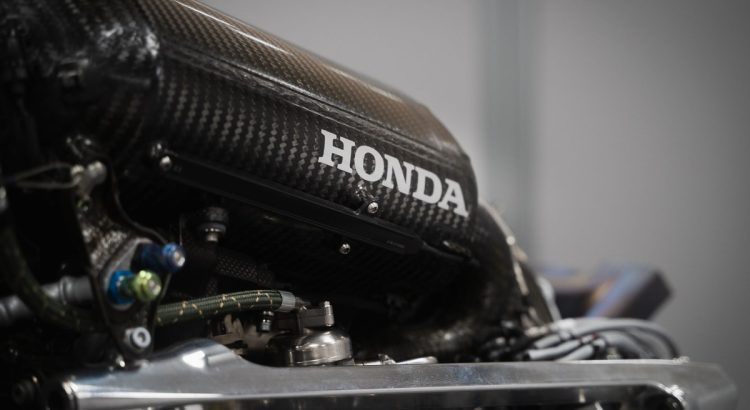
Aston Martin recently announced a partnership with Honda after using Mercedes engines for years. This change comes with a power boost with legendary designer Adrian Newey at the helm. Despite massive investments from Lawrence Stroll, results have been slow to come. The 2026 season is thus seen as crucial for the team, which must finally realize its ambitions.
Haas
Haas made the wise choice to partner with Ferrari since its debut in F1 in 2016, thus creating a solid partnership. Although the team has yet to reach the podium, it relies on this relationship to remain competitive against more established rivals. With a Ferrari junior driver at the wheel, Oliver Bearman, Haas hopes to capitalize on the accumulated experience to progress in the standings.
Audi

Concept of the Audi F1 2026 livery.
Audi is entering F1 as a factory team after acquiring Sauber. The challenge will be significant for the German brand, whose leaders are aware that they will not have the best power unit from the start. Indeed, Sauber finished at the bottom of the standings in 2025. The team will need to show patience and ambition to carve its path to success.
Alpine
Alpine made the controversial decision to become a customer of Mercedes for the 2026 season, ending its independent engine project. This decision was poorly received by some employees who had worked on the engine for years. Nevertheless, this change could offer Alpine a chance to get closer to the performance of the championship leaders after a difficult 2025 season where it finished last.
Cadillac
Cadillac will make its F1 debut in 2026 and become the eleventh team on the grid. After a long process of integration into the championship, Cadillac will use Ferrari engines for its first seasons before introducing its own units developed by General Motors in 2029. This arrival marks a significant change in the recent history of F1 and promises fierce battles to come.