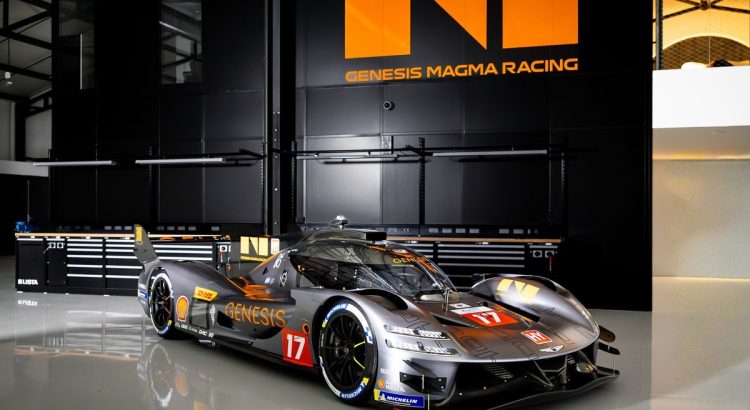
Presented in an elegant gray-black livery with orange accents, the Genesis GMR-001 is making waves ahead of its debut in the FIA WEC. This LMDh aims to secure Hyundai’s first victory at the legendary 24 Hours of Le Mans. But before dreaming of the podium, it must first compete in the 6 Hours of Imola.
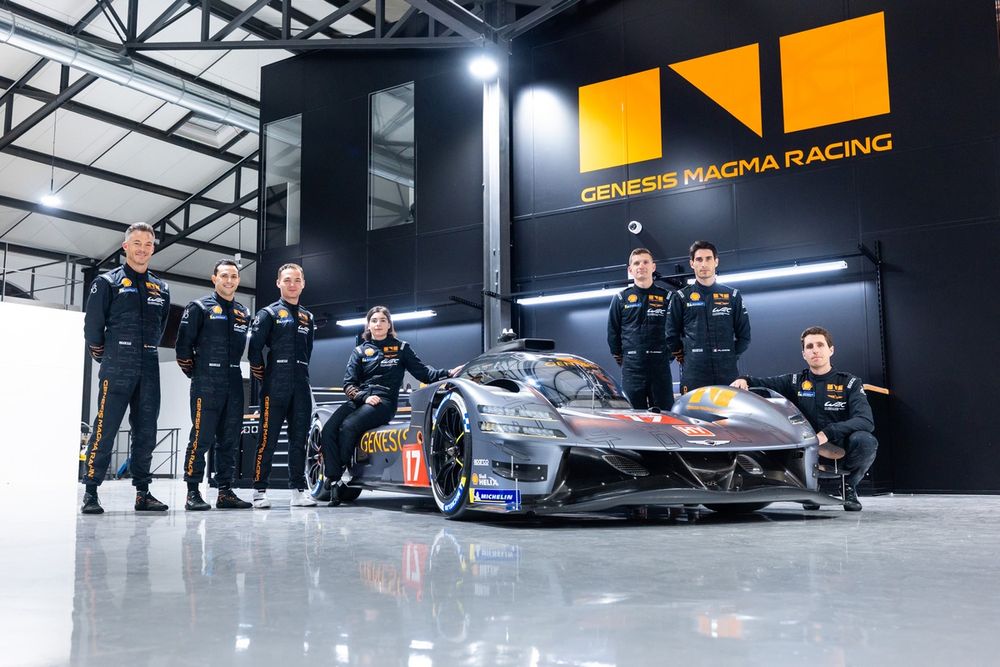
An Ambitious Project on the Starting Line
The Genesis GMR-001 has already come a long way, completing seven test sessions over as many months since its first run at Circuit Paul-Ricard in late August 2025. This model embodies a strong ambition: for André Lotterer, who joined the project in December 2024, building a race car from scratch is a unique adventure. “We essentially started from zero. It’s rewarding to be more than just a name in an established team; I could get involved and really bring my experience,” he tells Motorsport.com.
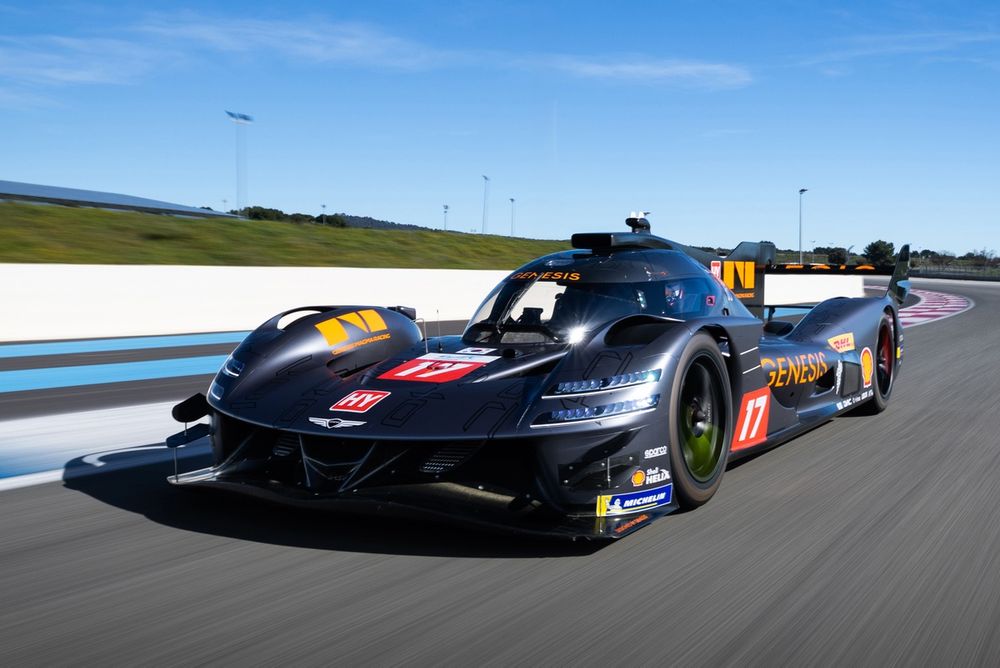
Oreca Chassis and Promising Engine
For the GMR-001, Hyundai opted for an Oreca chassis, compliant with LMDh regulations. This makes it the third car to use this platform after the Acura ARX-06 and the Alpine A424. At its heart is a 3.2-liter twin-turbo V8, paired with in-house developed software. This strategic choice ensures solid performance on track while adhering to competition standards.
During initial tests at Castellet, the team demonstrated reliability. In fact, during a simulation of over 30 hours at the Algarve circuit, the GMR-001 showed very encouraging signs. “We managed to run for a long time during this first major test,” reveals driver Daniel Juncadella. Some minor issues were reported, but nothing that required a major redesign.
The Importance of Software
A crucial aspect of this competition is the software component. Indeed, the only area not subject to Balance of Performance (BoP) in WEC, it plays a vital role in optimizing on-track performance. “Software is essential in this championship,” explains André Lotterer. “You need to master the torque sensors on the drive shafts to stay perfectly at the 520 kW power limit.”
Testing continued at Magny-Cours, Aragón, and Losail, with each circuit providing valuable lessons. In Qatar, for instance, the focus was on the rapid temperature rise of the new Michelin tires. This is a key skill for maximizing the performance of this hypercar.
Facing Competition: A Challenge Accepted
From the outset, it’s clear that the GMR-001 is not just showing up to participate. In this ultra-competitive category, it faces formidable rivals like the Porsche 963. The comparison between the two cars reveals fundamental differences in their design and philosophy. “The car is a joy to drive,” says Lotterer, describing the GMR-001 as “more precise and linear” than its German counterpart.
Mathieu Jaminet, also transitioning from Porsche to Genesis, shares this view and strives to use his experience to help the team refine its weaknesses. Despite the thousands of kilometers already covered, the team eagerly awaits the decisive moment at the 6 Hours of Imola.
Realistic Goals for a Strong Start
Pipo Derani humorously reflects on the journey ahead: “It’s like climbing Everest.” The priority now must be on details such as pit stops and perfect coordination among team members. As for Paul-Loup Chatin, he acknowledges that dominating from the start would be “unrealistic.” He prefers to focus on a challenging race at Imola before hoping to shine in Bahrain later this year.
André Lotterer concludes simply: “A great season would be finishing the first race without major issues.” While the ambition for podiums is there, he remains cautious about expectations given the high level of competition.
In Summary
- The Genesis GMR-001 aims for a victory at the 24 Hours of Le Mans.
- The project relies on an Oreca chassis and a twin-turbo V8 engine.
- Particular attention is given to software development.
- Competition with models like the Porsche 963 will be intense.
- Realistic goals have been set for the competitive debut.