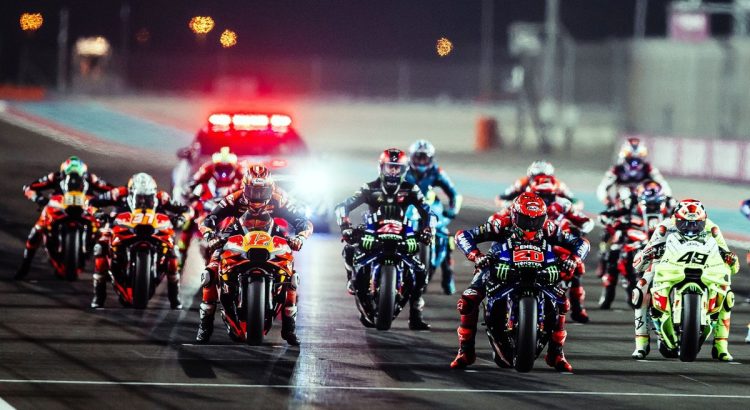
The postponement of the Qatar Grand Prix, initially scheduled for April, highlights the strategic challenges facing MotoGP. In a tense international context, this decision appears to be a defensive maneuver aimed at ensuring the safety of participants while maintaining the integrity of the championship. But beyond mere reorganization, what are the repercussions for the image and future of MotoGP?
A Decision Under Geopolitical Pressure
The MotoGP is not immune to the current turmoil. While Formula 1 has canceled its Grands Prix in Bahrain and Saudi Arabia, the motorcycle championship has chosen to postpone its event in Qatar, a country beset by political tensions. This decision is not only a desire to avoid a logistical fiasco but also a response to the need to ensure the safety of riders, teams, and spectators. In short, MotoGP prefers to play it safe rather than risk a total cancellation.
A Disrupted Schedule: Consequences for Teams and Riders
This change of date, with the Qatar Grand Prix now scheduled for November 8, leads to a domino effect of adjustments. The Portuguese Grand Prix in Portimão is pushed back to November 22, followed by a final meeting in Valencia on November 29. For the teams, this means reconfiguring their preparations to adapt to a tighter schedule. The riders, for their part, will have to juggle intensified races at the end of the season. However, this revised schedule could also offer a renewed excitement, with crucial races following one another quickly.
A Strong Message on Safety
Carmelo Ezpeleta, CEO of MotoGP, emphasized the importance of safety in this decision. Indeed, in the world of motorsport, the perception of safety is paramount. By taking this proactive decision, MotoGP sends a clear message: the safety of participants takes precedence over financial or media aspects. This could strengthen the confidence of sponsors and fans, who see that the championship’s management is taking concrete measures in the face of external crises.
Ticket Management: Attention to Fans
The issue of tickets is often overlooked in postponement announcements, but here it takes center stage. Ticket holders will have the option to roll over their seats for the next edition of the event. This gesture reflects a desire to maintain a trusting relationship with fans, who are essential to the longevity of MotoGP. In times of uncertainty, this approach could prove beneficial, as it shows a genuine concern for those who support the championship.
An Opportunity to Redefine MotoGP
This postponement could also be seen as an opportunity for MotoGP to redefine its image. By avoiding a complete cancellation, the championship demonstrates its resilience in the face of crises. In the future, this could encourage organizers to explore innovative solutions to deal with unforeseen events, such as partnerships with other circuits or even virtual races if necessary. In short, this turnaround could prompt a reflection on the flexibility and adaptability of the schedule.
In Summary
- The postponement of the Qatar Grand Prix reflects current geopolitical tensions.
- The modified schedule imposes significant adjustments on teams and riders.
- Safety is prioritized, reinforcing sponsor confidence.
- Ticket management shows particular attention to fans.
- This change could lead to a strategic redefinition of MotoGP.
In conclusion, this postponement is not just a simple logistical reorganization: it reflects a strategic shift for MotoGP. As the championship navigates between safety and competitiveness, it will need to continue adapting to external challenges while preserving its integrity. In the medium term, this situation could pave the way for innovations in the management of sporting events, thus redefining how MotoGP interacts with its fans and partners. For whom? For motorcycle enthusiasts eagerly awaiting a season where every race will count double.