A study commissioned by the French start-up Facteur Dix reveals that aerodynamics could play a crucial role in the future of automobiles, whether they are electric or thermal. While environmental and financial gains are at stake, will drivers be ready to adopt radically different designs? Get ready to discover why shape might just be the new engine of our transition to a sustainable automotive future.
An aerodynamic challenge that goes beyond simple design
The numbers speak for themselves. Better aerodynamic work could not only reduce CO2 emissions but also lighten our wallets. Indeed, according to the study, more aerodynamic vehicles could generate significant energy savings. But before getting too excited, one must ask: are drivers really ready to trade their imposing SUVs for a sleeker silhouette? The numbers should speak for themselves, as in daily use, the range of electric vehicles could suffer less with good design.
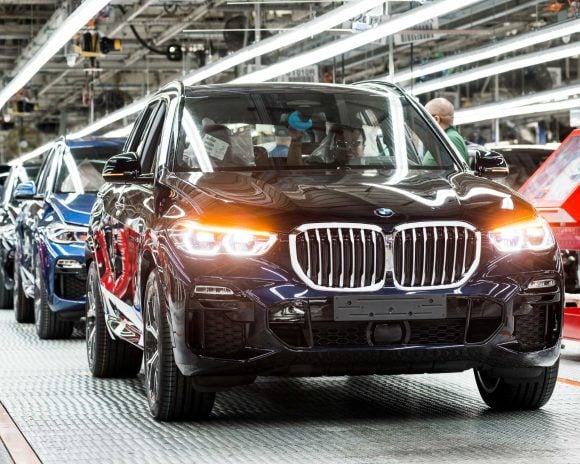
Manufacturers and customers often favor practicality. This is how SUVs have supplanted minivans, while compromising efficiency. But at what cost? © BMW
Style choices and their consequences
Choosing a car is a bit like choosing a recipe: one must juggle between practicality and efficiency. Comfort is often emphasized, but it is also essential to consider energy efficiency. Unfortunately, SUVs and their imposing grilles move us away from the fundamental principles of aerodynamics. In doing so, drivers may have sacrificed their chance to optimize their energy consumption.
SUVs and aerodynamics: a complicated duo
To illustrate the challenge, let’s imagine an SUV and a sports sedan in a race. The sedan, sleek and streamlined, will be much faster than its tall counterpart. The study highlights that SUVs, while they may display interesting aerodynamic coefficients, will never compete with vehicles designed to be more streamlined like the Mercedes EQXX or the Volkswagen XL1. Indeed, the start-up Facteur Dix is working on a very low-consumption vehicle prototype that could change the game.

Here is the shape to strive for to maximize electric range… © Mercedes
The importance of aerodynamics
The study is based on a theoretical fleet of 10.5 million vehicles, mainly “second vehicles” used for daily commutes. According to Technomap’s work, an optimized mini electric city car could consume an average of 4.9 kWh/100 km. This may seem insignificant, but the devil is in the details.
In urban environments, a vehicle primarily spends its energy compensating for its weight. However, as soon as one reaches 80 km/h, it requires as much energy to move the vehicle as to overcome air resistance. At 130 km/h, the latter represents over 80% of the energy consumed by the engine! In other words, aerodynamics becomes crucial for optimizing energy efficiency.

Paradoxically, these small cubic cars have the worst aerodynamic profiles. The use of a battery in the floor often exacerbates this problem. © Etienne Roville
Monumental gains for bold designs
The results speak for themselves: to cover the average home-to-work distance over a year, the aerodynamic prototype would consume only 418 kWh of electricity, compared to 947 kWh of a traditional mini electric city car or 555 L of gasoline from a thermal version. This amounts to a significant macroeconomic saving: imagine the equivalent of 800 wind turbines or the installation of solar panels on 1.3 million homes! But beware, these figures are based on a certified L5E prototype that is not yet available on the market.
Drivers facing change
If these gains are undeniable from an environmental and economic standpoint, how can we convince drivers? It is unlikely that a large number of them will accept to drive such a compact and radical machine as the Line prototype from Facteur Dix, designed to slice through the air with elegance. Safety is also a crucial point: evolving close to the ground among heavy vehicles is not very appealing.
To tip the balance in favor of the aerodynamic prototype, its range capabilities should be highlighted: thanks to its consumption of only 4 kWh/100 km, the model claims up to 500 km of range on the WLTP cycle. This recalls the impressive performance of the Mercedes EQXX, which managed to achieve 1000 km of range. If this holds true, perhaps some drivers would be willing to change their vision of the ideal vehicle… but it remains to be seen if the price will be affordable.