Audi’s showing at Milan Design Week is less about putting cars on pedestals and more about shaping how the brand wants to be understood. By making “Origin”—an installation created with Zaha Hadid Architects—the centerpiece, Audi is leaning on design, not a traditional product pitch, to introduce its next chapter.
That matters now because the vehicles on display are only part of the message. The installation, Audi’s evolving design language, the new plug-in hybrid RS 5, and even the brand’s Formula 1 effort are all being framed as one connected idea: technology interpreted through design, with performance positioned as something broader than raw specs alone.
“Origin” becomes Audi’s public design manifesto
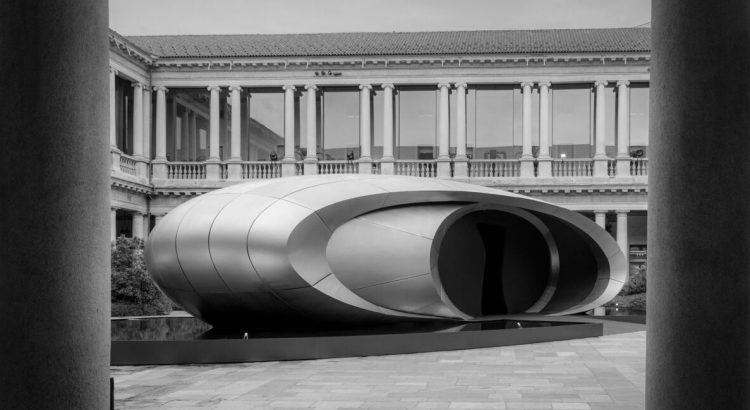
At the heart of Audi’s display is “Origin,” developed with Zaha Hadid Architects and installed in the courtyard of the former Archiepiscopal Seminary, now the Portrait Hotel on Corso Venezia. Audi says the piece expresses its current design thinking through four themes: clarity, technicality, intelligence, and emotion.
That makes it more than an artful backdrop. Instead of opening with a conventional reveal, Audi is using one of the world’s biggest design events to explain how it wants people to read its products. The practical takeaway is straightforward: strip away the noise, focus on shape, materials, and atmosphere, and you get a cleaner view of where Audi believes its visual identity is headed.
The setting does real work here, not just the structure
The installation is meant to shift over the course of the day, as changing reflections and shadows alter the way visitors see it from different angles. Its matte metallic surface, described as echoing technical materials such as titanium, is designed to pick up and soften the courtyard’s colors rather than overpower the space.
That choice says a lot about Audi’s intent. During Milan Design Week, the city can feel like visual overload, so Audi is deliberately treating calm as a design value. The contrast is effective: a modern object in a historic Milan setting, making the case that advanced design does not need to yell to land its point.
The RS 5 and Audi R26 tie the design message back to actual machines
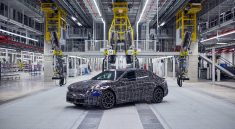
Alongside the installation, Audi is showing the new RS 5, which it describes as the first high-performance plug-in hybrid from Audi Sport. The company is also displaying the Audi R26 as part of its upcoming Formula 1 program.
Those two vehicles keep the stand from becoming purely conceptual. The RS 5 connects electrification to Audi Sport’s road-car lineup, while the Formula 1 project places the brand in a world where efficiency, packaging, and outright performance are tightly linked. Audi does not share technical figures here, so there is no way to judge horsepower, power delivery, or performance claims, but the direction is clear: electrified performance cars and top-tier motorsport are being folded into the same design-led story.
Audi wants Milan to frame mobility as culture
This marks Audi’s 13th straight year at Milan Design Week, and once again the brand is presenting its presence as part of a wider conversation rather than a simple car display. The themes it highlights include sustainability, urban living, material innovation, and, for 2026, sensory overload.
That tells you a lot about the audience Audi is chasing. Milan Design Week is not an auto show, and that is exactly why it works for this strategy. It gives Audi a way to speak not just to shoppers, but also to architects, designers, and cultural influencers—people who can help define mobility as something shaped by behavior, environment, and taste, not just engineering.
The strategy makes sense, but it has a ceiling
There is solid logic behind this approach. Premium brands increasingly have to sell identity alongside hardware, and Audi is far from alone in using design culture to reinforce that message. Positioning calm, restraint, and material sophistication as core brand values is a credible way to stand apart in a crowded premium field.
But there is also an obvious limit. A design philosophy can shape how a car is perceived, but it cannot substitute for the car itself. Without technical detail on the RS 5 or a clearer explanation of how this thinking will show up in production models, much of Audi’s case remains symbolic. Milan gives the brand a strong stage for the idea; the real test over the next 3–5 years is whether future road cars make that idea feel tangible to buyers, not just attractive in a courtyard.
In brief
- Audi’s 2026 Milan Design Week presence centers on “Origin,” an installation created with Zaha Hadid Architects.
- The project is meant to express Audi’s current design themes: clarity, technicality, intelligence, and emotion.
- The new RS 5 is being presented as Audi Sport’s first high-performance plug-in hybrid.
- Audi is also using the event to spotlight its Formula 1 program through the Audi R26.
- The broader goal is to place mobility inside a cultural and design conversation, not just a product one.
- The open question is how clearly this design-led message will carry into future production cars.