BMW Motorrad is celebrating 50 years of the RS badge, a name that has come to define the brand’s sport-touring formula more than any pure racing mission. That anniversary matters now because the RS line shows how BMW has spent five decades trying to balance speed, long-range comfort, and everyday usability, from the 1976 R 100 RS to today’s R 1300 RS.
This is about more than heritage. It’s about consistency: BMW has kept the core RS brief intact for half a century, even as engines, chassis tech, and rider expectations have changed dramatically.
The 1976 R 100 RS set the template for BMW sport-tourers
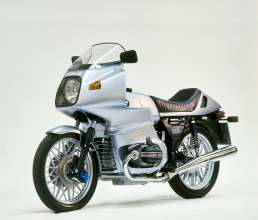
The production RS story begins with the BMW R 100 RS, unveiled in 1976. BMW says it was the world’s first mass-produced motorcycle with a frame-mounted full fairing developed in the wind tunnel, and that matters because it tied real aerodynamic function to long-distance comfort instead of using bodywork as styling theater.
The original bike packed a 980cc two-cylinder boxer making 70hp (51kW) at 7,250rpm, with a claimed top speed of 200km/h. Produced from 1976 to 1984, it also reshaped what RS meant inside BMW Motorrad: not just Rennsport, but a road-focused mix of travel and performance. That identity, more than any racing link, is what gave the badge lasting meaning.
Record runs showed RS still had real speed in its DNA
BMW’s anniversary look-back also includes the R 100 RS Nardò record bike from 1977, a reminder that the touring brief never meant giving up outright pace. Using a modified R 100 RS, Helmut Dähne and engine specialist Helmut Bucher pushed output to 84hp (62kW), removed the lower section of the fairing, and fitted a 19-inch rear wheel.
That machine topped 220km/h and helped BMW claim five world records at Nardò over 10km, 100km, six hours, 12 hours, and 24 hours. The bigger point is clear: RS was never meant to be soft. It always depended on strong performance, just delivered in a package better suited to real roads and real distance.
Rider demand kept the big boxer RS alive through major changes
BMW’s boxer RS lineage did not follow a neat, straight path, and that’s part of what makes it interesting. The R 100 RS returned in Monolever form in 1986 after pressure from riders, especially in the USA and Japan, who did not view BMW’s K-series three- and four-cylinder bikes, or the smaller 800cc boxers, as true replacements for the big twin.
That revived R 100 RS was first planned as a 1,000-unit special edition, but demand was strong enough that BMW kept it in the lineup until 1992. Output had fallen to 60hp (44kW) at 6,500rpm, with top speed dropping to 185km/h, showing where the bike had moved in the market: less outright performance, more emphasis on covering miles.
The next major shift came with the R 1100 RS, introduced in 1993 and listed here with a production run from 1992 to 2001. It brought four-valve heads, air/oil cooling, and digital ignition and fuel injection to the boxer RS formula, along with BMW’s Telelever front suspension. Power climbed to 90hp (66kW) from 1,085cc, and top speed rose to 215km/h.
BMW followed that with the R 1150 RS, produced from 2000 to 2004, using a 1,130cc boxer with 95hp (70kW) and the same 215km/h top speed. What stands out here is how clearly owners shaped the product. BMW may have expected the R 1100 S to satisfy riders who wanted something sportier, but plenty of RS buyers were still asking for a direct successor instead.
Liquid cooling and ShiftCam pushed the RS deeper into performance territory
The R 1200 RS, revealed in 2014 and produced from 2015 to 2018, marked the fifth boxer RS generation according to BMW. Its 1,170cc liquid-cooled boxer made 125hp (92kW) at 7,750rpm and 125Nm, while also bringing Dynamic ESA semi-active suspension to the model line.
That was a significant move because it pushed the RS beyond the role of fast do-everything bike. With a claimed 228km/h top speed, it edged closer to full-on sport-bike pace while keeping the more upright, practical RS layout intact. The trade-off, as usual, is that more hardware also raises the bar for refinement and ownership costs.
The R 1250 RS, launched in 2018 and built until 2024, continued that trajectory with a 1,254cc boxer making 136hp (100kW) and BMW’s ShiftCam variable valve timing. BMW’s claim centers on stronger low- and mid-range torque, which fits the RS brief perfectly: in this class, flexible power delivery and easy passing matter at least as much as peak output.
The new R 1300 RS makes BMW’s case for the format
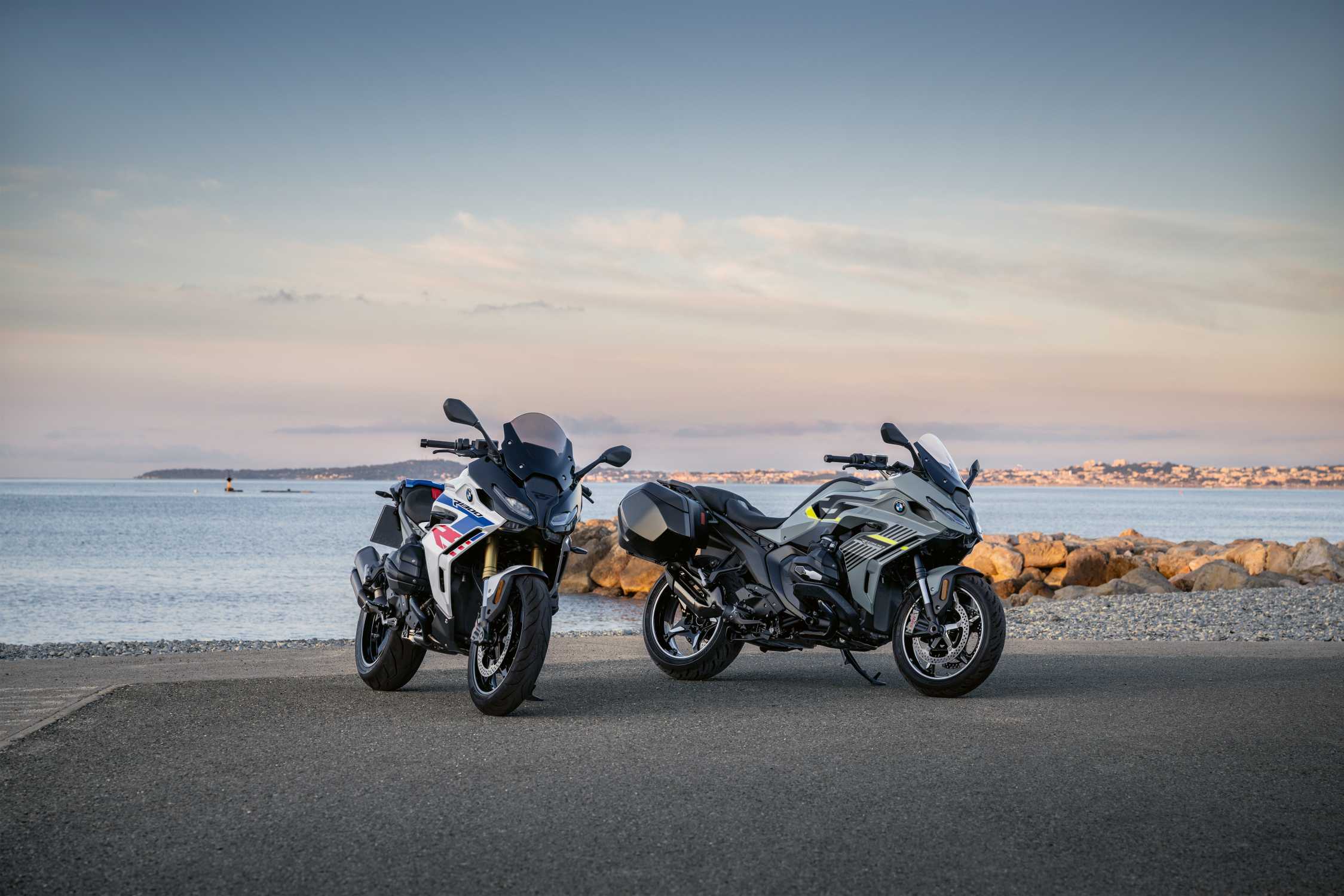
BMW presents the latest R 1300 RS as the current expression of the same idea, but with a sharper technical edge. It uses a 1,300cc two-cylinder boxer making 145hp (107kW), which BMW says is its most powerful production boxer engine yet, and it comes standard with three riding modes plus engine drag torque control.
Available equipment includes the Automated Shift Assistant and Dynamic Suspension Adjustment, which can vary damping, spring rate, and load compensation. BMW also says it is the first production motorcycle in the world with a telescopic fork featuring adjustable spring rate. If that claim holds up, it’s a meaningful chassis development, although the source material stops short of explaining how much difference riders will actually feel on the road.
There is one wrinkle in BMW’s own timeline, though: the table lists the R 1300 RS production period as “since 2015,” which does not fit the rest of the chronology and appears to be a source error. What the supplied figures do support is its 240km/h top speed and its place as the newest boxer RS in the lineup.
The K bikes proved RS was a format, not just a boxer label
The anniversary also makes clear that RS was never exclusive to BMW’s boxer twins. The K 100 RS, introduced in 1983, applied the same broad concept to a 987cc inline-four with 90hp (66kW) and a 220km/h top speed. Its half fairing and low center of gravity gave BMW another path into the sport-touring market, especially for riders who wanted the smoother, more familiar feel of multi-cylinder power delivery.
That branch evolved through the K 100 RS 4V of 1989, with 100hp (74kW) and a 232km/h top speed, then the K 1100 RS from 1992 to 1997, also with 100hp but a larger 1,092cc engine. In each case, the RS badge meant basically the same thing: strong long-distance ability without walking away from real performance.
The K 1200 RS was arguably the boldest version of that formula. Built from 1996 to 2005, it used a 1,171cc inline-four producing 130hp (96kW) at 8,750rpm, with a claimed top speed of 245km/h. BMW notes that it arrived as the company moved beyond the long-observed 100hp ceiling in the German market, which gives the bike broader industry context. This wasn’t just another RS—it was BMW responding to a market that had become far more comfortable with serious power in large road bikes.
In summary
- The RS badge has covered 50 years of BMW sport-tourers, beginning with the R 100 RS in 1976.
- The original R 100 RS helped define the class with a frame-mounted full fairing developed in the wind tunnel.
- BMW used the RS concept across both boxer twins and K-series four-cylinder motorcycles.
- Key boxer milestones include the R 1100 RS, R 1200 RS, R 1250 RS and the current 145hp R 1300 RS.
- The K 1200 RS marked BMW’s move into a higher-output era, with 130hp and a 245km/h top speed.
- One source detail appears inconsistent: the R 1300 RS production period is listed as “since 2015,” which does not fit the timeline provided.
Fifty years later, the RS formula still makes sense for riders who want one motorcycle that can cover ground quickly without the compromises of a pure sport bike or a full-dress touring rig. If comfort is the top priority, BMW’s own RT remains the obvious step up. If sharper edge matters more than weather protection and broad usability, more road-focused sport alternatives make more sense. Over the next few years, that middle ground is likely to stay relevant as manufacturers keep chasing bikes that can do more than one job well.