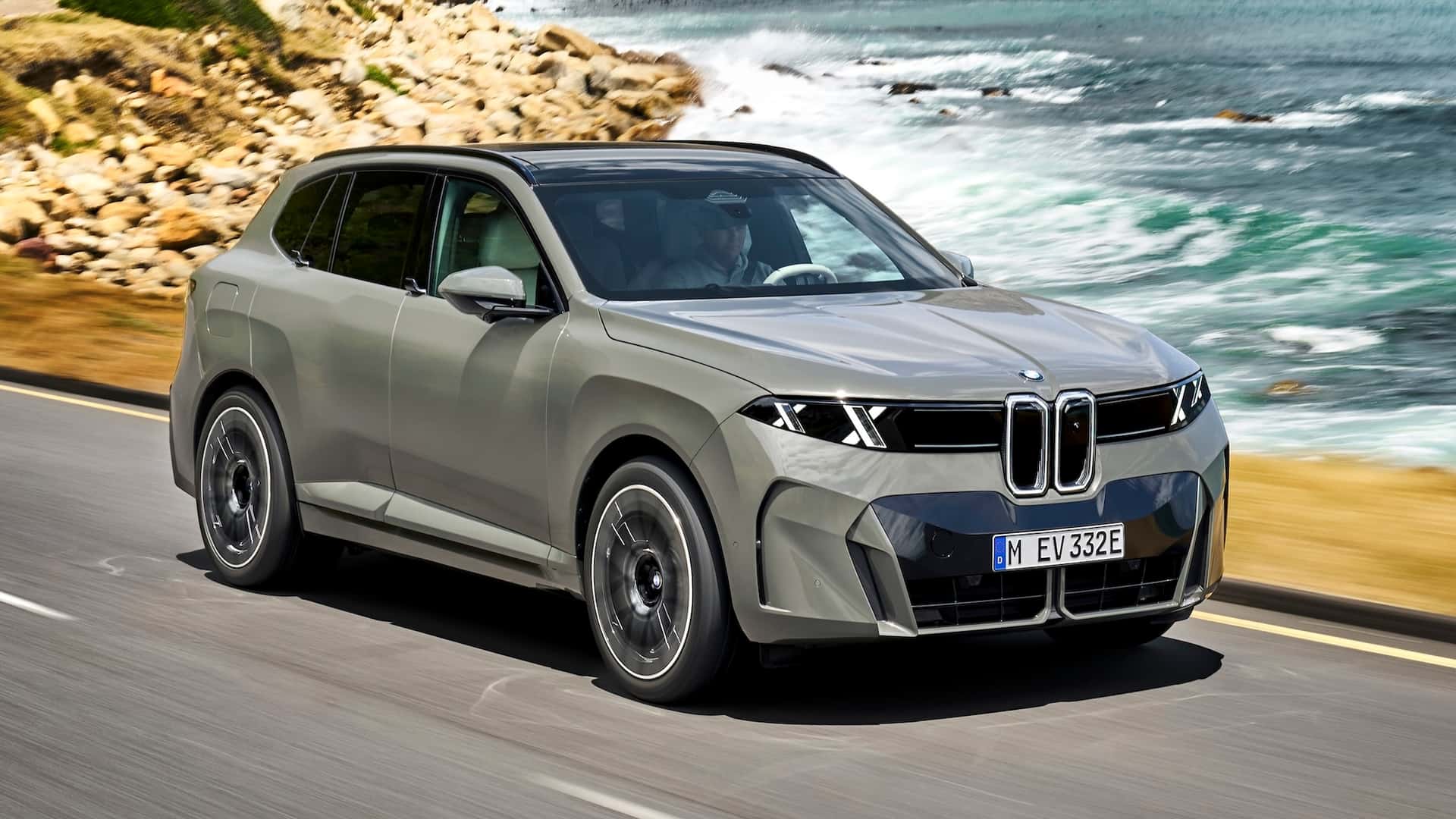
The End of an Era: BMW X5 Loses Its Signature Split Tailgate
For over two decades, the BMW X5 has offered a feature that was as practical as it was cool: the split tailgate. It was a signature element, a little party trick that set the X5 apart. But for the 2027 model year, BMW has decided to ditch this beloved feature, opting for a more conventional, single-piece tailgate. The official reason? Apparently, average people with average arm lengths were struggling to use it.
This move has sent ripples through the automotive community, particularly among loyal X5 owners who cherished the versatility of the split design. While BMW insists customer feedback drove this decision, the rationale feels a bit… unconvincing, especially when many enthusiasts lament its departure. It’s like saying goodbye to a trusted friend, only to be told they left because your handshake was too weak.
A Feature Loved by Many, Now Gone
The split tailgate, with its lower section folding down like a small pickup truck bed and the upper section lifting up, has been a hallmark of the X5 since its debut in 1999. It offered a convenient way to load groceries, dogs, or even just rest your legs while tailgating. It was a clever piece of engineering that added a layer of utility and character to an already capable luxury SUV.
While rivals like the Toyota Land Cruiser eventually dropped their split tailgates, the X5 remained a steadfast defender of this dual-door design. It was one of the last bastions of this particular automotive quirk, a testament to BMW’s willingness to embrace practicality alongside luxury. Now, that bastion has fallen, leaving a void where a unique feature once resided.
BMW’s Official Explanation: The Struggle is Real?
When pressed for an explanation at the launch event for the new X5 in Spartanburg, South Carolina, Philip Koehn, BMW’s Director of Luxury Class Cars for Alpina and Rolls-Royce, offered a rather… unique perspective. He suggested that the split tailgate, while “cool,” presented a genuine challenge for many users.
“Any average person with average arm length is actually struggling. If you’re perfectly honest, the split tailgate is in itself a cool thing with the low-end opening, and a normal-sized person will really struggle to load, or even more importantly, unload the boot.”
This explanation, however, lacks concrete data. BMW hasn’t provided specific figures or percentages to back up the claim that a significant portion of X5 owners found the split tailgate unmanageable. Meanwhile, social media buzz and owner forums often paint a different picture, with many current and former owners expressing their fondness for the very feature BMW now deems problematic.
Sleeker Lines, Wider Opening: The Trade-Off
Beyond the supposed user-friendliness issue, Koehn also pointed to design aspirations as a driving force behind the change. The new X5 sports a “faster roofline,” which, according to Koehn, necessitated a revised tailgate design. This, he claims, resulted in a reduced overall height for the tailgate but a wider aperture.
“The other bit is that the new X5 has a bit faster roofline, hence the top end of the tailgate has come down a bit, and therefore the overall height of the tailgate actually has been reduced, but by contrary, we’ve opened, we’ve increased the width of the aperture.”
This suggests a design evolution, prioritizing a more streamlined aesthetic over the distinct utility of the split gate. The implication is that this wider opening makes loading and unloading easier – a point that, while potentially true, doesn’t fully assuage the sentimentality many have for the old system. It’s a classic automotive compromise: sacrificing a bit of character for a dash more modernity and, perhaps, a touch more aerodynamic efficiency for those new electric powertrains.
The X5’s New Look: A Familiar Face, A Different Rear
The fifth-generation X5 arrives with a suite of updates, including a range of five global powertrains – gasoline, plug-in hybrid, and electric options are all on the table. Dealers are expected to see the updated X5 in late 2026. However, the most talked-about change, for better or worse, is the departure from the split tailgate.
Visually, the rear of the X5 will undoubtedly appear cleaner and more cohesive without the distinct horizontal split. This could contribute to a more integrated and upscale appearance, aligning with BMW’s evolving design language. The wider opening, if truly significant, could indeed simplify the process of loading larger items, a common consideration for luxury SUV buyers.
Motor1’s Take: More Than Just Customer Feedback?
While BMW points to customer feedback and design synergy, it’s hard not to suspect other factors at play. The cost-saving implications of simplifying the tailgate mechanism are undeniable. Furthermore, in the era of electrification, every bit of aerodynamic improvement counts towards maximizing range. A single, larger tailgate might offer subtle aerodynamic benefits over the more complex split design, especially with a steeply raked roofline.
Regardless of the precise motivations, the loss of the split tailgate is a genuine shame. It was a feature that added a unique flavor to the X5, a practical touch that often elicited a nod of approval. Its removal leaves a slight feeling of loss, a reminder that even iconic features can be sacrificed on the altar of modernization and perceived efficiency.
The Practicality Debate: Is the New Tailgate Truly Better?
The core of BMW’s argument rests on the idea that the new, single-piece tailgate is more practical for the average user. Koehn’s assertion that people struggled with the split design implies a usability issue that BMW felt compelled to address. The wider aperture is presented as the direct benefit, aiming to make loading and unloading less of a chore.
However, practicality is subjective. For many, the split tailgate’s advantage lay in its two-stage opening. The lower section provided a stable platform and a lower loading height, perfect for smaller items or for simply preventing items from sliding out. The upper section then provided ample clearance for larger objects. This nuanced approach offered a level of control and convenience that a single, larger opening might not replicate, especially in tight parking spaces where only the lower section might be feasible to open.
A Look at the Competition: Where Do Others Stand?
The automotive landscape is constantly shifting, and BMW’s decision places the X5 squarely in line with many of its competitors. As mentioned, the Toyota Land Cruiser, a long-time proponent of the split tailgate, has moved on. Many other luxury SUVs, from Audi’s Q7 to Mercedes-Benz’s GLS, utilize a conventional, single-piece tailgate. This suggests that BMW is aligning the X5 with the prevailing trend in the segment.
However, the split tailgate isn’t entirely extinct. Some manufacturers still offer variations of it, often on larger, more rugged SUVs where its utility is still highly valued. The fact that BMW was one of the last to hold out speaks to the feature’s enduring appeal among its specific customer base. Its removal signifies a broader shift away from such distinctive, albeit niche, functionalities in favor of unified design and mass-market appeal.
The Future of the X5: Powertrains and Expectations
With the 2027 X5 set to arrive with a diverse range of powertrain options, BMW is clearly aiming to cater to a wide spectrum of buyer needs and preferences. The inclusion of gasoline, plug-in hybrid, and fully electric variants underscores the brand’s commitment to offering choices in an evolving automotive market. The electric iX5 models, in particular, will benefit from any aerodynamic improvements achieved through the revised tailgate design.
Buyers can expect the usual BMW hallmarks of luxury, performance, and advanced technology. The interior, while losing the split tailgate, will likely feature updated infotainment systems, driver assistance features, and premium materials. The question remains whether these advancements will be enough to offset the loss of a feature that, for many, defined a part of the X5’s unique identity. It’s a gamble, one that BMW seems confident it can win by focusing on broader appeal and a cleaner aesthetic.
Verdict: A Sad Farewell to a Practical Icon
The decision to remove the split tailgate from the BMW X5 is, for many enthusiasts, a disappointing one. While BMW cites customer feedback and design improvements, the rationale feels somewhat thin, especially given the feature’s popularity among loyal owners. It represents a move towards a more conventional, perhaps cost-effective, design that aligns with broader industry trends.
- The iconic split tailgate is gone for the 2027 BMW X5.
- BMW claims customer feedback cited difficulty with the dual-opening design.
- A wider, single-piece tailgate is introduced for a sleeker look and potentially improved aerodynamics.
- Many loyal X5 owners express disappointment, valuing the split tailgate’s unique practicality.
- The move aligns the X5 with many competitors but removes a distinctive feature.
- Potential cost savings and aerodynamic benefits for EV models may also be factors.