

At the 2026 Beijing auto show, Huawei showed just how far its xPixel headlights can go: They can project full-color images, even enough to turn a parked car into a makeshift movie screen. The stunt gets the attention, but the real story is how automotive lighting is evolving into a tool for safety, guidance, and now in-vehicle-style display tech.
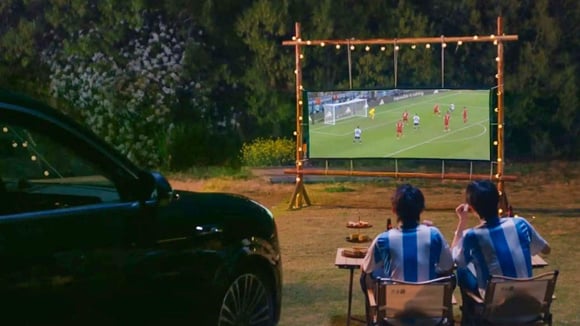
The movie-screen demo is the eye-catcher, but it is not the main point. Huawei is using the xPixel system to show how headlights can become an active interface between the car, the road, pedestrians, and even the experience of being parked.
xPixel is moving beyond smart beam control
Auto news : Huawei is not starting from scratch here. The xPixel units originally focused on adaptive lighting, using the beam to reduce glare and read the road better. In other words, they were built to do what a modern headlight should do without drawing attention to itself.

The new version goes further by projecting color images. In practice, a parked vehicle can become a small outdoor projector, capable of showing a film, a series, or even a sports event on a flat surface. It sounds excessive, and it is. But it also makes Huawei’s point: the headlight is no longer just a light source, it is a multifunction module.
That fits a broader pattern in China’s auto industry, where every component is expected to serve more than one job. The headlight no longer just helps you see and be seen. It becomes part of a connected-car system where lighting doubles as a communication tool.
Safety is still the strongest argument
The video projection grabs the headlines, but Huawei is also pushing the road-use case. Earlier xPixel versions could already project guidance onto the pavement, including lane-change cues and signals aimed at pedestrians. That moves the tech away from novelty and toward actual vehicle-to-environment communication.
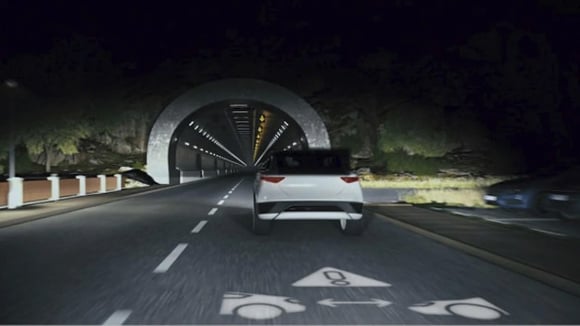
Used well, that kind of projection can make driving information easier to read on worn lane markings, in rain, or in poor visibility. That is where the idea starts to make practical sense: it is not replacing the driver, just giving them a clearer read on what is happening around the car.
Huawei also wants the system to help communicate with pedestrians. The headlights can project visual signals close to the vehicle, which could make the car’s intentions more obvious. On the road, though, the real test will be whether the imagery stays readable without turning into visual clutter.
Huawei is tying lighting into its driver-assistance systems
The bigger idea behind xPixel is that lighting is no longer standing alone. Huawei is linking the headlights to its driver-assistance hardware, turning the lighting system into an extension of the ADAS stack. The car is not just illuminating the route; it is using light to interpret it.

Huawei also highlights a next-generation 896-line LiDAR system that can detect obstacles just 14 centimeters tall from about 120 meters away. That includes small animals, debris, and road imperfections, all of which can become a bigger problem at night or at speed. The logic is clear: the better the car can see, the more its lighting can do around that visibility.
In that setup, the headlight starts to look like a safety interface. It is a very Chinese approach to the modern car: sensors, software, and lighting are designed as one system. Luxury is no longer only about upholstery or the center screen. It is also about how the car reads the road.
China is still the industry’s proving ground
For now, the latest xPixel system is slated for the Aito M9, a large SUV positioned as a flagship model, before reaching other vehicles such as the Qijing GT7 or Luxeed V9. That makes sense. High-end models are usually where automakers show off the newest tech before pushing it wider.
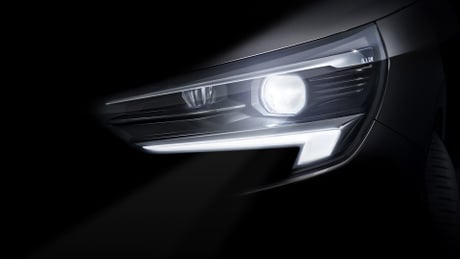
It also reflects a simple reality: not every innovation is born, tested, and refined at the same pace. China is now the major testbed for advanced lighting, driver assistance, and in-car display functions. What looks over the top from Europe can already be launched, sold, and iterated there.
That matters because mixing functions makes the product harder to copy quickly. Huawei is not just building a smarter headlight. It is building a product logic where one component can serve multiple roles, from everyday driving to a very theatrical demo.
Europe is already moving, just not this far
In Europe, nobody is projecting movies with headlights yet. But automakers have already pushed deep into adaptive lighting with Matrix LED, Digital Light, and similar systems that shape the beam, follow the road, and project certain symbols onto the pavement.
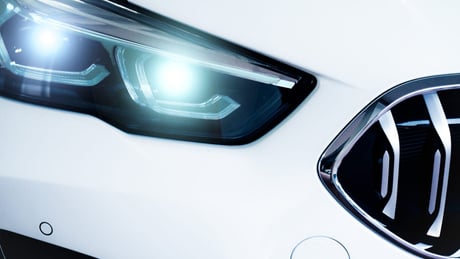
Systems from Audi, BMW, Mercedes, and Volkswagen already adjust lighting for traffic, speed, and road geometry. Valeo’s AI-driven systems are moving in the same direction, with lighting that can project pictograms, such as a reminder to keep your distance near a tunnel. That is still utility-first tech, not parking-lot cinema.
The difference is ambition. In Europe, smart headlights are still mostly about visibility and safety. In China, they are also becoming a space for communication and entertainment. That says a lot about how fast the market there is pushing the car toward a more deeply integrated digital role.
What Huawei’s headlight demo really tells us
Huawei’s point is not just to make people smile with a headlight that can project a movie. It is showing that automotive lighting is entering a new phase, where the line between useful function and tech spectacle is getting much harder to see.
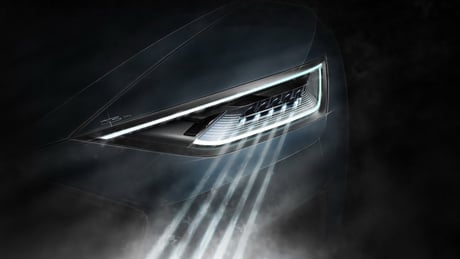
- The xPixel headlights can now project color images, not just shape the beam.
- The movie feature is mostly a demo, but it points to a much broader product strategy.
- The most practical uses are still road guidance, signaling, and safety around the vehicle.
- Huawei is pairing the headlights with its driver-assistance systems and 896-line LiDAR.
- The technology is headed first to the Chinese market, starting with the Aito M9.
- Europe already has advanced smart headlights, but the ambition is still more restrained.
For buyers, this is for the kind of tech-focused flagship customer who wants the latest hardware and is comfortable with a system that does a lot at once. For everyone else, the practical limit is obvious: useful lighting is one thing, turning the road into a screen is another.


