Monospaces, the kings of the 90s and 2000s, have seen their definition stretch well beyond their original boundaries. Today, these vehicles seem to be fading away, yet they gave rise to some truly unexpected creations. From the bold attempt of the Renault Avantime to the eccentric Chrysler PT Cruiser convertible, let’s dive into the quirky world of these automotive hybrids that tried to redefine family transportation.

A Coupe That Never Took Flight: The Renault Avantime
The Renault Avantime is often touted as the first “coupé-space” in history, a concept straddling the line between minivan and coupe. The idea of merging these two worlds seemed appealing: on one side, the practicality of a traditional minivan, on the other, the elegance of a coupe. However, this marriage quickly showed its limits. With only 8,552 units sold between 2001 and 2003, it stands as a testament to the commercial failure of this bold venture. The design, featuring three doors and no central pillar, failed to convince buyers seeking functionality. The 210 hp V6 3.0, while powerful, couldn’t compensate for the lack of practicality. Ultimately, the Avantime became a collector’s item, but it remains an example of a missed genius.

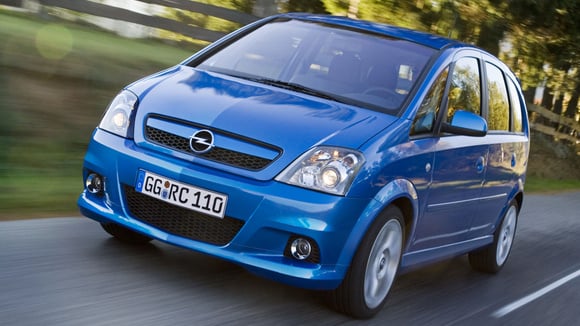
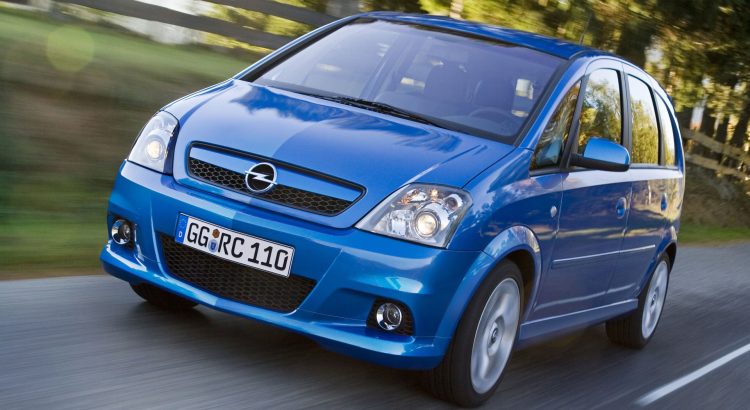
The Opel Meriva OPC, the only small sporty minivan in history © Opel
The Chrysler PT Cruiser Convertible: A Misplaced Nostalgia
In terms of hybridization, the Chrysler PT Cruiser convertible encapsulates a bygone era. In the 2000s, neo-retro trends were in vogue, and Chrysler attempted to blend this aesthetic with the concepts of a minivan and a convertible. The result? A vehicle that captivated crowds at its unveiling in 1999 but left many puzzled when the convertible version launched in 2004. Although it surpassed a million units across all versions, the convertible remained a curiosity, especially in France, where nearly 20,000 units of the closed version found buyers. The PT Cruiser serves as a reminder that innovation can sometimes clash with market realities.

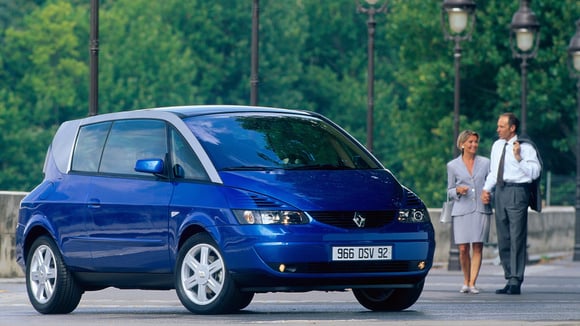
Announced by the eponymous concept, the Avantime is the first “coupé-space”. The last one as well… © Renault
Renault Scénic RX4: The Adventurous Minivan
At a time when minivans were king, the Renault Scénic RX4 aimed to attract adventurous families. In 2001, as SUVs began to emerge, Renault sought to combine comfort with off-road capabilities. With the help of Steyr-Puch, known for its collaboration with Mercedes on the G-Class, the Scénic RX4 was transformed into a permanent 4×4. While the idea appealed to some, it wasn’t enough to reignite enthusiasm for the minivan. The RX4 paved the way for more modern models but also highlighted the limitations of a concept struggling to adapt to new consumer expectations.

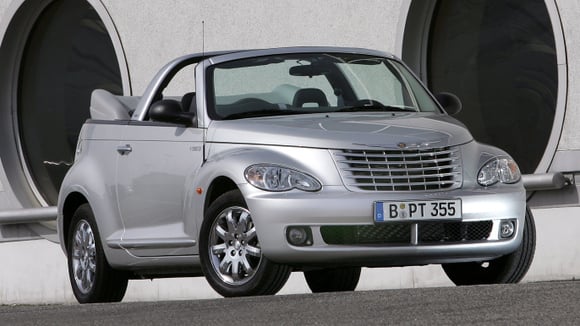
The look of the PT Cruiser, especially in convertible form, is certainly eye-catching. © Chrysler
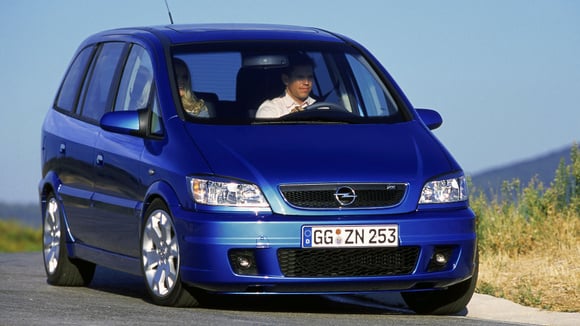
Opel Zafira and Meriva OPC: When Sportiness Invades Family Life
During a time when minivans reached their peak, Opel decided to inject a dose of sportiness into its models. The Zafira OPC was a true surprise with its 192 hp 2.0 turbo, capable of accelerating from 0 to 100 km/h in 8.2 seconds. This genre-blending was renewed with the second generation, boosted to 240 hp. Even the Meriva had its sporty version with 180 hp. However, these attempts failed to find their audience, illustrating a disconnect between supply and demand. At a time when SUVs began to dominate, sportiness in a minivan couldn’t convince buyers.

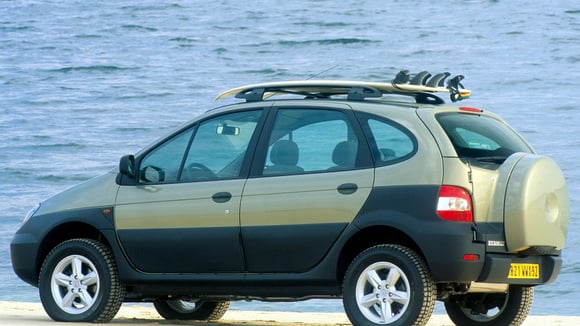
The Renault Scénic RX4 featured a specific tailgate integrating a spare wheel to enhance its rugged appeal. © DR
A Bygone Era: Why Did These Innovations Fail to Take Off?
These atypical models raise a crucial question: why did so many innovations in the minivan segment fail to find their place in the market? The answer lies in the evolution of consumer expectations. The rise of SUVs has reshaped the automotive landscape by offering a blend of style, practicality, and off-road capabilities. While minivans have charmed with their modularity, they often struggled to adapt to new market demands. Their attempts at diversification sometimes resulted in eccentric creations that failed to resonate.

In Summary
- Minivans attempted bold blends without lasting success.
- Models like the Renault Avantime and Chrysler PT Cruiser convertible illustrate this phenomenon.
- Sportiness in minivans proved to be misaligned with market demands.
- The emergence of SUVs has redefined consumer expectations.
- These attempts reveal a gap between innovation and market reality.
In conclusion, these unusual models remind us of an era when minivans sought to reinvent themselves in the face of changing competition. For car enthusiasts, they remain curiosities to explore, but for modern families, the question lingers: what could justify a resurgence of minivans in the coming years? Looking ahead, the shift towards more eco-friendly and versatile vehicles could breathe new life into similar concepts.