


At a time when electric vehicle sales are taking an uncertain turn, Tesla unveils analysts’ forecasts that paint a rollercoaster future. Between worrying declines and hopes for growth, the iconic brand finds itself at a crossroads.
Disappointing numbers for 2025
As the year 2025 comes to a close, automakers are preparing to unveil their sales figures. However, Tesla has chosen to innovate by sharing Wall Street’s estimates on its investor relations website, an uncommon approach that reveals alarming forecasts. The automaker has compiled the consensus of no less than 20 financial firms, including heavyweights like Wedbush Securities and Morgan Stanley, painting a bleak picture for the electric vehicle leader.

Tesla Model Y Standard
Analysts predict a drop in Tesla’s global deliveries in the fourth quarter of 2025, estimated at 422,850 units, a decrease of 15% compared to the previous year. On an annual basis, sales are also expected to show a decline of 8.3%, reaching 1.64 million units compared to 1.79 million in 2024. These figures are not surprising; they reveal a downward trend exacerbated by the end of federal tax credits and an aging model portfolio.
The impact of government policies
The disappointing figures for Tesla are not solely due to internal management but also to political decisions. The elimination of the $7,500 federal tax credit has had a significant impact on electric vehicle sales, weakening demand in an already slowing sector. Even before this cut, the trend toward declining sales was evident, exacerbated by a model offering that fails to excite consumers.
Adding to this is the phenomenon of the “Elon Effect,” where customers, disappointed by the brand’s strategic choices, have begun to turn their backs on Tesla. In the third quarter, the brand recorded nearly half a million deliveries, but this was mainly due to a rush of buyers eager to take advantage of tax credits before their expiration.
Mixed projections until 2029
Tesla is not only assessing the current year; it has also shared forecasts up to 2029. Analysts expect a slight recovery with deliveries reaching 1.75 million units in 2026, then crossing the 2 million mark in 2027. However, these forecasts are far from Tesla’s initial ambitions, which hoped to reach 20 million sales by 2030, a figure now removed from its public communications.
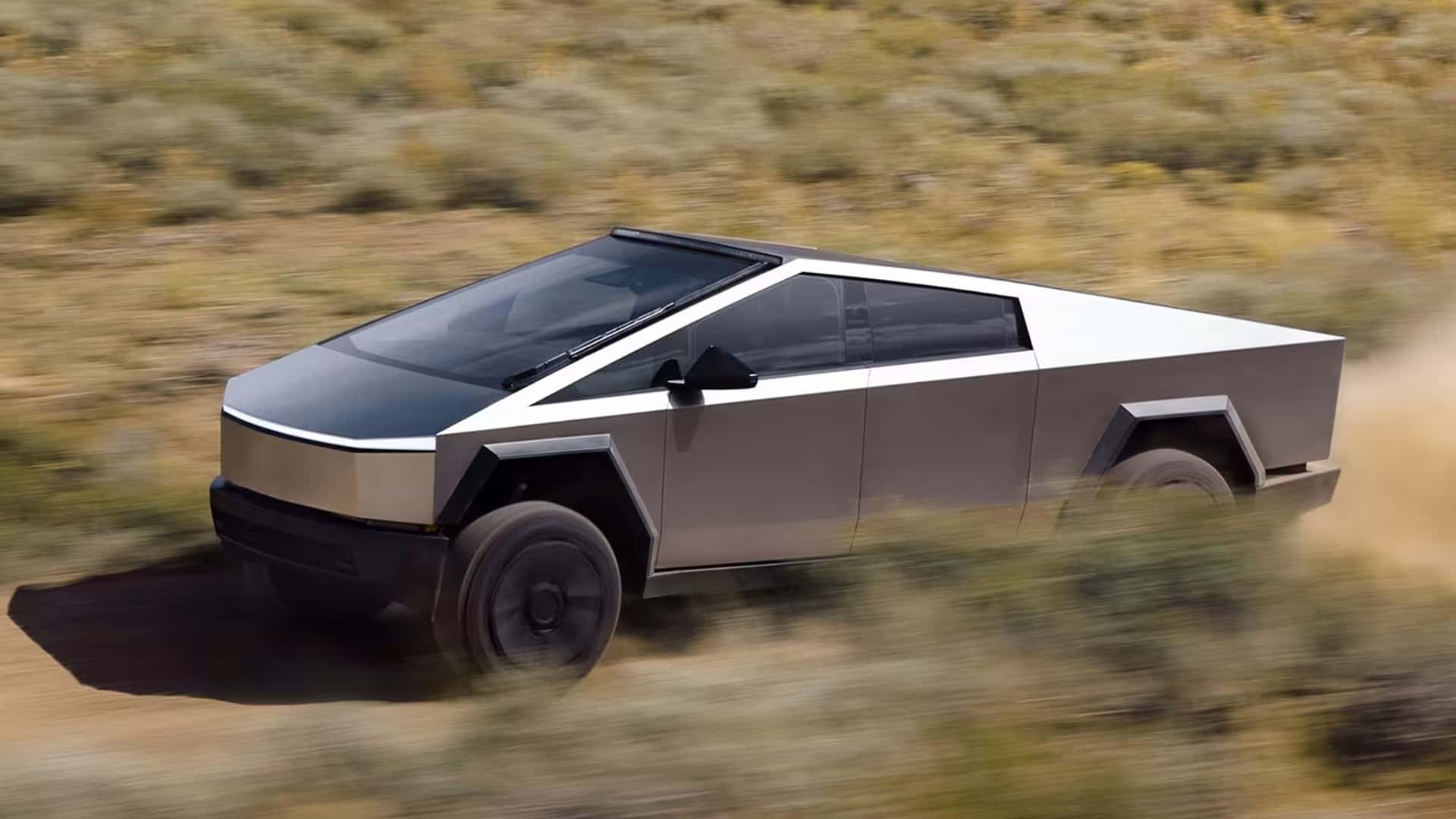
Tesla Cybertruck with optional off-road lightbar
Indeed, projections indicate that deliveries could reach 2.35 million in 2028 and exceed 3 million in 2029. Yet, these figures are marred by a wide margin of error, illustrated by a “standard deviation” of nearly one million units for 2029 deliveries. This means opinions among analysts diverge significantly: some remain optimistic while others take a more conservative approach.
Hopes rest on the Cybercab
Despite these uncertainties, growth is presented as a foregone conclusion by Wall Street, primarily relying on the launch of the Cybercab. This revolutionary model, designed without a steering wheel and featuring butterfly doors, is expected to enter production in April 2026. Nevertheless, beyond this ambitious project, Tesla has yet to announce any new high-potential models.
The brand has also canceled an affordable $25,000 electric vehicle to focus on artificial intelligence and robotics. The simplified versions of the Model Y Standard and Model 3 Standard have not had the expected impact on fourth-quarter sales, raising doubts about Tesla’s future attractiveness.
A heavy wait for investors
For investors and enthusiasts of the brand, the current period is tinged with uncertainty. As Tesla seems to navigate troubled waters with an aging portfolio and declining sales forecasts, the lack of significant innovations could hinder its growth. The coming years will be crucial in determining whether the brand can reconnect with the success it once enjoyed.
To stay informed about the latest trends and news in the automotive industry, feel free to check out our articles on automotive news.


