

In 2023, the Citroën C3 received a zero rating during the Latin NCAP crash tests, a harsh blow for the French manufacturer. While Stellantis is working to redevelop this model for the European market, the mystery remains: where are the Euro NCAP evaluations of the C3?
A zero that raises questions
The new Citroën C3, freshly launched in the South American market, failed to impress during the Latin NCAP crash tests, receiving a catastrophic score of zero out of five. This finding could be dismissed as a mere anomaly if it weren’t for the sad reality of a vehicle that, in addition to its lack of safety equipment, has a structure deemed fragile. Indeed, this version is equipped with only two airbags, leaving consumers concerned about their safety perplexed.
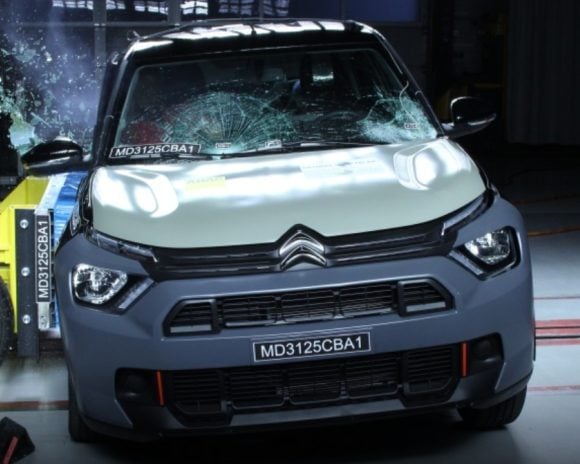
The crash test of the Citroën Basalt in South America © Latin NCAP
Sharp criticisms from the president of Latin NCAP
Stephan Brodziak, the president of Latin NCAP, did not mince his words when discussing the situation of the Smart Car platform models, which includes the Citroën C3 and its German cousin, the Opel Frontera. According to him, Stellantis “directly compromises passenger safety” in this region, highlighting a policy of evaluation well below international standards. Brazilians have been particularly annoyed by this alarming rating, and it’s hard to argue against them.
Currently, the Citroën C3 sold in Brazil does not only stand out for its lack of equipment. In fact, the very structure of the vehicle has raised serious concerns, to the point that the C3 Aircross version also received a zero during its Latin NCAP evaluation. More recently, the Citroën Basalt followed the same path, achieving a similar score, despite a significant improvement in its protection for children, reaching 58%. By comparison, the C3 Aircross and C3 struggled with scores of 11% and 12% respectively.
Safety standards in question
What is striking about these evaluations is that organizations like Latin NCAP base their ratings not only on the structure and safety equipment present in vehicles but also on criteria sometimes deemed secondary. Yet, in the case of the C3 and other Smart Car platform models, driver protection remains very inadequate, averaging between 30% and 35%.
Where are the crash tests for our Citroën C3?
A question arises: what about the European versions of these models? It has been over a year since the Citroën C3 has been marketed on the old continent, but no trace of an Euro NCAP crash test has been reported. Certainly, there is no obligation for manufacturers to present their vehicles for testing, but the absence of official evaluations raises legitimate questions.
The Euro NCAP protocol states that each member must sponsor the evaluation of at least one model per year. Manufacturers can also choose to sponsor their own models. Nevertheless, the absence of Smart Car platform models in these tests remains concerning. We have reached out to Stellantis on this issue and are awaiting a response. Other brands also seem to be neglecting these tests, believing they no longer represent a sufficient selling point.
Stellantis facing criticism
In the face of these accusations, Stellantis has sought to defend itself by reaffirming its commitment to automotive safety. The group assures that all its models comply with current national and international regulations. Furthermore, it specifies that all vehicles sold in South America are subject to evaluation protocols at a recognized safety center.
However, the criticisms persist. If Stellantis wants to restore its image and regain consumer trust, it must demonstrate transparency regarding its practices and models. Consumers have the right to know if their safety is genuinely considered in the design of their vehicle.
In conclusion, the chaotic journey of the Citroën C3 in crash tests underscores the crucial importance of automotive safety. Brands must commit to offering vehicles that not only appeal with their design but also guarantee the protection of their occupants.


