

BMW Group is teaming up with French AI startup Mistral AI to supercharge its virtual crash simulation process. The goal is to leverage specialized artificial intelligence to analyze massive datasets, ultimately accelerating the development of safer vehicles.
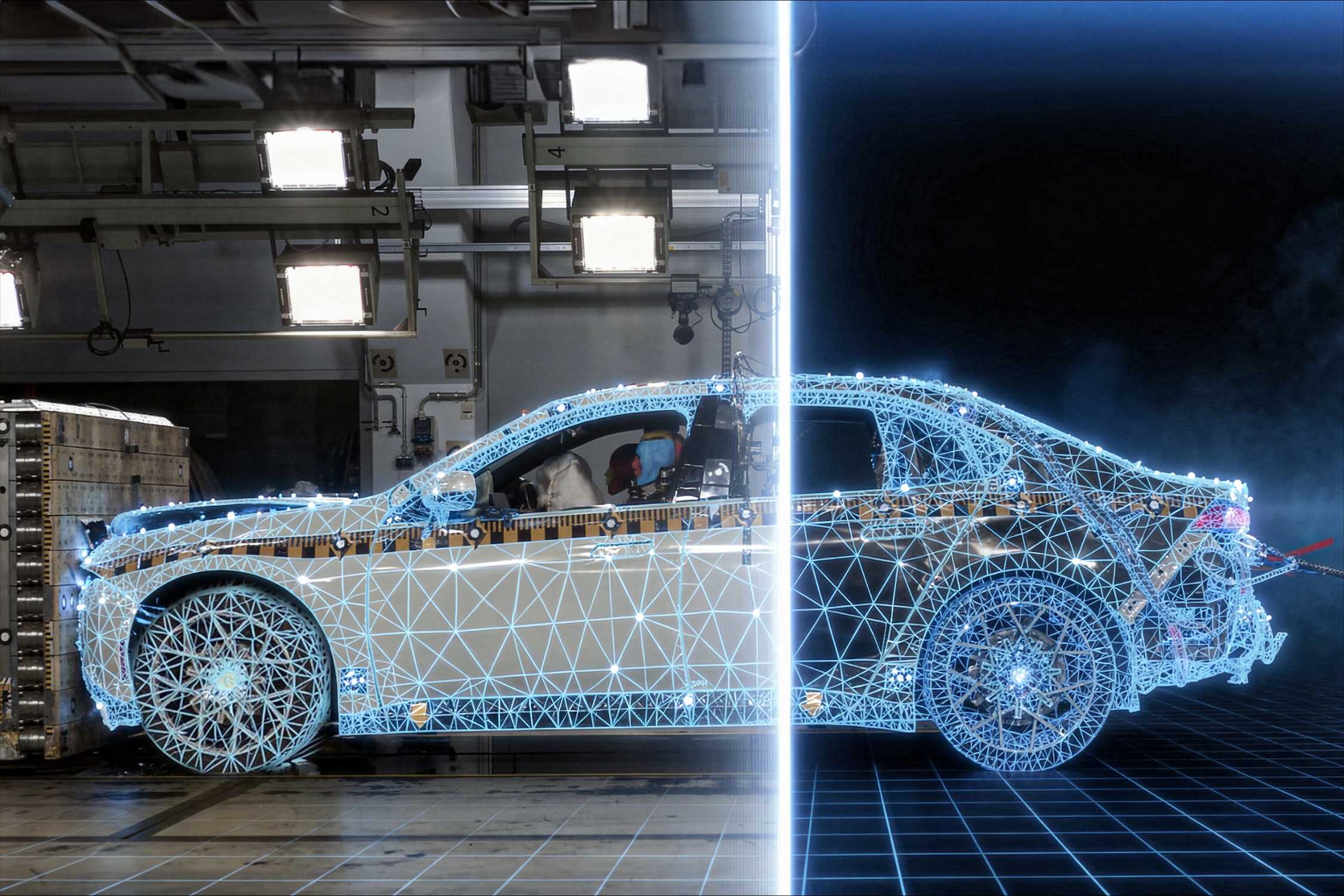
In the automotive world, safety is non-negotiable. For BMW Group, crash simulation is a cornerstone of its development pipeline. Thousands of virtual simulations are conducted weekly, generating an enormous amount of data—over a petabyte to date. It’s within this complex landscape that artificial intelligence promises to make a significant impact.
AI: A New Tool for Automotive Safety
The partnership between the German automaker and Mistral AI, a specialist in artificial intelligence models, aims to enhance the quality, accuracy, and speed of crash simulations. This marks a significant first step in integrating AI into more specialized areas of automotive development and, more broadly, across BMW Group’s entire value chain. The objective is to create custom AI models capable of understanding and analyzing the specific technical nuances of automotive engineering.
Industrial Data Fuels Cutting-Edge AI
“For BMW Group, leveraging industrial data is a key factor in translating artificial intelligence into value creation,” explains Dr. Franz Decker, CIO and Senior Vice President of the group. The alliance with Mistral AI combines BMW’s extensive engineering datasets with the French company’s model training capabilities. The expected outcome is a specialized AI that can assist engineering teams with particularly demanding development tasks.
A Staggering Amount of Data
The complexity of BMW’s crash simulations, with thousands of virtual tests each week, generates a phenomenal volume of technical data. This information, accumulated over years, offers invaluable insights into how vehicle structures and materials behave during an impact. This data treasure trove provides a unique foundation for training an industrial AI model that can continuously learn and improve.
“Large Industry Models”: The Future of Industrial AI
To deploy this approach at scale, BMW is focusing on “Large Industry Models” (LIMs). Unlike general-purpose AIs, these models are specifically trained on engineering and simulation data unique to the automotive industry, particularly from safety testing. LIMs therefore possess highly specialized domain knowledge, requiring not only industrial data but also deep technical expertise and learning environments tailored to BMW’s development processes.
A Strategic Collaboration for Innovation
This partnership underscores the growing importance of industrial data for the next wave of value creation. It also strengthens BMW Group’s innovation and artificial intelligence ecosystem, positioning it at the forefront of technology in a sector where safety is paramount. Integrating AI into critical areas like crash simulation promises to accelerate the development of increasingly capable and, most importantly, safer vehicles for everyone.
Key Takeaways from the Partnership
- Accelerated Development: AI is expected to shorten new model development timelines by optimizing crash simulations.
- Enhanced Accuracy: Fine-grained data analysis by specialized models should improve the reliability of simulation results.
- Improved Safety: The ultimate goal is to design even safer vehicles through a better understanding of impact dynamics.
- French Expertise: The collaboration highlights Mistral AI’s know-how in advanced artificial intelligence.
- Towards Industrial AI: This project paves the way for using industry-specific AI models in other sectors.


Related articles : BMW 1 Series
Selection of articles, guides and advice : BMW 1 Series.


