

After securing pole position last year, Cadillac arrives at Le Mans with clear ambitions. The American manufacturer has worked tirelessly to iron out its weaknesses and position itself as a serious contender for victory. The question is: will the improvements be enough to compete with Ferrari and Porsche?
It’s rare for the 24 Hours of Le Mans to unfold without an obvious favorite, but this 2026 edition is shaping up to be particularly unpredictable. This is due to an unprecedented density in the Hypercar field and a tightening of performance that makes any prediction hazardous. Yet, a persistent whisper has emerged in the paddock: what if this year, it’s finally Cadillac’s year? One year after snatching pole position, the American manufacturer seems to have doubled down to convert its potential into a win.
Motorsport is a game of details, and Cadillac understands this well. Engineers have focused their efforts on the aerodynamics of their V-Series.R LMDh prototype, with one primary objective: increasing top speed. A glaring weakness in 2025, which proved costly against the Porsches and Ferraris on the long straights of La Sarthe. The quest is therefore simple: improve top speed without sacrificing the car’s inherent qualities.
Lessons Learned from Last Year: Top Speed is Imperative
Norman Nato, one of the French drivers involved, doesn’t mince words. While the specifics of the improvements remain secret, the assessment from last year is clear: “If you look at last year’s qualifying, it was pretty obvious where we were fast and where we were lacking. We tried to improve on that.” Comfort in twisty sections, like the Porsche Curves, isn’t enough at Le Mans. To resist and, more importantly, to overtake during the race, a lack of top speed quickly becomes a decisive handicap.
Sébastien Bourdais, another prominent figure in the Cadillac camp, confirms this strategic direction: “Everyone really tried to readjust the car’s aero to make us more competitive in race conditions, clearly with more top speed, and to bring us a bit more in line with what the others are doing.” The former F1 driver highlights a crucial point: “We saw that the car was very, very fast over one lap last year, but that’s not how you win Le Mans. If you get overtaken on the straights and can’t overtake back… A tremendous amount of work has been done, and I think we should be able to fight this year; that’s the goal.” The ambition is stated, the work colossal; now it remains to be validated on track.
The Test Day: The First Gauge of Evolutions
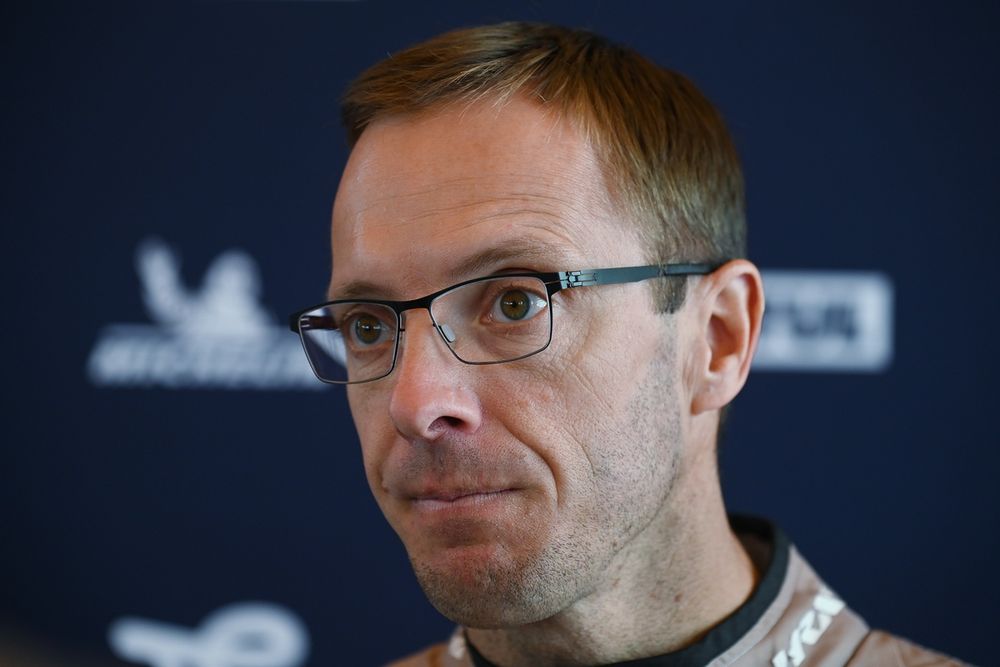
Sébastien Bourdais is convinced that Cadillac has the assets to aim for victory.
It is therefore with palpable impatience that the teams will approach the Test Day this Sunday. This will be the first concrete opportunity to gauge the effectiveness of the aerodynamic modifications, particularly the much-discussed top speed. For Bourdais, who shares the wheel of the No. 38 with Earl Bamber and Jack Aitken, the suspense is at its peak: “This is the first time we’ll seriously push the car above 300 km/h, so it’s the first time we’ll really know where we stand aerodynamically, and how much it will cost us against the Porsches.”
Norman Nato shares this feeling of feverish anticipation. At the wheel of the No. 12 with Louis Delétraz and Will Stevens, he knows that the work done on simulators and during private tests is only part of the equation: “We have a rough idea of where we gained and potentially lost a little, but we don’t know exactly yet, because every circuit is very different.” Recent outings at Imola, Spa, and especially Silverstone two weeks ago were precisely aimed at fine-tuning the setups before the big event at La Sarthe.
A Numerical Advantage: Three Cadillacs on the Grid
One of Cadillac’s strengths this year lies in its numerical presence. With three V-Series.Rs entered, the American brand has a greater firepower than many of its competitors. This multiplicity of prototypes not only allows for a better distribution of development efforts and data collection but also offers increased track presence, potentially translating into better strategies and traffic management.
While the competition watches closely, Alpine driver Frédéric Makowiecki acknowledges the crucial importance of top speed at Le Mans: “It remains paramount if you want to have a race where you control your own destiny and don’t just react to traffic.” When asked about Cadillac’s ambitions, the Frenchman replies with a mischievous smile: “They can be more than confident!” A statement that, coming from a rival, echoes the American hopes.
Key Takeaways on Cadillac’s Rise:
- Top Speed Objective: Improving top speed is Cadillac’s absolute priority after lessons learned in 2025.
- Aerodynamic Work: Evolutions focus on aero to gain efficiency on long straights.
- Race Strategy: The ambition is clear: move from pole position to victory by being more competitive in race conditions.
- Three Cars Entered: The presence of three V-Series.R prototypes offers a numerical and strategic advantage.
- Attentive Competition: Rivals recognize the importance of top speed and are closely monitoring Cadillac’s progress.
- On-Track Validation: Test Day will be the first real test to confirm the announced progress.


