
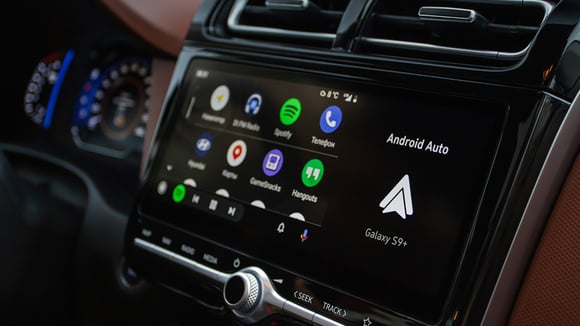
As Android Auto has established itself as a key player in automotive connectivity, Google is poised to make a significant leap forward. The ability to control the radio directly through the Android Auto interface could transform how drivers interact with their vehicles. This technical advancement raises questions about the future of embedded systems.

A Long-Awaited Feature: Radio at Your Fingertips
For several years, Android Auto has become one of the most widely used systems for connecting a smartphone to a car’s display. Navigation, calls, music, or messaging: the interface allows access to essential phone functions while driving. However, despite its popularity, the system still has some limitations, including a particularly frustrating one: the inability to control the vehicle’s radio directly. This long-awaited feature could finally become a reality, thanks to the latest software updates. In fact, clues discovered by our colleagues at Android Authority suggest that Google is working on an option that allows users to search for and select radio stations directly through the Android Auto interface.

A Challenge Amid Evolving Dashboards
This advancement addresses a significant issue: the gradual disappearance of physical buttons in modern cars. Many manufacturers have opted for touchscreens that centralize most controls, making access to essential functions like radio or climate control sometimes more complicated. By directly integrating these functions into Android Auto, Google would enable this interface to transform into a true control center capable of managing an increasing number of embedded systems. For drivers, this means saving time and simplifying operation while on the road.

A Significant Technical Challenge
Behind this seemingly simple function lies a considerable technical challenge. Unlike Android Automotive, which operates directly on the vehicle’s multimedia system, Android Auto primarily relies on a mirroring principle that displays smartphone applications on the vehicle’s screen. To enable Android Auto to directly control the radio, Google must establish communication with the vehicle’s electronic systems, requiring complex integration with various internal networks, such as the CAN bus, commonly used in most modern cars.

Integration Challenges Vary by Manufacturer
The challenge is that each manufacturer implements their systems differently: some use standardized radio modules, while others develop their own architectures. Additionally, regional differences come into play: in North America, many vehicles use HD Radio technology, while in Europe, the dominant standard is DAB+. In other regions, analog systems remain prevalent. Therefore, Google must develop a solution that works with this wide variety of vehicles and audio systems.

A Gateway to More Features
If this initial hardware integration works well, it could pave the way for further similar functions. Climate control settings, seat positioning, or other embedded systems could ultimately be controlled directly through Android Auto. Clues in the software’s beta versions suggest that Google is already working on integrating climate controls directly into the interface. This could position Android Auto as a central player in the connected driving experience.

Conclusion
- Google is working on direct radio integration into Android Auto.
- This aligns with the trend toward dashboards without physical buttons.
- Complex technical challenges arise due to the variety of embedded systems.
- This advancement could pave the way for further integrated controls in the future.
- Users may soon benefit from a simplified and more functional interface.
This evolution of Android Auto marks a significant turning point in how embedded systems interact with smartphones. For drivers, this means an improved user experience, but it also raises questions about the future of digital interfaces in automobiles. It remains to be seen how competitors will respond to this strategic move by Google and what further innovations may emerge in the coming years.


