
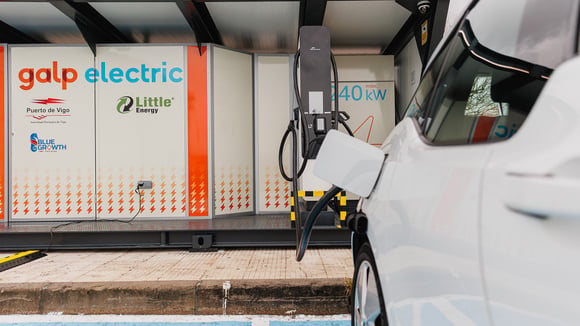
As electric mobility advances, the issue of charging becomes increasingly pressing. In this context, Nissan and Little Electric Energy are testing an innovative solution in Vigo, Spain, by repurposing Nissan LEAF batteries to power fast charging stations. This project could redefine our approach to electric charging.
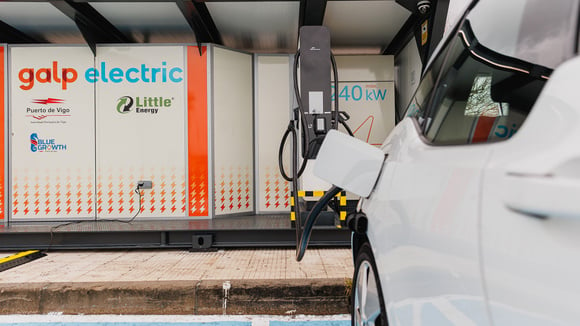
A Bold Pilot Project at the Port of Vigo
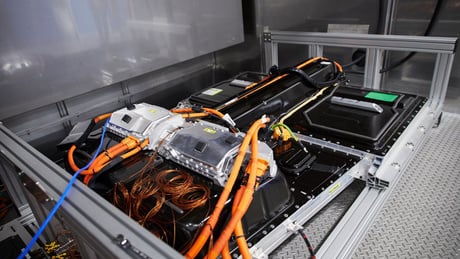
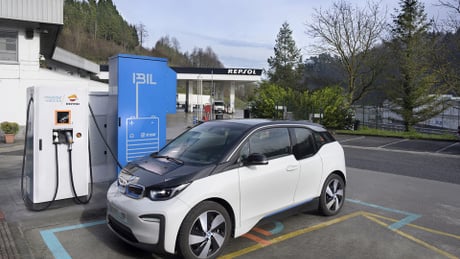
With the exponential rise of electric vehicles, charging has become a major concern. In Vigo, an interesting initiative is taking shape: twelve Nissan LEAF batteries, no longer suitable for driving, are finding new life in a pilot project. Developed by Little Electric Energy, this solution relies on a stationary storage system capable of delivering up to 240 kW of fast charging. In simple terms, these batteries are not discarded; they are transformed into energy accumulators.
A Second Life for Batteries: Towards a Circular Economy
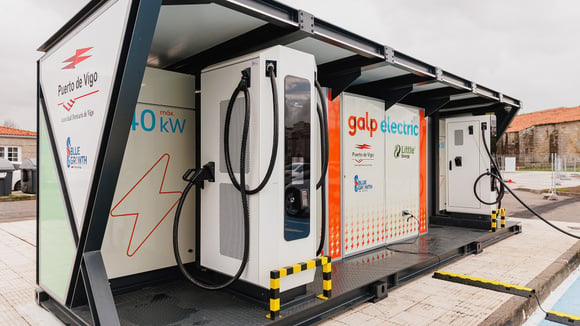
Lithium-ion batteries retain enough capacity even at the end of their automotive cycle for other uses. In Vigo, the project focuses on smart recycling. The twelve packs of 30 kWh form a 300 kWh storage system, allowing for slow accumulation of electricity from the local grid and rapid discharge during charging. This buffering mechanism is particularly relevant in areas where the electrical grid is insufficient. Thus, this system offers a pragmatic alternative to costly high-performance lines.
Green Charge Flex: A Modular and Adaptable Solution
The Green Charge Flex system stands out for its modularity. It integrates the batteries into a storage unit that powers multiple charging points and offers AC charging options up to 22 kW as well as DC up to 240 kW. This flexibility allows the installation to be adapted to different charging standards such as CCS2, CCS1, and CHAdeMO. In practice, this means that the infrastructure can be quickly deployed where needed, without heavy infrastructure work.
A Dual Challenge: Batteries and Infrastructure
This project not only offers a technical solution but also tackles two major challenges. On one hand, it extends the lifespan of end-of-cycle batteries and reduces the need for immediate recycling. On the other hand, it directly addresses the limitations of charging infrastructure, often cited as a barrier to electric vehicle adoption. Indeed, in several European countries, the capacity of the grid is frequently highlighted as an obstacle. The initiative in Vigo could serve as a model for other regions facing similar challenges.
A Collaborative Approach Supported by Various Stakeholders
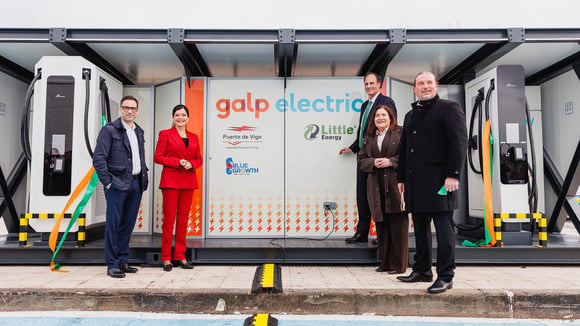
The Vigo project benefits not only from the support of Nissan and Little Electric Energy but also from the local port authority and a charging operator. This partnership underscores the importance of a collaborative approach to solving infrastructure issues. Soufiane El Khomri, director of Nissan Energy for the AMIEO region, emphasizes that this initiative aims to reduce pressure on electrical networks while maximizing battery value. In summary, it is not just a technical innovation but a true paradigm shift in energy resource management.

Logistical Challenges to Overcome
However, this approach is not without challenges. Large-scale implementation could raise questions about the long-term reliability of the cells and the stability of their performance. If the Vigo experiment proves successful, it will still be necessary to consider the logistics required to manage a network of such installations. Nevertheless, this experimentation could pave the way for a new model of charging infrastructure in underserved areas.

Summary
- The Vigo project uses Nissan LEAF batteries to power fast chargers.
- A modular solution that addresses local electrical grid limitations.
- An initiative that extends battery life while improving charging infrastructure.
- A collaborative model involving multiple industry stakeholders.
- Logistical challenges remain an obstacle to large-scale implementation.
In conclusion, the initiative by Nissan and Little Electric Energy in Vigo represents a potential turning point in electric charging management. It demonstrates how resource reuse can address contemporary challenges while promoting a more sustainable energy transition. In the medium term, this solution, if widely adopted, could transform the landscape of charging infrastructure in Europe and beyond, facilitating broader electric vehicle adoption.


