The first Alfa Romeo Spider didn’t win everyone over at a glance. That’s exactly why it matters sixty years later: beneath a shape that split opinion, the Duetto established a distinctly Italian idea of the roadster—more elegant than agreeable, and more technically serious than its looks might suggest.
In the automotive news cycle, anniversaries often become an excuse to dust off a familiar legend. Here, the real story runs deeper. The original Spider became an icon not because it tried to please everybody, but because Alfa Romeo was willing to break with its own playbook.
The Spider filled a clear gap in Alfa Romeo’s lineup
In the early 1960s, Alfa Romeo already had solid footing with the Giulia, a lively sedan that gave middle-class performance cars its own Italian twist. The coupes derived from it were gaining ground too, but the range still lacked a convertible that could succeed the Giulietta Spider without dragging yesterday’s design language into a new decade.
So this wasn’t just a styling exercise. It was a lineup necessity, and just as important, an image problem to solve. Alfa couldn’t live on practical, capable cars alone; it needed a Spider that spoke as much to emotion as it did to the driver. That’s where the Duetto story begins, with a brief that sounded simple on paper and proved far tougher in steel.
Pininfarina pushed an aerodynamic shape, even if it risked backlash
Before the production car took shape, Alfa Romeo explored several paths. A detour through Bertone produced the GTC in 1964, designed by Giorgetto Giugiaro, but the study went nowhere. Touring’s financial trouble, despite being lined up for production, also forced Alfa to rethink the plan. The project then moved to Pininfarina, drawing on styling research from the Superflow series developed through the second half of the 1950s.
What arrived in 1966 made no attempt to split the difference. With its low nose, taut flanks, tapered tail, and low beltline, the Spider 1600 presented itself as an aerodynamic object first and a pretty postcard second. Under Aldo Brovarone, with Battista “Pinin” Farina’s influence close at hand, the car took on a smooth, almost fluid form. It looked clean and fast, but it also surprised buyers expecting a gentler evolution of the Giulietta Spider.
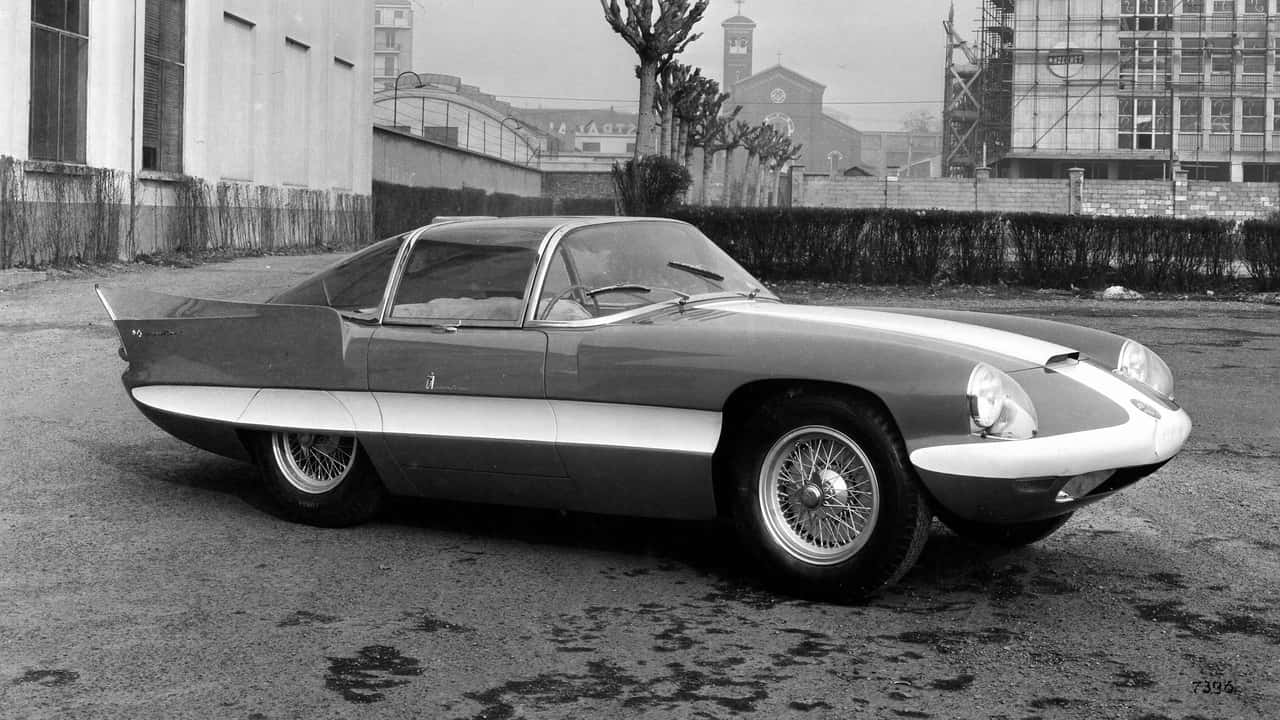
Super Flow 6C Pinin Farina (1957)

Alfa Romeo Super Flow III (1959) by Pininfarina

Alfa Romeo Spider Duetto (1966-1969)
That decision is central to the car’s legacy. Alfa Romeo didn’t design this Spider to reassure anyone; it designed it to move the conversation forward. That’s often where the important cars come from—when they’re willing to be disliked at launch.
The rounded tail drew criticism before it became the car’s signature
Buyers first met a convertible measuring 4.25 m, powered by a 1.6-liter engine with 80 kW (109 ch), but it was the bodywork that dominated the discussion. Underneath, the hardware was solid, drawing from the Giulia Sprint GT Veloce. The real flashpoint was the so-called “Rundheck” rear end, that rounded, tapered tail that immediately split opinion.
Some Alfa loyalists thought it looked too futuristic, too far removed from the brand’s usual cues. Others saw a rare purity to it, especially with the top down, when the slim windshield and small wind deflectors nearly disappeared from view. The broad character line along the side and the Plexiglas headlamp covers weren’t just visual flourishes either; they followed aerodynamic and structural logic. In other words, the styling wasn’t pasted on. It had a job to do.
The nickname “Osso di Seppia,” coined by workers in Grugliasco because of the car’s cuttlebone-like tail, says a lot about its fate. What first looked odd became the defining feature. Car history is full of that kind of reversal: the designs people argue about tend to outlast the safer shapes that start aging the minute they leave the factory.

Alfa Romeo Spider Duetto (1966-1969)

Alfa Romeo Spider Duetto (1966-1969)
The name stumbled, but the image took off fast
To launch the new Spider, Alfa Romeo held a contest to name it. More than 120,000 suggestions were sent to Arese. The company chose “Duetto,” a name meant to capture a blend of grace and strength. It was a smart idea, but it quickly ran into legal trouble: an Italian confectioner claimed the trademark, while Volvo was already selling a model called Duett.
So the badge officially disappeared at the start of 1967. The name didn’t. That’s one of the Duetto’s enduring quirks: even after the legal issue weakened it on paper, the public kept it alive. The market and pop culture did the rest. The car’s Atlantic crossing aboard the liner Raffaello and its appearance in The Graduate in 1967 gave it worldwide visibility. Once a car lands in the right movie at the right moment, it stops being just a model and becomes part of the cultural scenery.
The flattering quote attributed to Steve McQueen in 1966 fed the same effect. No need to overstate it. By then, the Spider was already growing beyond its spec sheet, and for a roadster, that’s usually where the real magic starts.
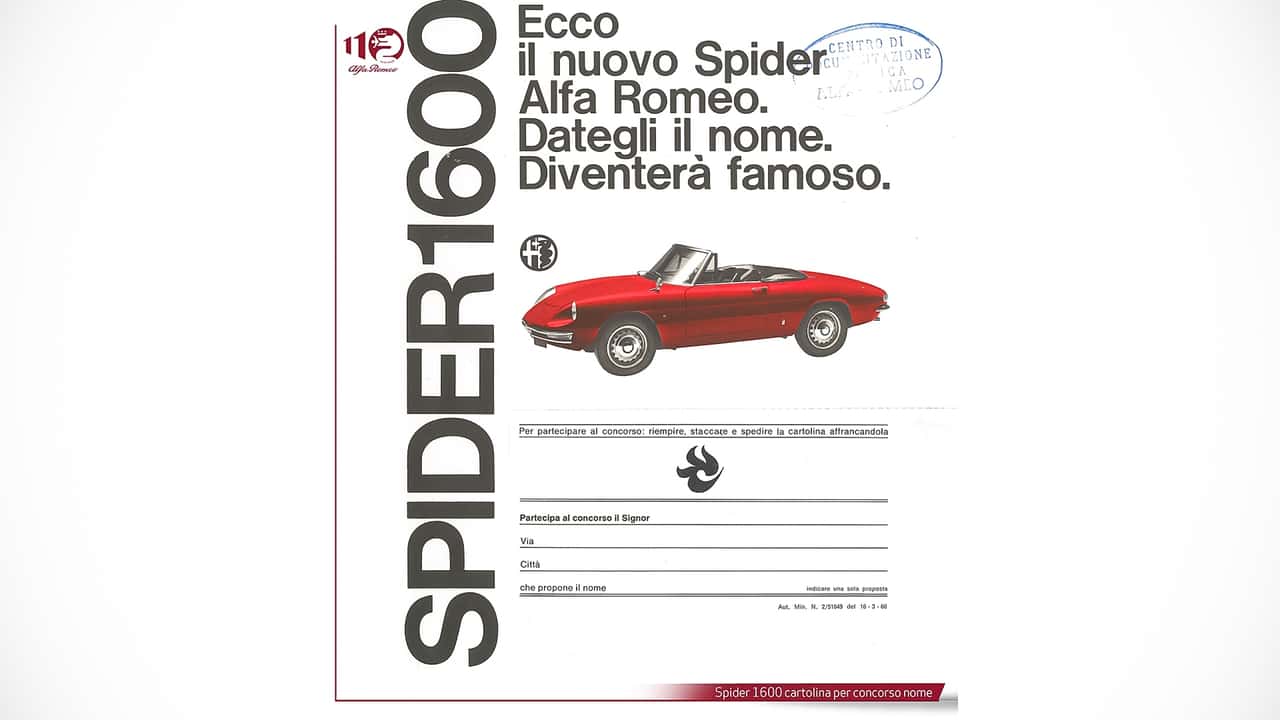
Alfa Romeo Spider Duetto (1966-1969)
The Duetto’s real strength was a seriously advanced technical package
The Duetto survived the decades for more than its shape. The Spider rode on a shortened Giulia type 105 chassis and arrived with a spec sheet that was impressively serious for its day: a 1.6-liter four-cylinder, dual overhead cams, alloy block and cylinder head, twin two-barrel carburetors, a five-speed manual transmission, and four-wheel disc brakes. In the mid-1960s, that wasn’t a footnote. It was a statement.
On the road, that layout delivered a roadster that did more than cruise with the top down. Alfa stuck to its core philosophy: a Spider still had to feel like a real sports car. Period road tests praised its road manners, with the predictable caveat that wet pavement could be tricky on today’s standards of tire width, given the narrow 155 tires. The top speed of 182 km/h also underlined its performance at a time when European traffic moved at a much more modest pace.
Inside, the mood stayed simple and coherent. Two large gauges sat ahead of the driver, the dashboard was painted in body color, materials were chosen with open-air use in mind, and the trunk was more usable than the shape suggested. That mattered then and still matters now. The Duetto wasn’t just something to admire from across a show field; it had enough practicality to be driven, which set it apart from some charming convertibles that became tiring in real use.
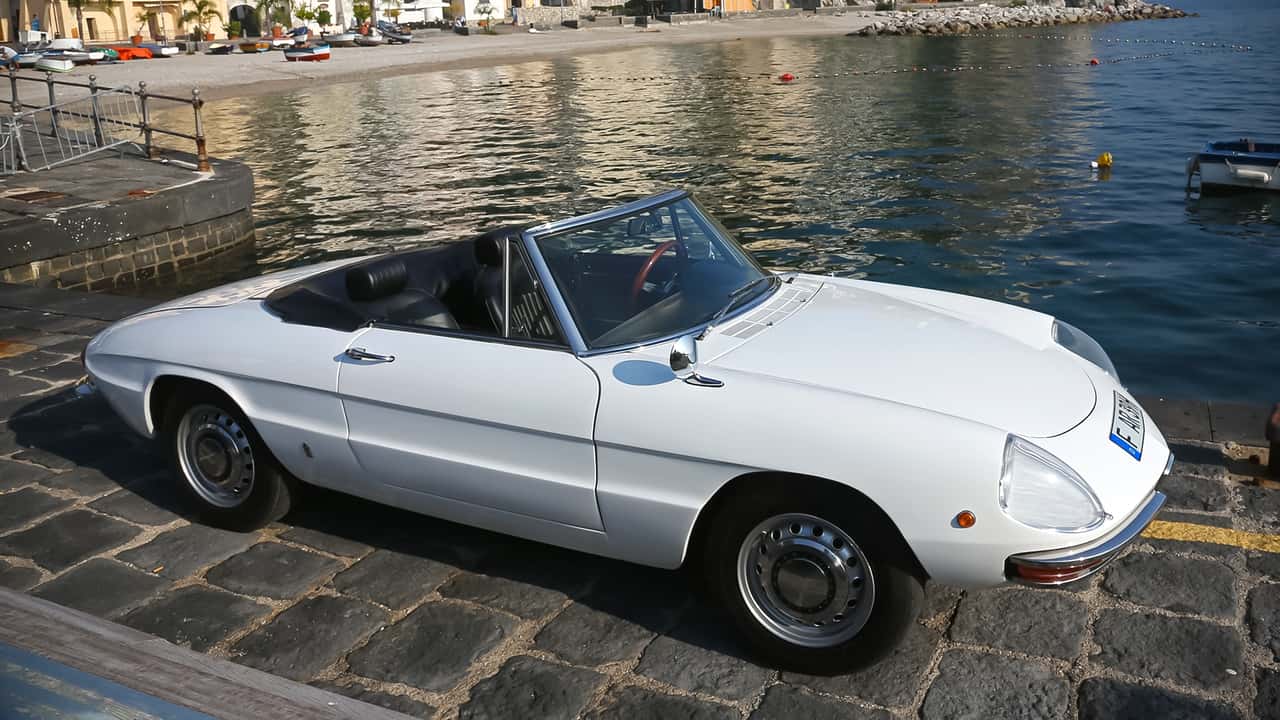
Alfa Romeo Spider Duetto (1966-1969)

Alfa Romeo Spider Duetto (1966-1969)
Engine updates already showed the limits that success would bring
The Spider sold well in Europe, but the US market quickly changed the equation. Starting in 1968, the carbureted 1600 no longer met tighter California emissions rules. Alfa Romeo had to adapt its roadster without sanding off its character. That was one of the model’s first real limits in the marketplace: being desirable was no longer enough; it also had to survive regulation.
The answer was the 1750 Veloce. Displacement grew to 1,779 cm³, and US cars received Spica mechanical fuel injection. Europe kept carburetors. Output rose to 113 ch, but the more meaningful gain came from added torque and taller gearing, which made the car more relaxed on the move. Top speed increased to 188 km/h. It wasn’t a dramatic overhaul, and that was the point—it was a smart technical evolution.
Alfa also revised the chassis, braking, and a few presentation details. At the same time, the company widened the lineup downward with the Spider 1300 Junior, rated at 89 ch, less generously equipped but much easier to reach at 10,990 marks, versus 13,575 marks for the 1750 in Germany. That pricing spread says plenty about the bigger picture: as the Spider moved upscale, Alfa had to reopen the door for younger buyers.
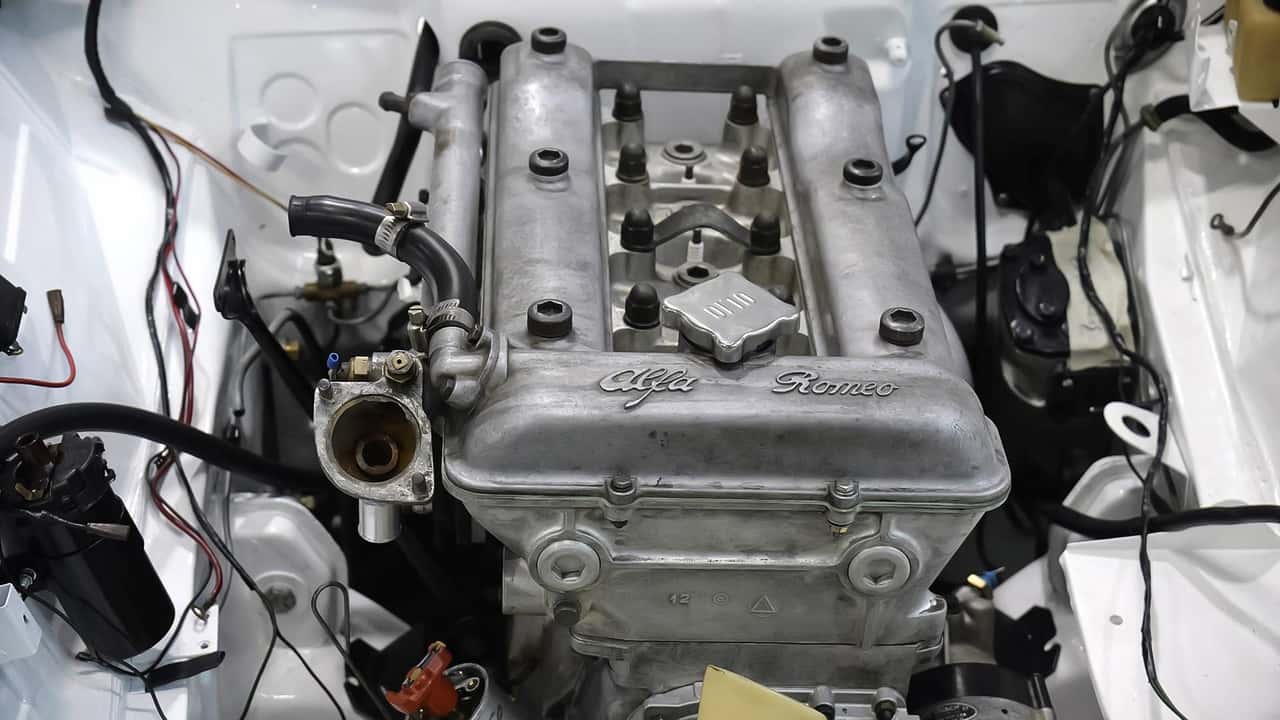
Alfa Romeo Spider 1750 Veloce
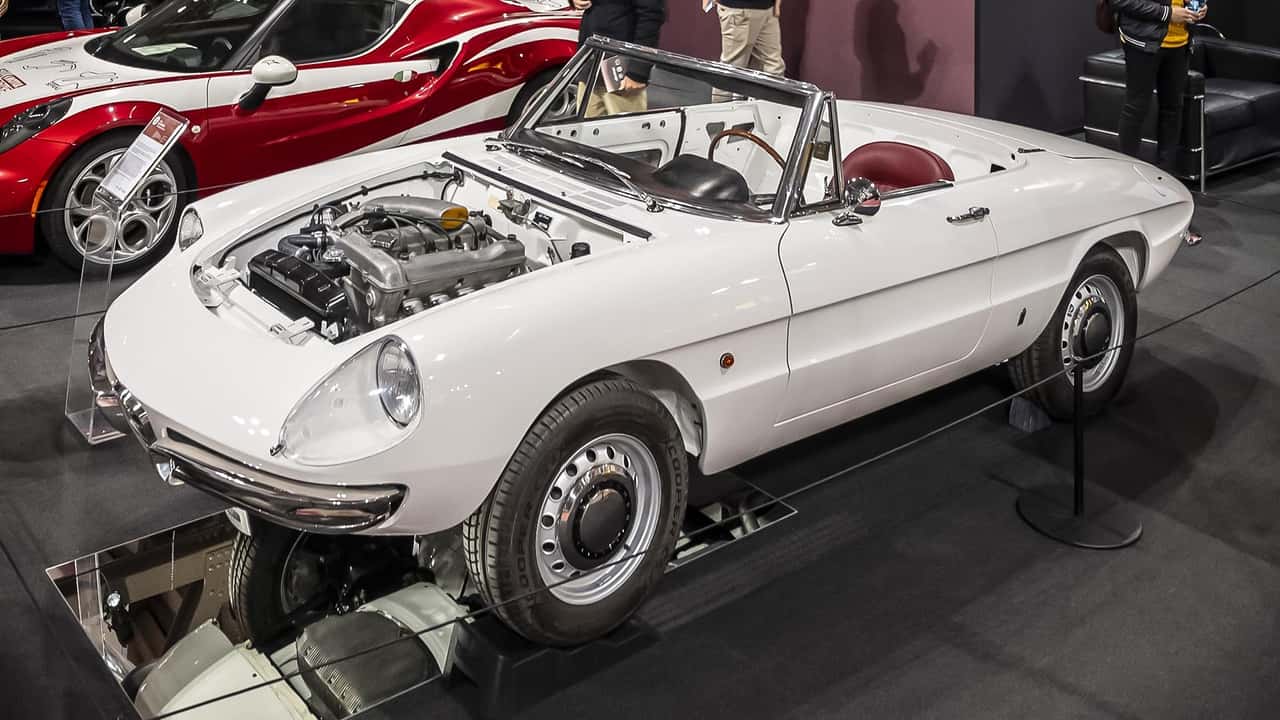
Alfa Romeo Spider 1750 Veloce
By late 1969, the first major redesign ended the rounded-tail Spider’s run after roughly 13,600 units. The more conventional rear that followed shows the trade-off clearly: the original design’s boldness created the icon, but it wasn’t the easiest shape to sustain in industrial terms.
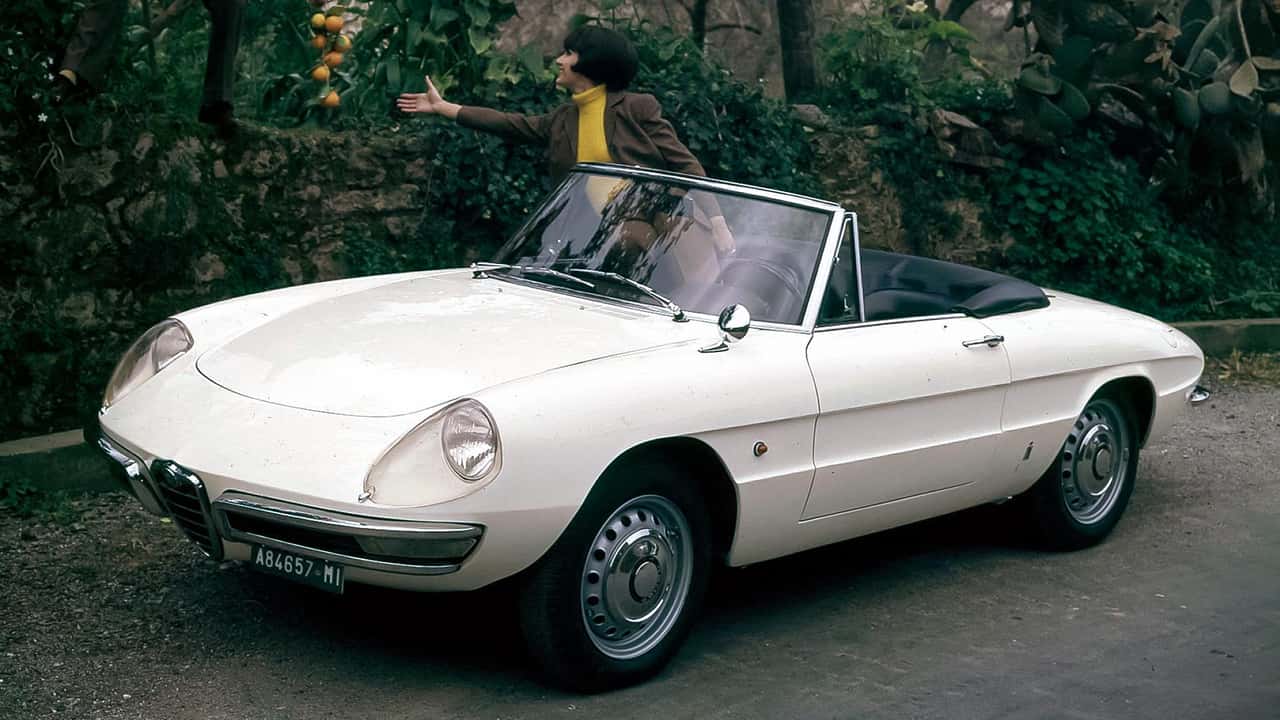
Alfa Romeo Spider Duetto (1966-1969)
In summary
- The first Spider was created to fill a real hole in Alfa Romeo’s lineup.
- Its Pininfarina design deliberately broke from the more traditional Giulietta Spider formula.
- The rounded “Osso di Seppia” tail divided opinion at first, then became the model’s most iconic feature.
- The Duetto’s technical package was notably advanced for 1966, with twin cams, a five-speed manual, and four-wheel disc brakes.
- The arrival of the 1750 Veloce reflected the impact of US regulations and the growing importance of export markets.
- The original Spider lasted only a short time in this form, which adds to its distinct place today.
At its core, the Duetto isn’t just another pretty vintage Alfa. It’s a case study in how a brand builds prestige by refusing the safe middle ground. For classic-car buyers, it remains the Spider to chase if what you want is the purest expression of the model, along with all the period compromises that come with it. If ease of ownership matters more, later Spiders are the logical move. But if the goal is style and character, the first one still stands apart. Over the next 3–5 years, that won’t change: early, uncompromised icons are only becoming more central to how collectors define a brand’s real heritage.