Alpine leaves Imola with a result that looks solid on paper, but the bigger takeaway is what still separates the team from the front. The No. 35 car finishing fourth confirms the A424 has taken a step forward, while the No. 36 showed just how expensive even small strategy or execution mistakes are in Hypercar.
So after this season opener, the real story is not just where Alpine finished. It is whether the team can turn credible race pace into a complete result. For anyone following the season in other endurance championships, Imola already offered a pretty clear read: the technical foundation is there, but the operational side is not quite at the same level yet.
Fourth place confirms the A424 is moving forward
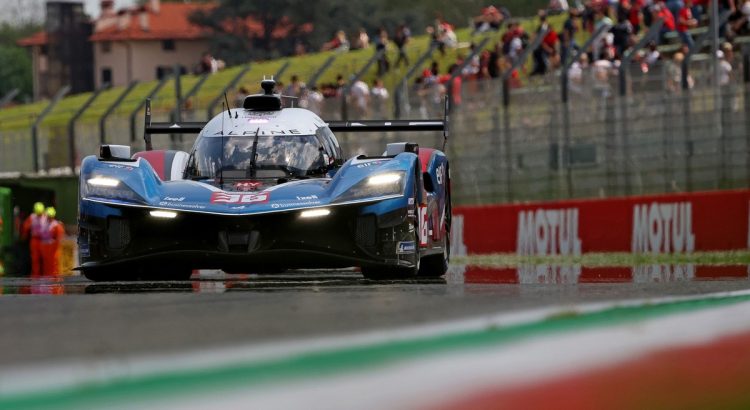
The No. 35 Alpine of António Félix da Costa, Charles Milesi, and Ferdinand Habsburg finished fourth in the 6 Hours of Imola, 18 seconds off the podium. That is not the kind of result that reshapes the grid by itself, but in the context of the A424’s first outing in 2026 specification, it matters.
What Alpine really needed was a clean weekend to validate that its offseason development work was heading in the right direction. On that front, the answer looks positive. The car ran with the lead group on merit, without needing a miracle strategy call or a race thrown into chaos.
That said, fourth also defines the current limit. Alpine ended up just short of the podium, behind the Toyotas and the No. 51 Ferrari. The progress is real, but it still is not enough to clear the final step. In Hypercar, that is the standard that counts: not intent, but conversion.
Soft tires helped put the No. 35 in the right fight
The opening phase of the race gave a useful look at Alpine’s approach. Starting seventh with Habsburg in the car, the No. 35 quickly cleared the No. 7 Toyota and the No. 94 Peugeot, helped in part by its soft tires. That was not a free gamble. It was a deliberate way to attack traffic early and settle into the right rhythm.
Philippe Sinault was clear about that after the race. Alpine chose an aggressive approach, working almost exclusively with the soft compound to better understand its behavior over a stint while also anticipating cooler, less predictable conditions. At a place like Imola, where passing can be brutally difficult, track position early changes everything.
The first neutralization then allowed the team to fine-tune strategy and lock in that place near the front. That is what made Alpine’s weekend interesting. The A424 did not just show pace; it also appeared to have a good balance from the start of the meeting. Over a long race, that is often what separates a genuinely competitive car from one that only looks fast for a few laps.
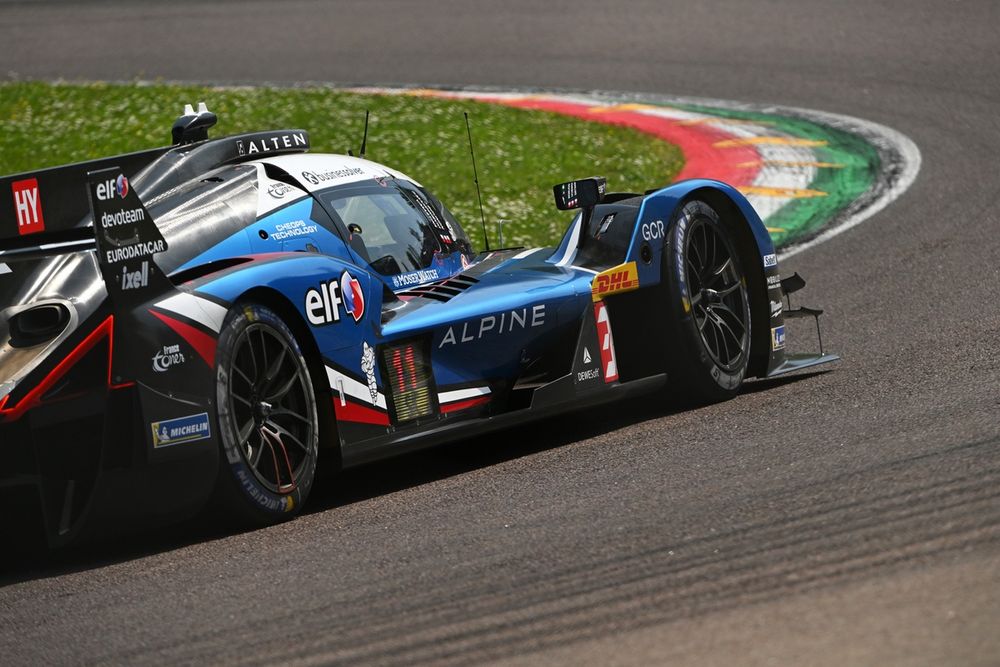
The Alpine A424 No. 36 during the 6 Hours of Imola.
The No. 36 showed how costly operational mistakes can be
If the No. 35 represented the clean side of Alpine’s weekend, the No. 36 of Frédéric Makowiecki, Jules Gounon, and Victor Martins told the other story. It qualified farther back and ultimately finished 11th after paying for two very concrete errors: not stopping under the first neutralization, then serving a drive-through for an infringement under Virtual Safety Car.
That is not a minor footnote. In modern endurance racing, one hesitant strategy call or one procedural mistake can wreck six hours of work. Alpine’s leadership said as much. Nicolas Lapierre pointed to “small mistakes” that may have cost the team a stronger result, while Sinault was even more direct about the No. 36, admitting the team made too many errors.
The important point is that those mistakes did not hide a major pace deficit. Sinault said the No. 36 was running at a level very close to the sister car. In other words, Alpine did not lose that result on pure speed from its second crew. It lost it in the details, exactly where a true front-running team cannot afford to slip.
Alpine has more credibility now, but not full authority
This first round paints a more nuanced hierarchy than the finishing order alone suggests. Alpine is capable of aiming for the front third of the field on a regular basis, as Axel Plasse, who succeeded Bruno Famin at the head of the program, pointed out. That is encouraging because it validates the winter development push and suggests the A424 is no longer feeling its way forward.
But one thing is still missing: authority. A team that is truly established at the front does more than stay in the mix. It dictates the pace of its weekend, locks down procedures, takes full advantage of every neutralization, and does not let one car drift into the middle of the pack because of an avoidable penalty. Alpine is not there yet.
That distinction matters, because it keeps a fourth-place finish in proper perspective. Right now, this is a positive signal, not a competitive turning point. Endurance racing does not reward potential. It rewards repetition. Alpine’s next challenge is to reproduce this level of performance while cleaning up the operational mistakes.
Alpine’s post-race comments suggest a team that sees the problem clearly
That may be one of the healthiest signs from the weekend. Alpine did not sound self-congratulatory afterward. Lapierre called it a satisfying start to the season, but also acknowledged that errors may have cost the team more. Sinault contrasted an efficient No. 35 with a No. 36 that was hurt too much by decision-making and execution. No spin, just a clear read of the weekend.
That kind of honesty matters in a program still being built. It is far more useful to identify exactly what is going wrong than to hide behind polished messaging. Alpine believes it has a solid base and clearly defined areas to improve. Put simply, the foundation does not need to be rebuilt, but it still needs cleaner finishing work around the edges.
Plasse also highlighted internal cohesion and the organizational adjustments made over the winter. That is less visible than a pass on track, but over a season it carries real weight. Endurance teams are built in the pit lane as much as on the circuit. And when the margins are “tiny,” as he put it, those are the details that decide whether a car fights for the podium or disappears into an anonymous finish.
The next rounds will show whether Imola was a marker or a one-off hint
Imola obviously is not enough to define Alpine’s season on its own. One race, even one full of useful clues, is not a trendline. But it does give us a clear early read: the A424 appears to have made a meaningful step in competitiveness, and the team now has a better handle on where it needs to improve.
As the rest of the championship unfolds, the question is pretty simple. Can Alpine turn credible outsider status into a regular podium threat? If the answer is yes, it will need the No. 35 to keep delivering at this level and the No. 36 to execute much more cleanly. If the answer is no, Imola will stand as a promising weekend that was still too imperfect to matter over the long haul.
That is the real takeaway. The story is not the team’s satisfaction level, but the specific gains still left on the table. They are concrete ones: strategy, discipline under neutralization, and full use of both cars. The speed is starting to show up. Now Alpine has to stop tripping over the small stuff.
In summary
- Alpine’s No. 35 finished fourth at Imola, 18 seconds off the podium.
- That result validates the A424’s progress in 2026 specification.
- A soft-tire strategy and a well-managed race helped the No. 35 stay with the lead group.
- The No. 36 finished 11th after a missed strategy call under neutralization and a penalty under Virtual Safety Car.
- Alpine has a credible technical base, but still needs to eliminate operational mistakes.
- The rest of the season will show whether Imola was a major signal or simply an encouraging early benchmark.
In the end, Alpine leaves Imola with one reassurance and one warning. The reassurance is that the A424 now looks consistent enough to target the front on a regular basis. The warning is that this level demands absolute discipline on strategy and execution. For anyone tracking the championship, Alpine is now a team worth watching closely; for anyone waiting on a true, repeat podium contender, confirmation still needs to come quickly. Over the next 3–5 years, that balance between raw performance and flawless execution is what will decide whether Alpine becomes a fixture at the front or remains stuck as a dangerous outsider.