
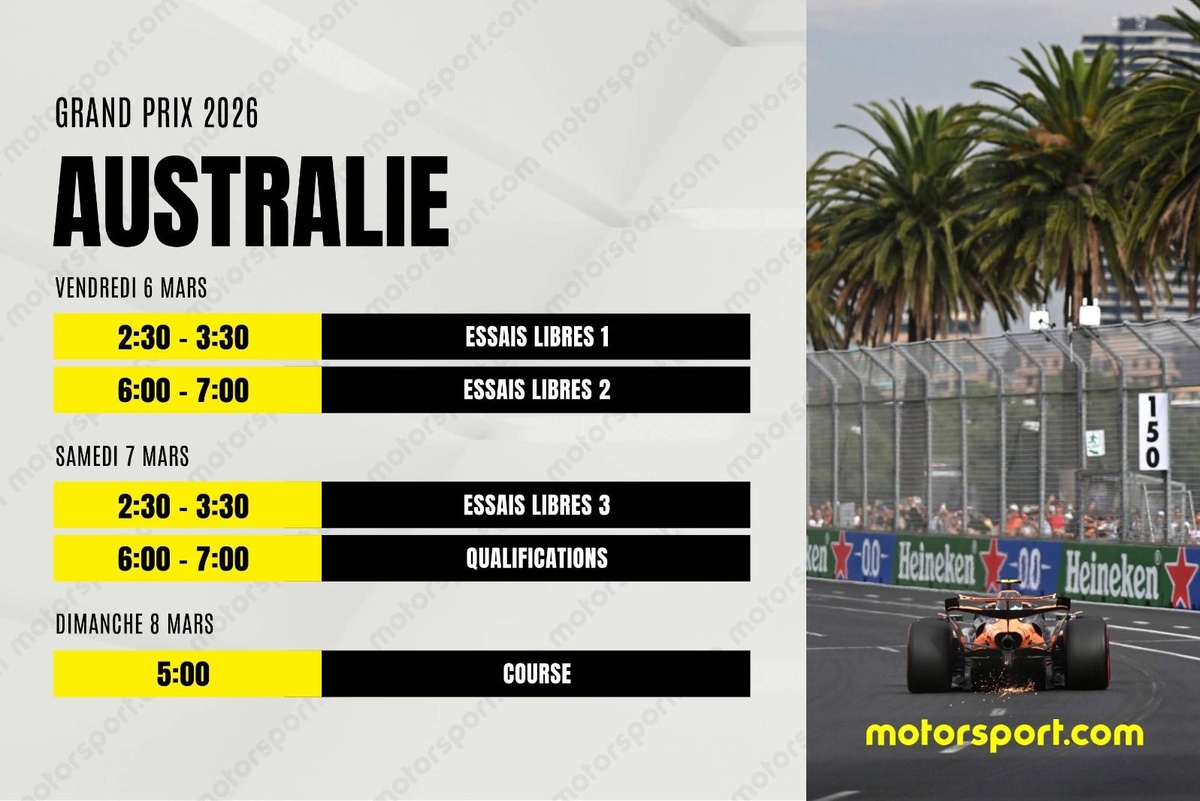
The Australian Grand Prix 2026 is shaping up to be a pivotal moment for Formula 1. As the Albert Park circuit regains its status as the opening round, it prepares to host cars that will compete under a new regulation. This change brings both excitement and concern, with a major question: will this evolution meet the expectations of fans and stakeholders in the sport?
Schedule for the Australian GP 2026: An Early Wake-Up Call for Fans
For European Formula 1 enthusiasts, the Australian Grand Prix promises an additional challenge: the time difference. With a ten-hour gap, the practice sessions, qualifying, and the race will require an early wake-up or a few sleepless nights. This choice of schedule may seem trivial, but it reflects an undeniable reality: F1 is a global sport. In short, this time constraint could influence television viewership, a crucial aspect for broadcasters and sponsors.
Where to Watch the Australian Grand Prix? Canal+ Stays the Course
The channels of the Canal+ group continue to broadcast the entirety of the F1 weekend in France. For the Australian Grand Prix, the practice sessions will be on Canal+ Sport, while qualifying and the race will be accessible on Canal+. This continuity in broadcasting is essential to maintain enthusiasm around the sport, especially at the dawn of a season marked by regulatory changes. However, this dependence on a single broadcaster could raise questions for the future, especially if other players emerge in the market.
The Albert Park Circuit: Between Tradition and Modernity
The layout of Albert Park, often referred to as “semi-urban,” has undergone notable modifications in recent years. The renovations have been designed to enhance the spectacle, with an expansion of the track and a redesign of several corners. Stretching 5.278 km and consisting of 14 turns, this atypical circuit offers a mix of technical challenges and overtaking opportunities. In practice, these changes could favor more dynamic races, but they also raise questions about the impact on team strategies. Indeed, a wider track could encourage more aggressive racing approaches, making duels even more intense.
F1 Records at the Melbourne Circuit: A Story to Be Written
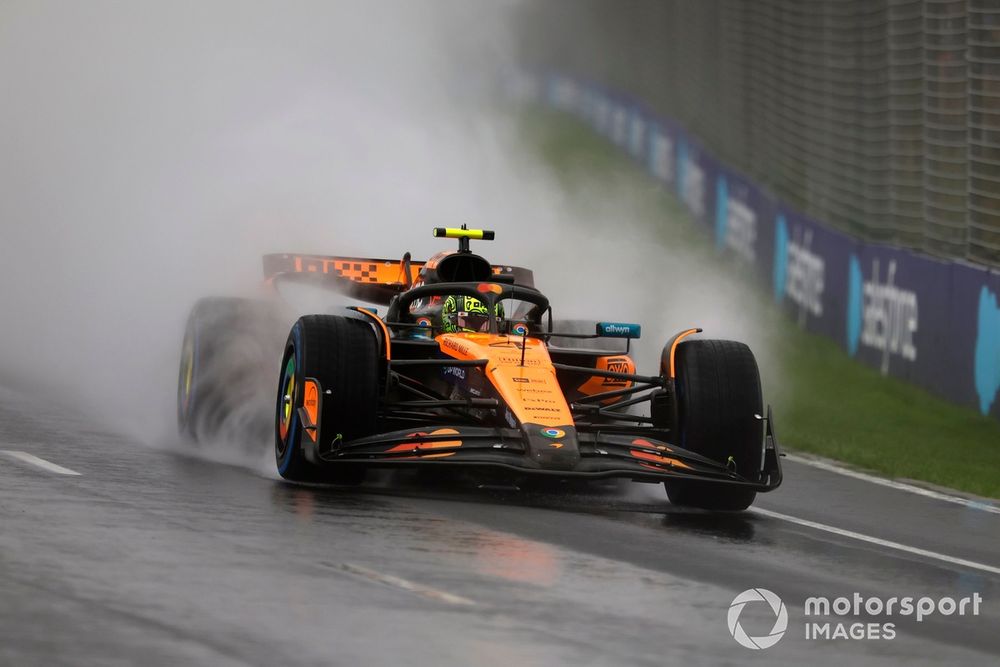
The last edition of the Australian GP saw Lando Norris triumph in pouring rain, a memorable moment that could mark the beginning of a new era for this young driver. But as each season brings its share of surprises, the 2026 edition will be an opportunity to see if these new regulations will allow for the establishment of new records. The performances of drivers and teams will be closely scrutinized, and the ability to adapt to these changes will be crucial.
The Last 10 Pole Sitters and Winners of the Australian GP F1: An Evolving Record
The record of the Australian GP is rich in twists and turns. The champions who have marked this race are often those who have been able to take advantage of the circuit’s specifics. With the new regulations, new dynamics could emerge. Teams will need to demonstrate innovation not only in the design of their cars but also in their racing strategies.
Weather in Melbourne: A Factor Not to Be Overlooked
Weather forecasts predict a return of sunshine to Melbourne for the GP weekend, with temperatures reaching up to 23°C. While the weather may seem mild, it remains a key factor influencing race performance. Sunny weather could favor more aggressive strategies, while unpredictable weather could shuffle the cards. Teams must therefore be ready to adapt to changing conditions, which could have a direct impact on the final outcome.
In Summary
- The Australian GP 2026 marks a turning point with significant regulatory changes.
- The time differences pose a challenge for the European audience.
- Canal+ maintains its position as the exclusive broadcaster, ensuring continuous visibility.
- The modifications to the Albert Park circuit aim to enhance the spectacle but raise questions about strategies.
- The weather could play a decisive role in the race’s outcome.
In conclusion, the Australian Grand Prix 2026 will be both a test for the new regulations and a revealer of the teams’ adaptability. For fans, it is an opportunity to see if this new direction will bring the long-awaited thrill. In the medium term, these evolutions could redefine the landscape of Formula 1, with implications for team strategies and spectator engagement. Competition is sure to intensify, and the spectacle should heighten, but it remains to be seen if this will be enough to satisfy the growing expectations of an increasingly demanding audience.


