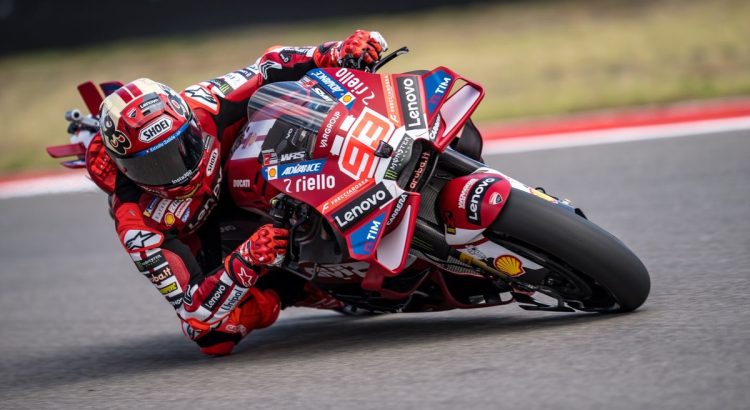
Ducati’s current unease goes beyond simple rear-tire wear. At the very moment Aprilia is setting the pace in MotoGP, rider feedback points to something deeper: the Desmosedici no longer speaks the same language to everyone in the garage. And that’s exactly why Marc Márquez’s case makes the problem harder to read, not easier.
By the time the paddock reached Jerez, one thing was already clear: Ducati’s slump doesn’t look like a one-off. On the big MotoGP story right now, this has become one of the key talking points in the paddock: a bike that is still fast, but less consistent, less intuitive, and above all no longer able to protect its rear tire the way it once did.
Aprilia has moved ahead, and Ducati is running out of excuses
Ducati no longer carries the ruthless margin that defined its advantage from 2022 onward. Early explanations came quickly: unusual tracks, different rear-tire constructions, special conditions. That line of defense is fading fast. Michelin has pushed back on that interpretation, and the picture is now more uncomfortable for Borgo Panigale: Aprilia is simply doing a better job managing the rear tire.
Marc Márquez said as much at Jerez. Three different tracks, three different layouts, and yet the competitive order still looks familiar. In his view, Aprilia is now the benchmark. That matters because it shifts the championship conversation from one bad weekend to a genuine swing in the competitive balance.
The most telling part is where Ducati has lost ground. The Desmosedici built its reputation on brutal acceleration, late braking, and the ability to hold together over race distance. Now it still looks sharp over one lap or in the opening phase of a race, but on Sunday, when grip starts to fall away, the package becomes much harder to manage.
Márquez complicates the diagnosis instead of confirming it
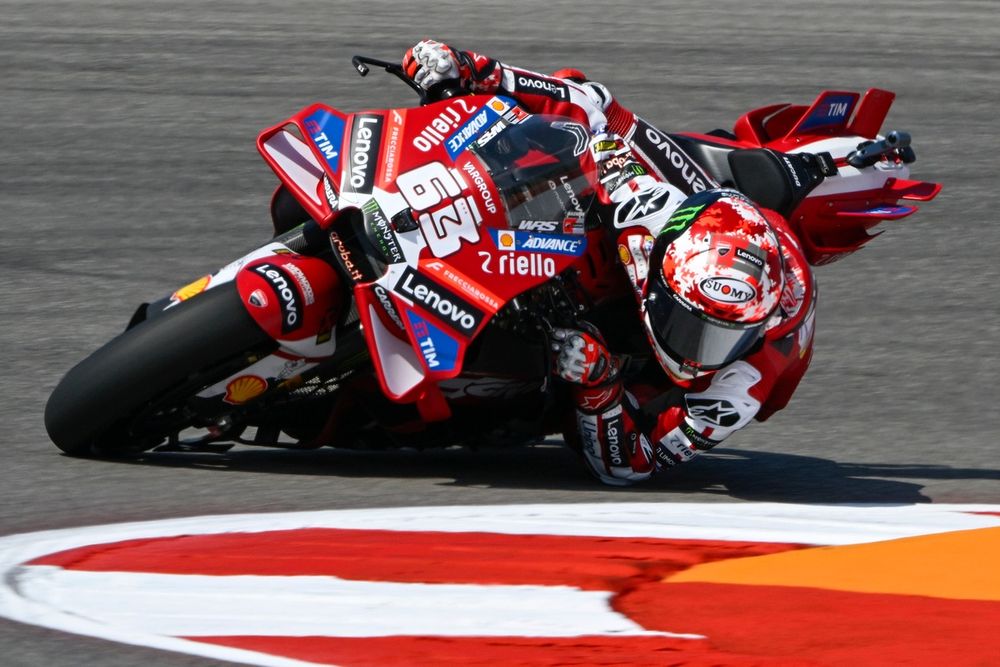
This is where the story becomes more than a setup issue. Pecco Bagnaia has complained about a clear loss of grip in race trim. Fabio Di Giannantonio describes a bike that has become less predictable. Márquez, though, is not struggling in exactly the same place. He admits the issue affects every Ducati, while also saying he feels better than the others once the rear starts to go away.
In practice, the Spaniard is almost living the opposite scenario. He is less comfortable on a fresh tire, but more competitive late in the race. His early season, affected by his right shoulder, only sharpened that pattern: less explosive over one lap, more solid when the race stretches out. Austin showed that, with a comeback that seemed to come more naturally to him than it did for Bagnaia.
That creates a real engineering problem. Ducati is getting technical feedback that does not point in one clean direction. For any manufacturer, that is close to a worst-case scenario. When your strongest rider does not suffer like the others, it becomes much harder to tell whether the bike has one clear flaw or whether it has drifted toward a narrower riding window. In a tight title fight, that kind of uncertainty gets expensive quickly.
Di Giannantonio raises the awkward question: has Ducati moved too close to Marc?
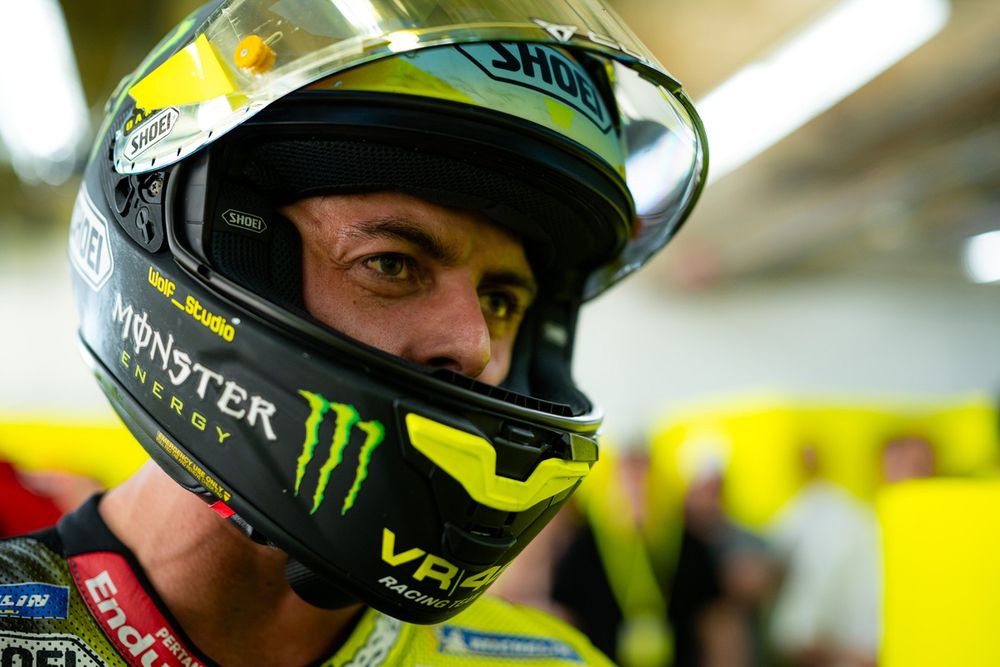
Fabio Di Giannantonio did not dodge the issue. In his view, the bike’s development path since last year may have moved more toward Marc Márquez’s style. Politically, that is a sensitive claim inside any factory effort, but it is not one Ducati can just ignore. If a bike becomes more compatible with an outlier talent and less natural for everyone else, the theoretical upside can turn into a team-wide trap.
The VR46 rider describes a machine with which he cannot be truly fast, cannot feel fully safe, and cannot recover the predictability he expects. That is not a small complaint. In MotoGP, when the front and rear stop telling the same story, rider confidence disappears before the lap time does. From there, every corner becomes a constant correction, and at this level that is exhausting over race distance.
His conclusion is simple: Ducati may need to take a small step back. Not out of nostalgia, but to recover a healthier baseline that more of its riders can actually use. There is one limit to that theory, though. Bagnaia himself has said Márquez looks less comfortable on the GP26 than he was last year. So even the idea of a Ducati shaped around Marc does not fully explain what is happening.
The bigger issue may be the front end: when the bike turns less, the rear pays for it
The strongest lead may actually come from Di Giannantonio’s read of the bike. In his view, the rear-tire wear is really a consequence of a front end that is not working as well. If the Ducati does not enter the corner as cleanly, cannot brake as hard on the front, or offers less support during rotation, riders naturally lean more on the rear. Keep asking that tire to do everything, and eventually it gives up.
That explanation ties the symptoms together. It also helps explain Aprilia’s current edge. Several riders on the grid believe the Noale machine carries more corner speed and lets riders use the front better on entry. That creates a double advantage: the bike turns more naturally, and the rear tire is asked to do less. In MotoGP, the problem you see is often not the one that started the chain reaction.
Di Giannantonio sums up that vicious circle well. On a fresh tire, the Ducati remains highly effective. But once the rear starts to slide, the lack of support from the front prevents the rider from compensating. Performance then drops away in steps. That kind of weakness is especially costly on Sunday: everything looks normal at the start, then 10 laps later the bike becomes a much heavier burden to carry.
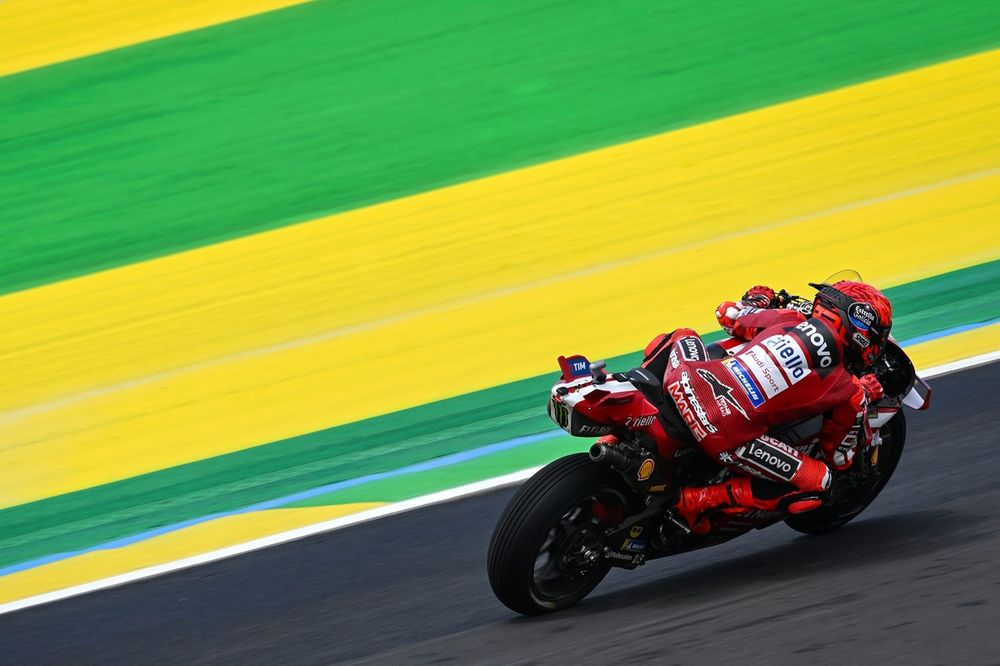
That theory gains credibility because Álex Márquez has also reportedly pointed to a lack of feel on corner entry. That convergence matters. It suggests a bike that still has raw speed, but now asks for more physical commitment and more compromise to deliver the same result. Over a full season, that is rarely a healthy sign.
Bagnaia pushes back, proof Ducati still doesn’t have one clear answer
Pecco Bagnaia offers an important counterpoint: he believes the current bike’s front end is actually better than last year’s. He describes it as more planted, easier to read, and more consistent in the messages it sends. That detail matters because it shows the issue is not being experienced in the same way, even among Ducati’s lead riders.
The gap in feedback could come from riding style, setup, or simply where each rider’s confidence level sits right now. Bagnaia even admits he is adapting a bit better this year, while still dealing with the same core race-day problem. That does not kill the front-end theory, but it does reinforce a brutal truth: everyone at Ducati feels something, yet no one is describing exactly the same fire.
That is the technical challenge in a nutshell. A bike can improve in one isolated area and still become harder to exploit overall. It can offer more front-end support while also forcing some riders to load the rear in phases where they did not before. On the telemetry, that will show up clearly. On track, the rider is the one paying for it.

Jerez could point Ducati in the right direction, but the margin is shrinking
Gigi Dall’Igna is still looking for the right key, and Ducati is expected to evaluate solutions at Jerez before continuing the work in Monday’s test. That makes sense. When the feedback is split, you need more running to isolate the cause. The problem is that the calendar never slows down, and while Ducati searches, Aprilia keeps cashing in.
The risk is easy to see. If Ducati corrects too far in Márquez’s direction, it could leave Bagnaia, Di Giannantonio, or Álex Márquez even more exposed. If it walks the bike back, it could also give up some of the raw potential that made the Desmosedici so formidable in the first place. That is a balancing act, and right now the safety net looks thin.
So the real question may not be whether Marc Márquez is the cause of Ducati’s current problems. The bigger issue is that he represents an exception inside a package that still has not found its center. When a manufacturer starts developing around exceptions instead of a shared baseline, race weekends usually become harder to understand and even harder to control.
[[AUTONOME_BLOCK_X]]
What matters most before the next phase of the season
- Aprilia currently appears to manage rear-tire degradation better than Ducati.
- Marc Márquez does not feel the performance drop in the same way Bagnaia or Di Giannantonio do.
- Di Giannantonio believes Ducati’s development direction may have moved closer to Márquez’s riding style.
- The root cause may be at the front, forcing Ducati riders to overwork the rear tire.
- Bagnaia complicates that read by saying the current front end is better than last year’s.
- Jerez and the follow-up test should help Ducati choose between several competing diagnoses.
Looking ahead, Ducati does not need a miracle so much as a clear direction. If the brand wants to take control again, it needs a bike that stays understandable over race distance, not just one that looks fast in the opening laps. Otherwise the alternative is simple and pretty harsh: keep leaning on the talent of a few riders to hide a base package that is less intuitive than it used to be. In MotoGP, that kind of illusion rarely survives for long, and over the next 3–5 years it is exactly the sort of development fork that can reshape the pecking order.