

Ducati used Monday’s Jerez test to push hard on aerodynamics, a new swingarm and a fresh round of electronic tweaks. The timing matters because the Italian brand wants to know fast whether any of those parts can be cleared for the French Grand Prix at Le Mans.
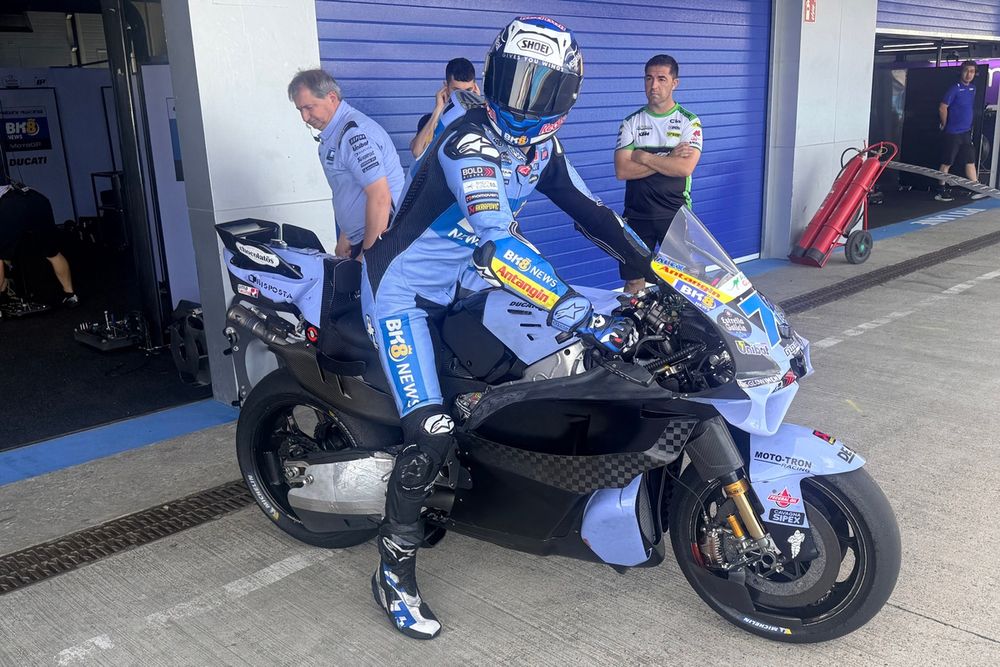
For more on the MotoGP picture, here’s the latest MotoGP news.
Ducati packed Jerez with real development work
What happened in Andalusia was not a casual shakedown. Ducati spent the Jerez test evaluating several updates on its factory Desmosedicis, with the biggest focus on aerodynamics, plus a new swingarm and electronic changes.
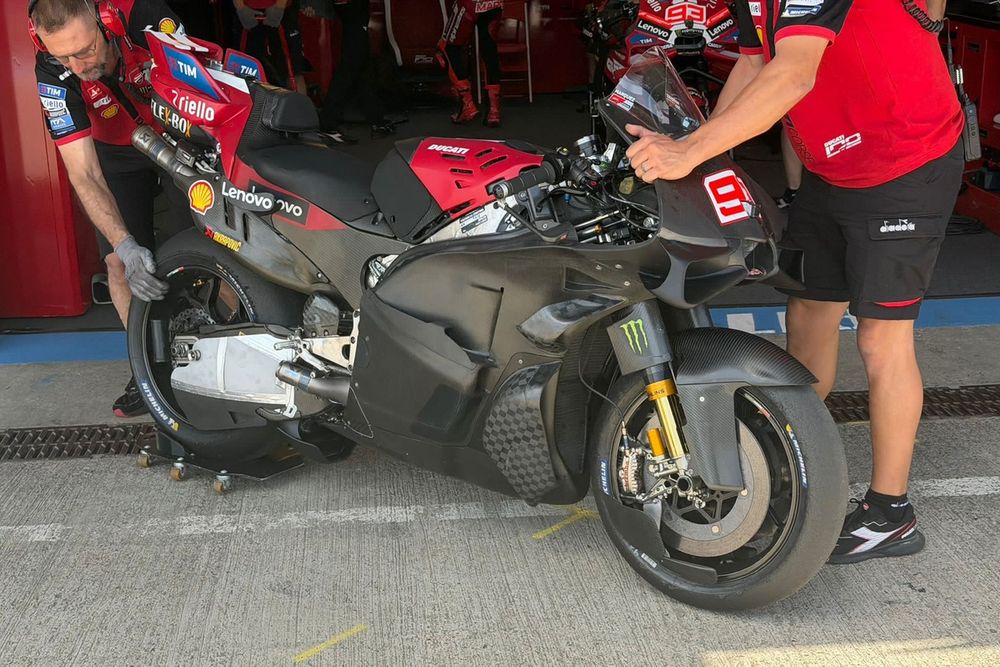
The bodywork changes were extensive, from the front end to the side sections, and the winglets were reshaped as well. In MotoGP, that kind of work is never cosmetic. It is about finding stability, protecting lap time and making the bike easier to manage when the front starts to move around.
There is also a bigger competitive layer here. Ducati wants to close ground on Aprilia in an area where the Noale brand has often set the tone, which tells you the Borgo Panigale factory is still hunting for performance even while leading the class.
Aero is now the main battleground
The clearest takeaway from Jerez is that aerodynamics have moved to the top of Ducati’s wish list. Davide Tardozzi did not hide it: the factory has focused heavily on aero because it sees that as a realistic path to more speed.
On track, the bike looked heavily reworked. A wider front section, redesigned side fairings and different winglets all point to a serious development push. None of it is about style. It is about improving corner entry, keeping the bike settled and helping the rider when the front end gets nervous.
That said, Jerez only tells part of the story. It is a useful test venue, but it does not fully replicate the demands of a faster circuit like Le Mans. That is why the next step matters: a good idea on one track still has to prove itself somewhere else.
Bagnaia wants better braking and turn-in
Pecco Bagnaia came away with a positive feeling, even if he stopped short of calling the update a breakthrough. He said the test delivered a useful gain, which sounds like a modest result, but in MotoGP those small steps often matter most when they land exactly where a rider needs them.
Bagnaia pointed to two areas in particular: better rotation in fast corners and stronger corner entry. He felt the new aero helped him carry speed without upsetting his line. In a category decided by tiny margins, that counts.
He was less convinced by the electronics side. Not because the work was off-target, but because the gains are harder to measure immediately. That is one of MotoGP’s trickiest truths: the most invisible changes can take the longest to understand.
Marc Márquez likes what he feels at the front
Marc Márquez left Jerez with something almost as valuable as a stopwatch result: more trust in the front end. He said he improved in left-hand corners, an area that had bothered him earlier this season, while also finding a bit more in right-hand turns.
That matters because Ducati is not only chasing raw speed. It is also trying to give a rider who is highly sensitive to front-end feedback a bike that speaks clearly underneath him. When the front is honest, everything else tends to fall into place faster.
Márquez also made it clear that he did not have to give up his strengths to find that extra confidence. That suggests Ducati may have found a better-balanced base, which is often worth more than a flashy headline number on a single test sheet.
The new swingarm still needs answers
Another part that drew attention was the new swingarm, which is large and heavily covered. Visually, it stands out immediately. Technically, though, it is harder to judge because a component like that affects several areas at once.
It can influence traction, stability and how the bike delivers its reactions on corner exit. But as always in MotoGP, a gain in one area can come with a cost somewhere else. That is the job of testing: finding the best compromise, not chasing a magic fix.
Álex Márquez struck a cautious tone, too. He said some things were positive and others less so, while making clear that it is hard to draw a final conclusion about aerodynamics from a single circuit. Jerez helps, but it does not close the case.
Le Mans is possible, but not everything is ready
The obvious question now is whether these updates can make it to Le Mans. Tardozzi suggested Ducati is trying to find a package that can satisfy different needs. Bagnaia wants more braking and better corner entry. Márquez is still looking for more speed in fast turns. That is not an easy balance to strike.
Bagnaia said he would like the new aero introduced quickly for the French Grand Prix, and he made it clear he believes Ducati can move very fast when it wants to. The intent is there, then, but intent is not the same thing as approval.
The electronics package looks harder to finalize in such a short window. Bagnaia admitted as much. The work is moving forward, but there is still uncertainty, especially when the request is to stop the bike better without losing rotation. That is a complicated ask, not a simple parts swap.
Ducati is chasing balance, not a wholesale reset
Jerez ultimately told a familiar MotoGP story: Ducati is not trying to reinvent the Desmosedici, but to sharpen it. The factory is working on aero because it believes the payoff is real, while trying not to lose the bike’s existing strengths.
For the riders, the goals are more concrete. Bagnaia wants cleaner braking and a better turn-in. Márquez wants more front-end confidence. Álex Márquez is the reminder that a test is never a final verdict. Put together, that leaves Ducati with progress, but also a few unanswered questions.
So the next few weeks matter. If Le Mans gets these parts, Ducati will have a useful first read on whether the package is ready for race use or still needs refining. For now, the factory looks like the favorite for riders who want a sharper front end and stronger cornering support, while anyone expecting a dramatic reset should probably look elsewhere. Over the next three to five years, though, this is the kind of aero-first development race that will keep shaping the class.
- Ducati tested multiple aerodynamic updates, a new swingarm and electronic changes at Jerez.
- Aero appears to be the factory’s main development priority, with Aprilia still a key reference point.
- Bagnaia liked the gains for corner entry and turning, while Márquez felt more confidence at the front.
- The new swingarm may help traction and stability, but it still needs more validation.
- Le Mans could be the next stop for some of these parts, but nothing is confirmed yet.
- The real challenge remains finding the right compromise without giving up Ducati’s current strengths.


