Kimi Antonelli’s rough start in the Miami Sprint did more than cost positions. It exposed a wider Mercedes problem, and the team eventually admitted that the issue was not all on its rookie driver. The bigger story from Miami is a familiar one in Formula 1: weak launches, small mistakes, and a performance gap to McLaren, Ferrari, and Red Bull that Mercedes can’t ignore.
[[AUTONOME_IMG_X]]
Before getting into the details, it helps to look at the broader Formula 1 picture. At Miami, Mercedes was not only chasing the cars ahead — it was also trying to understand its own limitations after a messy sprint, a shaky opening phase, and a technical hierarchy that already looks different from what the Silver Arrows hoped for.
Antonelli keeps losing ground at the start
The numbers are starting to tell the same story. After five starts, Antonelli had already lost 20 positions combined on the opening lap, a sign that Mercedes still has a real issue getting power down cleanly and managing traction at the start.
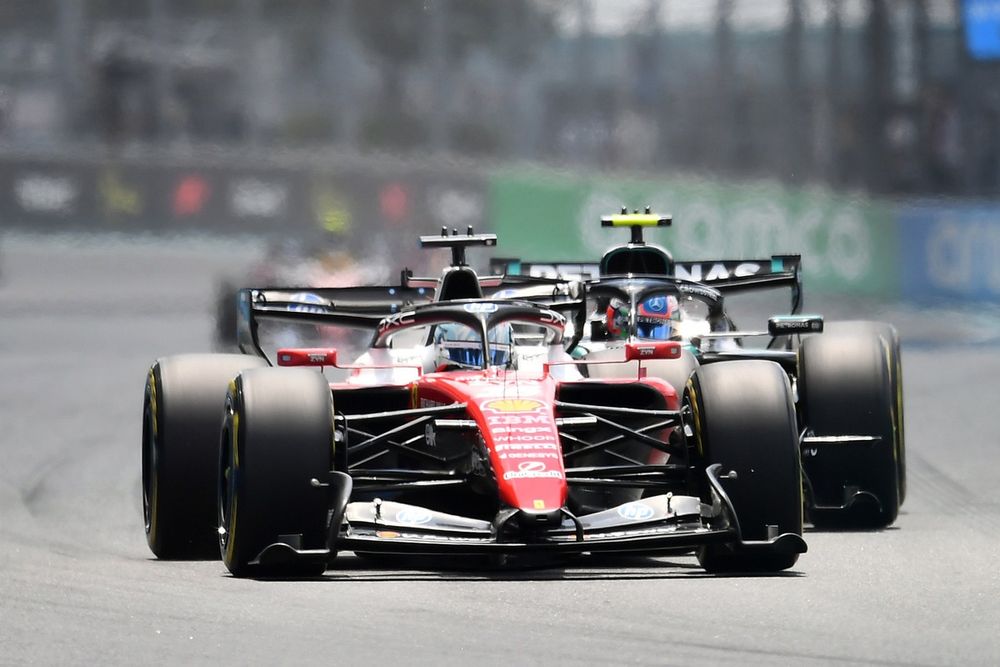
The Miami Sprint followed the same pattern. Antonelli dropped from second to fifth between the launch and the first corner, turning a strong grid spot into damage control almost immediately. He usually owns up when the mistake is his, but this time he said the procedure was right and the grip was simply far worse than expected.
Mercedes says the problem was on its side
That’s where the story changed. Mercedes ultimately said the issue came from its own side and made a point of saying it was “absolutely not Kimi’s fault.” In a paddock where every word is chosen carefully, that reads like a technical admission as much as a defense of the driver.
It also matters for how Antonelli’s first F1 season is being judged. A rookie is always going to be under the microscope, but if the team is willing to own part of the problem, the discussion shifts away from a simple driver error. The focus moves to Mercedes’ starting system, its setup, and the basics it still has not fully nailed down.
The sprint exposed Mercedes’ real pace
Antonelli’s start was only part of the problem. The full sprint painted a tougher picture for Mercedes as a whole. The team spent much of the race battling its own cars instead of threatening Charles Leclerc’s Ferrari or closing on the McLarens, who looked out of reach.
That is the real takeaway for Mercedes. The team looked solid enough to avoid a disaster, but not sharp enough to pressure the front-running group. When the gap in pace is this obvious, the final result matters less than the bigger signal the race sends.
Penalties made the result look even worse
The classification slipped further after the checkered flag. Antonelli was originally listed fourth and fifth, but he later dropped to sixth after a penalty for repeated track-limit violations, which moved George Russell up a spot. The race was not just difficult for Mercedes; it was messy from start to finish.
Antonelli did not try to dress it up. He said he was frustrated, admitted he did not drive well enough, and acknowledged that he made too many mistakes. In a sprint, there is little time to recover from a bad launch or a track-limits warning, and Mercedes paid for both.
Russell says Miami was a low-grip track
Russell also pointed to the Miami circuit itself. He said the track offered very little grip, comparing it to places like Brazil and Zandvoort, where the car can feel slippery on all four tires. When that happens, the driver loses confidence quickly and the chassis becomes harder to read.
Russell still salvaged a useful result by finishing fourth, two places better than where he started. His comments also put the sprint in perspective: McLaren, Ferrari, and even Red Bull all seemed to have a stronger package on the day. Mercedes is not just chasing execution — it is chasing performance.
Mercedes delayed its upgrades until Canada
The lack of pace was not a surprise in isolation. Mercedes chose to hold back its main upgrades until the Canadian Grand Prix, while several rivals brought their updates to Miami. In a development race this tight, that kind of timing shows up fast on the stopwatch.
Toto Wolff said the team knew it was behind in the upgrade schedule, even if it hoped to stay competitive on track. He also pushed back on any link to recent rule changes, framing the problem as a straight development race. In Formula 1, a few tenths banked early can change everything later. Waiting too long is its own form of losing.
What Miami really says about Mercedes
Miami left Mercedes with a clear message: the team still has work to do on both ends. Antonelli is learning on the job, Russell is trying to limit the damage, and the car still does not look like it has found the right performance window.
For now, Mercedes looks like a team for fans who can tolerate some frustration and a few rough weekends while the upgrade plan catches up. If you want the cleaner answer, this is still not it. The pace gap is real, the starts need fixing, and Canada now looks like a key checkpoint for whether Mercedes can close the distance.
- Kimi Antonelli again lost ground at the start, even with part of the issue tied to the car.
- Mercedes said the problem was on its side, not the driver’s.
- The Miami Sprint showed a clear pace gap to McLaren and Ferrari.
- Track-limit penalties made the final result look worse.
- Mercedes is waiting until Canada to bring most of its upgrades.
- The next step is simple: cleaner starts and better performance when it arrives.