The dashboard warning lights are the main indicators of your vehicle’s condition. Some signal simple information, while others indicate immediate danger. Knowing how to recognize them can help avoid costly breakdowns and risky situations.
Here is a complete guide to understanding the meaning of all car warning lights and knowing how to react.
What Do the Colors of the Warning Lights Mean?
🔴 Red Lights: Immediate Danger
A red light indicates a serious problem. It is advised to stop the vehicle as soon as possible.
- Oil pressure light
- Engine temperature light
- Battery light
- Brake / handbrake light
🟠 Orange Lights: Anomaly to Check
An orange light signals a defect that requires quick diagnosis.
- Check engine light
- ESP / traction control light
- ABS light
- Airbag light
- DPF light
- AdBlue light
🟢 / 🔵 Green and Blue Lights: Information
They simply indicate the normal operation of a system.
- Low beam lights
- High beam lights
- Cruise control
- Turn signals
Meaning of Main Red Warning Lights
Oil Pressure Light

Indicates a drop in engine oil pressure. Immediate stop recommended.
Engine Temperature Light

Signals overheating. Check the coolant level.
Battery Light

Charging problem or faulty alternator.
Meaning of Main Orange Warning Lights
Check Engine Light

Defect detected in the engine or emissions system. OBD diagnosis recommended.
ABS Light
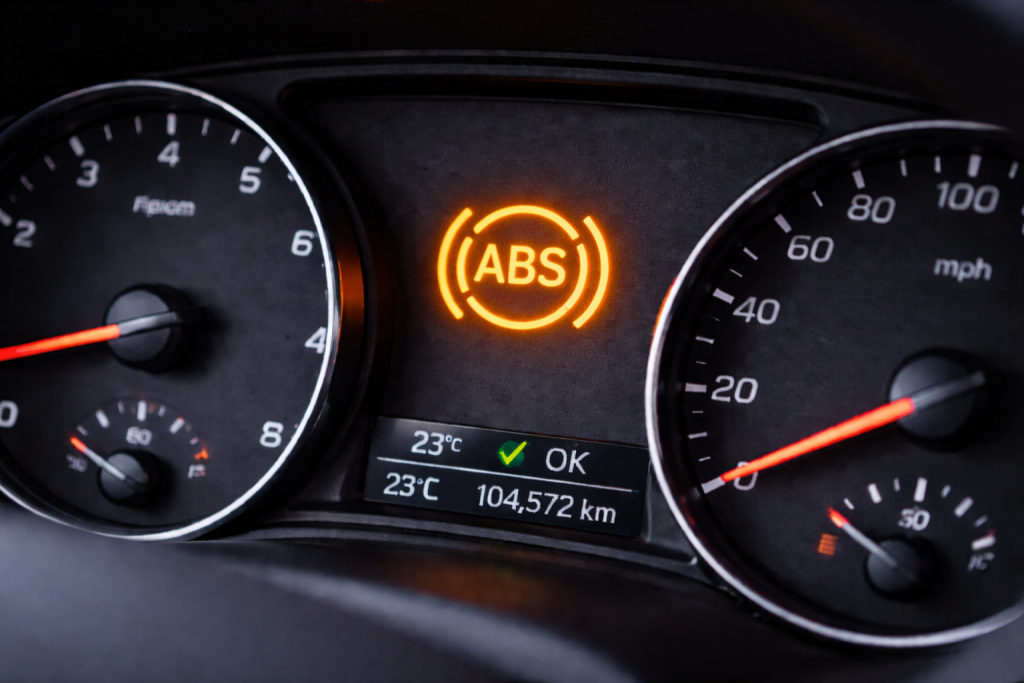
Malfunction of the anti-lock braking system.
ESP Light
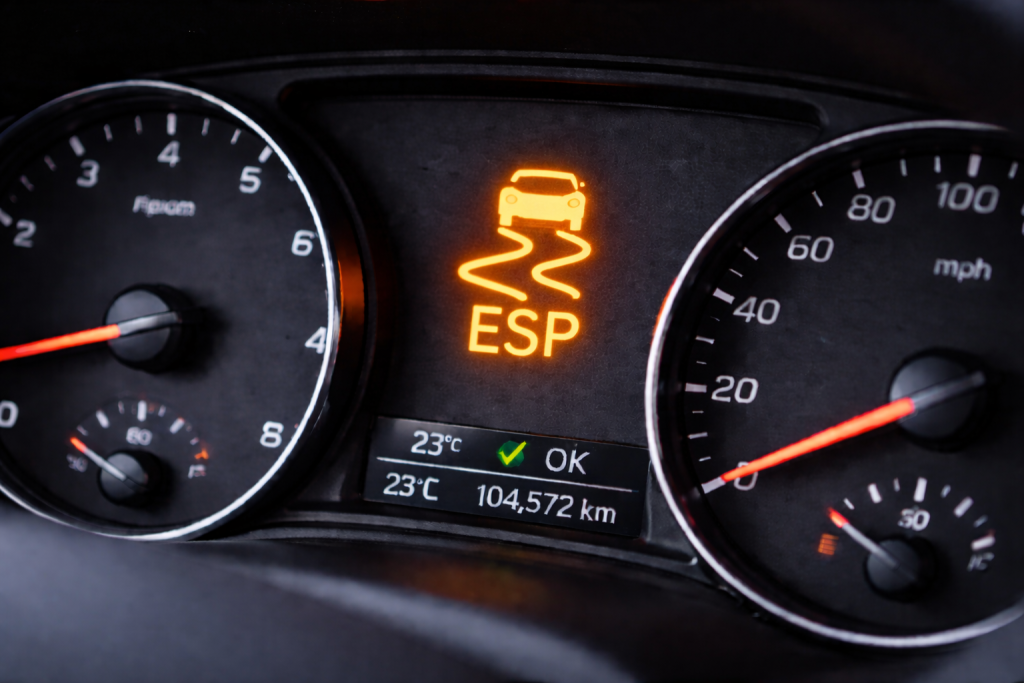
Stability control problem.
DPF Light
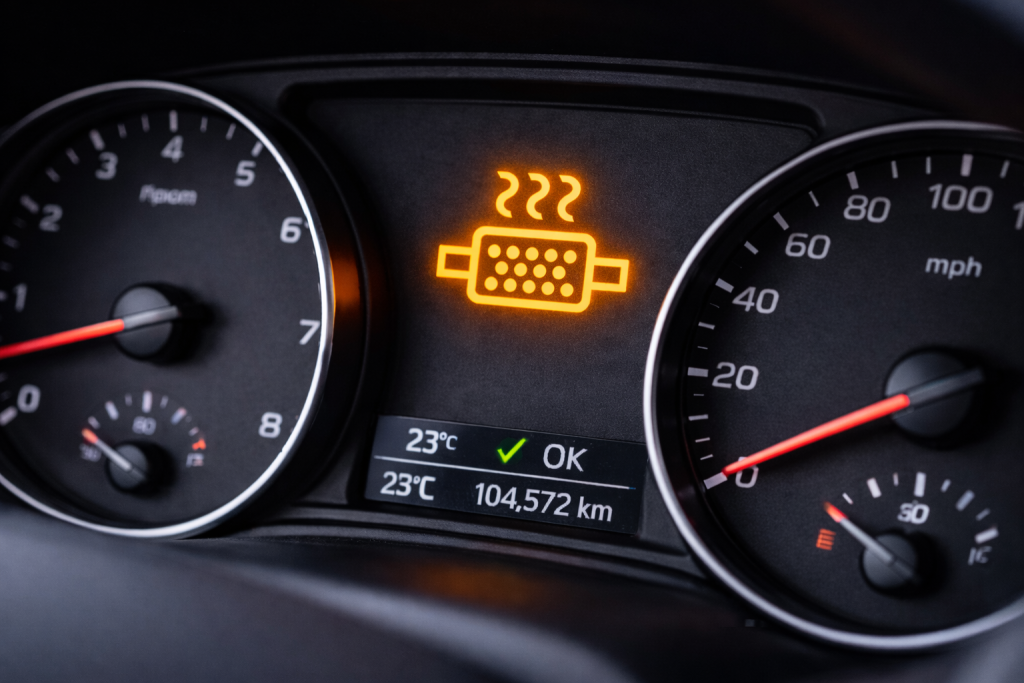
Clogged particulate filter or regeneration needed.
AdBlue Light
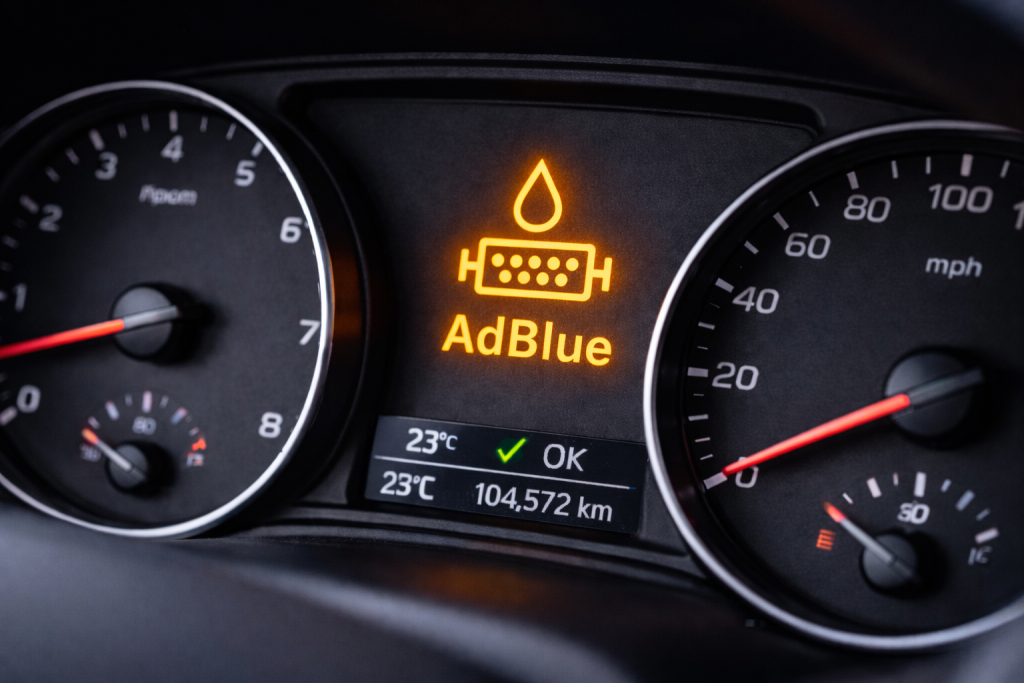
Insufficient level or defect in the SCR system.
What to Do If a Warning Light Comes On?
- Identify the color
- Consult the vehicle manual
- Avoid long trips if red light is on
- Read fault codes with an OBD reader
Can You Continue Driving with a Warning Light On?
It depends on the color:
- Red → stop recommended
- Orange → drive cautiously until diagnosed
- Green / Blue → normal information
Frequently Asked Questions
Why Do Multiple Warning Lights Come On at the Same Time?
An electrical fault or weak battery can trigger multiple alerts simultaneously.
Can a Warning Light Disappear on Its Own?
Yes, if the fault was temporary. The code, however, remains recorded.
Key Takeaways
Understanding the dashboard warning lights can help avoid serious breakdowns. A quick and appropriate diagnosis is essential to maintain the vehicle’s reliability.