

Biofuels, such as B100 and E85, often present themselves as ecological heroes, but the reality is much darker. Behind this alluring facade lies a disturbing truth: these fuels do not really reduce pollutant emissions, and their production devastates our forests. In other words, ecology is not just about pouring a few drops of “nature” into our tank.
The reality behind the myth
If you think biofuels are going to save the planet, think again. Although their promotion is ubiquitous, especially with B100 (100% biodiesel) and E85 (85% ethanol), the facts speak for themselves. These fuels are often presented as “green” alternatives, but studies show they fail to significantly reduce greenhouse gas emissions. It’s a bit like believing that wearing a wool sweater will keep you warm if you spend your time leaving the door open!
The process of growing the raw materials needed to produce these biofuels—such as rapeseed or corn—has a colossal environmental impact. Deforestation and soil artificialization are integral parts of the picture. Imagine a massive bulldozer tearing up hectares of forest to make way for cornfields that will fuel our cars. It’s a bit like building a house on the ashes of your former home: the view is nice, but the reality remains tragic.
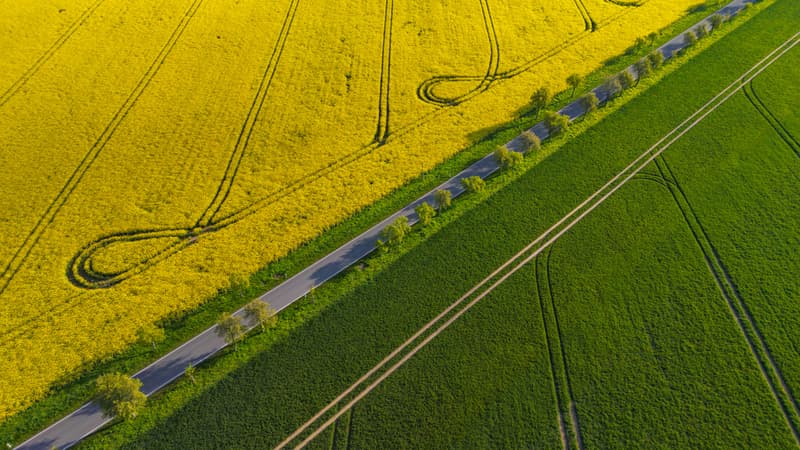
This image illustrates the reality of crops intended for biofuels. Indeed, while we hope for a reduction in pollutants, we find that the reality is much more complex. Rapeseed and corn fields often replace rich and diverse ecosystems, thereby degrading our biodiversity.
A concerning environmental assessment
It is important to note that while biofuels are often talked about as a miracle solution, their environmental record is far from glowing. Numerous studies have shown that these fuels can actually emit as much, if not more, greenhouse gases than their fossil counterparts. The idea that switching to a so-called “renewable” fuel would be enough to reverse the climate trend is therefore a beautiful utopia. Think of it as an optical illusion: everything looks magnificent from afar, but up close, the truth is harsher.
The life cycle of biofuels also raises questions. From their production to their consumption, each step generates emissions that add to the overall balance. It’s a bit like buying organic chocolate thinking you’re doing something good for the environment while neglecting the fact that its transport from a distant plantation has already generated tons of CO2.
An alternative that eats away at our resources
The major problem with biofuels is that they merely shift the problem instead of solving it. By choosing to use agricultural land to grow plants intended to fuel our engines, we risk compromising food security in certain regions of the world. It’s a bit like choosing to feed your pet caviar while the children around have nothing to eat—totally absurd.
Worse still, the massive production of biofuels contributes to rising food prices. Farmers are pushed to prioritize profitable fuel crops at the expense of those that actually feed populations. In the end, it’s a dangerous game where profit outweighs sustainability.
Towards a better understanding of energy issues
It is crucial to have a clear vision of alternatives to fossil fuels. If biofuels are not the long-awaited answer, what are our options? The key lies in a diversified and thoughtful approach to energy. Solutions like hydrogen, electricity, or improving battery-related technologies could prove more relevant in the long run. Imagine a world where your car recharges using only solar energy—that would have a certain style, wouldn’t it?
Moreover, it would be beneficial to invest in education and research to develop innovative technologies that minimize our environmental impact without sacrificing our vital resources. We must not only view the world through the prism of the automobile but also consider our collective future with a sustainable perspective.
Final assessment: illusions and realities
In summary, biofuels such as B100 and E85 remind us that it is easy to be seduced by an engaging discourse on environmental protection. Yet, behind this facade lies a more complex and sometimes troubling reality. Before filling your tank with these green promises, take a moment to reflect on the potential consequences.
It is time to demystify these supposedly ecological alternatives and push our thinking towards truly sustainable solutions. Because in the end, if we really want to change things, we will need much more than a simple fuel switch—we will need an energy revolution.
Official sources:

