MINI will celebrate 25 years of its BMW-era comeback in 2026, and the moment says more than a birthday banner ever could. The milestone matters now because today’s MINI is no longer just a style-forward small car—it sits where British manufacturing, premium-brand pricing, and a steady move toward electric vehicles all meet.
That’s the bigger story behind the anniversary. MINI is using the occasion to show how far the BMW-backed brand has come since production of the modern car began in Oxford on 26 April 2001, while also arguing that its formula—heritage, personalization, and electrification—still has room to work in a harder, more crowded market.
MINI’s 25th anniversary really marks BMW’s successful brand reboot
The original Mini had already earned its place in automotive history long before BMW stepped in. Introduced in 1959 and shaped by Sir Alec Issigonis’ space-efficient, front-wheel-drive layout, it quickly became both a practical answer to its time and a cultural icon with real racing credibility under the Cooper name.
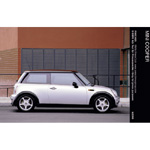
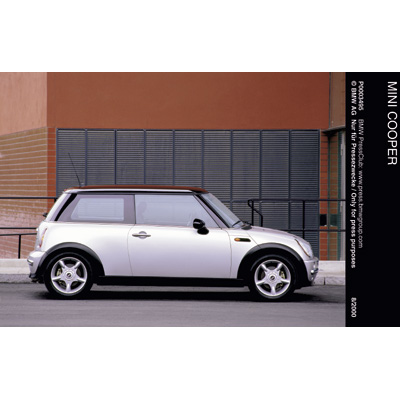
What changed in 2001 wasn’t the legend—it was the business model. When the first modern MINI rolled out of Plant Oxford, BMW had effectively rebuilt the brand for the premium small-car market, preserving the familiar design themes and nimble feel while pushing it upscale in technology, quality, and price. That’s the key distinction: this quarter-century is less about nostalgia and more about proving the reset actually lasted.
Today’s MINI lineup is broader than ever, and that cuts both ways
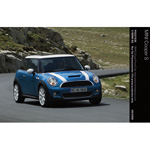
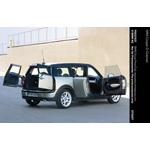
MINI says its current lineup is the widest in brand history, with five models spanning fully electric and combustion powertrains. On paper, that gives the company more breathing room than the old one-hatchback playbook, and it shows how far MINI has stretched from the original 3-door concept into a broader family that now includes the Countryman and Aceman.
But there’s a clear trade-off. The bigger MINI gets, the harder it is to keep the tight identity that made the brand stand out in the first place. MINI is trying to manage that by leaning on signature styling and heavy personalization—from bonnet stripes to the multi-tone roof—while using special editions like the upcoming MINI Paul Smith Edition to keep the brand image sharp.
EV sales are climbing fast, even if the transition is still uneven
The clearest forward-looking point in MINI’s announcement is the sales mix. In 2025, the brand posted global sales of 288,290 vehicles, with battery electric models accounting for more than a third of deliveries worldwide.
That number gets more revealing when you look at individual markets. MINI says EVs already represented more than 50% of deliveries in the Netherlands, Turkey, Sweden, and China, suggesting demand is strong where charging infrastructure, tax policy, or local market conditions line up. That also shows the limits of the shift: more than a third globally is real progress, but it’s not a full-brand electric conversion yet.
John Cooper Works still matters because it keeps MINI credible with enthusiasts
Even with all the focus on EVs, MINI is making a point of showing it hasn’t walked away from its performance roots. The John Cooper Works sub-brand reached a record 25,630 sales in 2025, equal to 8.9% of total MINI volume.
That matters for more than bragging rights. JCW has long carried a big share of MINI’s enthusiast credibility, tying the current range back to the Mini Cooper and Cooper S competition story of the 1960s. In practical terms, strong JCW demand helps MINI make the case that driving character still sells, even as the lineup expands and powertrain priorities shift.
Oxford and Swindon remain core to MINI’s identity—and its case for authenticity
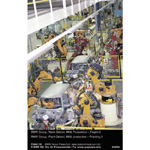
MINI’s anniversary message leans hard on its UK production footprint, and not without reason. Since 2001, 4,671,664 MINIs have been built in Britain, with Oxford serving as the main production hub and Swindon supplying body panels. BMW says the two sites employ more than 3,000 people and turn out around 800 MINIs a day, with one car leaving the Oxford line every 78 seconds.
Those numbers matter because they give MINI’s British identity real industrial weight, not just retro design cues and Union Flag trim. At a time when UK auto manufacturing is under constant pressure over competitiveness, supply chains, and the pace of electrification, MINI can make a stronger authenticity argument than many heritage-driven rivals.
MINI’s history shows a brand that kept expanding without fully losing the plot
The anniversary timeline is familiar in spots, but it still tells you something important. After the first Mini arrived in 1959, the Cooper followed in 1961, the Cooper S came in 1963-64, and Monte Carlo Rally wins in 1964, 1965, and 1967 helped turn a smart small car into something much bigger in the public imagination.
The modern era has been busier and more experimental. BMW unveiled the first modern MINI in 2000 before production started in Oxford in 2001. From there, the brand expanded into Convertible, Clubman, and Countryman models, launched MINI E trials in 2009, announced the MINI Electric in 2019, and began building fully electric series-production cars at Oxford in 2020 with the MINI Cooper SE. More recently, 2023 brought the fifth-generation MINI Cooper and third-generation Countryman in both electric and combustion forms, while 2024 added the Aceman and a new Cooper Convertible. The pattern is pretty clear: MINI has survived by repeatedly stretching the original idea without completely breaking from it.
What 25 years of the modern MINI really tell us
- BMW’s 2001 relaunch did more than revive a famous badge; it built a durable premium small-car brand.
- MINI sold 288,290 cars globally in 2025, with battery electric models making up more than one third of deliveries.
- In the Netherlands, Turkey, Sweden, and China, EVs accounted for more than half of MINI deliveries.
- John Cooper Works hit a record 25,630 sales in 2025, representing 8.9% of total MINI volume.
- Since 2001, 4,671,664 MINIs have been built in Britain, with Oxford and Swindon still central to production.
- The next chapter looks less like a nostalgia play and more like a real test of whether MINI can keep its character while moving deeper into electrification over the next few years.